 New added
Ho Chi Minh Mausoleum
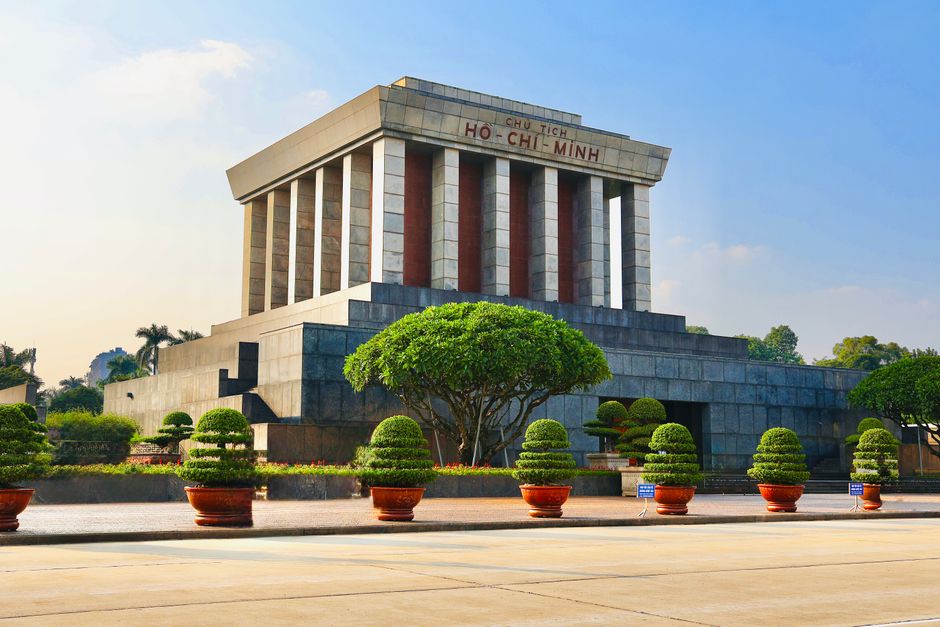
Dominating the vast expanse of Ba Dinh Square—where President Ho Chi Minh read Vietnam’s Declaration of Independence on September 2, 1945—this hulking monument of grey granite stands as a striking fusion of Soviet socialist realism and traditional Vietnamese motif. Inaugurated in 1975, the 21.6-meter-tall edifice draws deliberate structural inspiration from Lenin’s tomb in Moscow, yet its tiered colonnade subtly evokes the geometric silhouette of a stylized lotus flower. Flanked by botanical gardens boasting over 250 species of flora gathered from across the nation, the monolithic structure faces 240 manicured grass squares, fronted by deep crimson lettering spelling out the late leader's name. Stepping beyond the exterior colonnade, the humid Hanoi heat abruptly yields to a sterile, refrigerated chill. Visitors shuffle in strict, single-file silence through dim corridors, watched over by bayonet-bearing sentries in crisp white honor guard uniforms. In the heart of the mausoleum, framed by polished red-and-grey stone walls, rests a transparent glass sarcophagus softly bathed in amber light. Here lies the embalmed body of Ho Chi Minh, dressed in his trademark khaki tunic with hands resting peacefully across his chest. The continuous, hushed procession permits only a fleeting, somber gaze at the revolutionary patriarch, leaving travelers gripped by the surreal reverence that anchors Vietnam’s foremost secular shrine.