Hoa Lo Prison
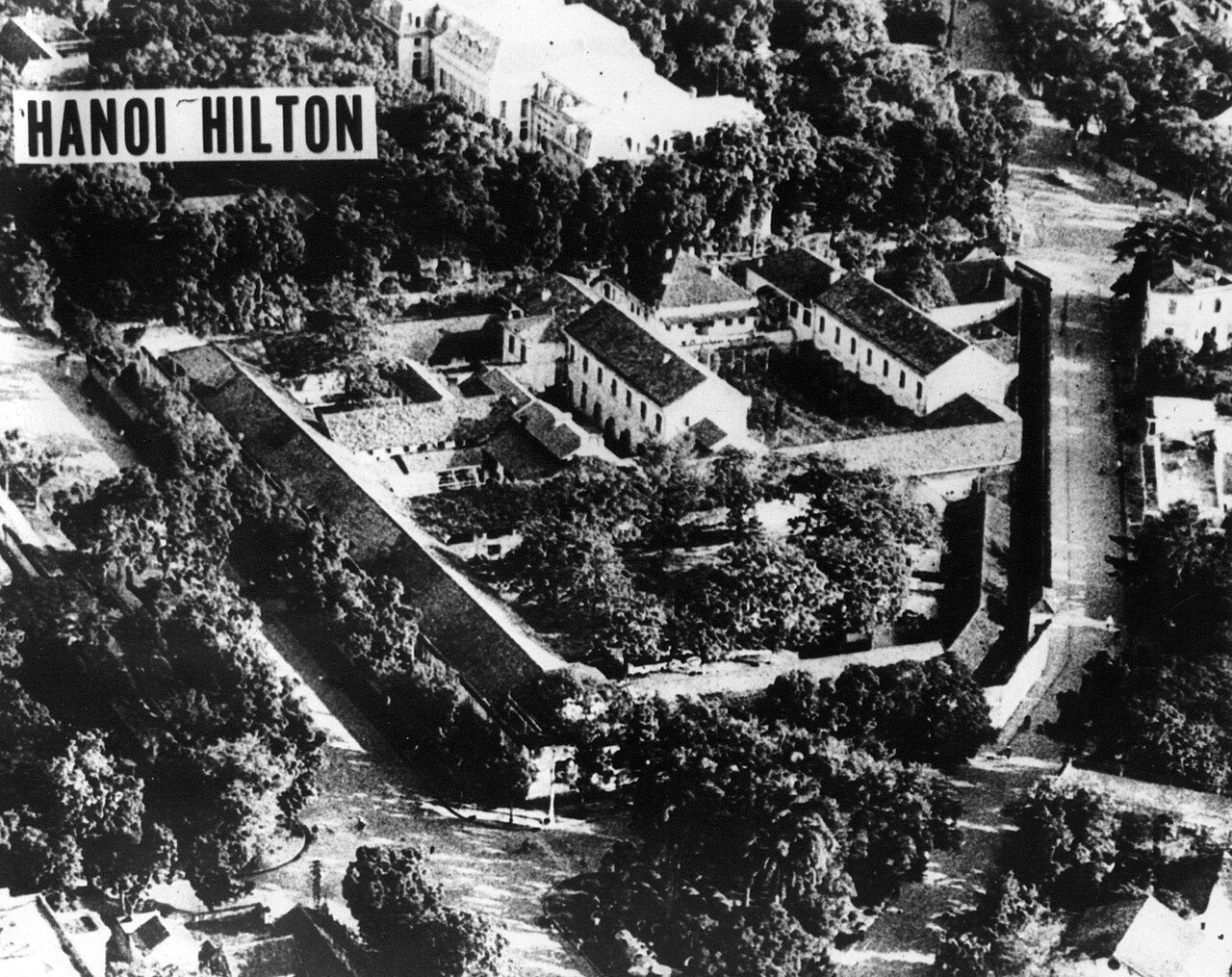
Commissioned by French colonial authorities in 1896 under the name *Maison Centrale*, Hoa Lo Prison looms behind thick, mustard-yellow walls embedded with iron spikes and jagged glass. Originally designed in an austere colonial penal style to detain political dissidents, the site—ironically dubbed the "Hanoi Hilton" by American POWs decades later—presents a somber confrontation with Vietnam's turbulent 20th century. Visitors step from the roar of Hanoi's traffic into cool, damp corridors where communal wards display rows of lifelike plaster figures shackled to long wooden foot stocks, evoking the agonizing confinement endured by revolutionary leaders such as Le Duan and Truong Chinh. The path descends deeper into the harrowing *cachot*, pitch-black solitary confinement cells where narrow spaces and sloped concrete floors amplify a palpable sense of sensory deprivation. Nearby stands an original, towering French guillotine, its heavy steel blade preserved as a chilling artifact of colonial justice. In the leafy interior courtyard, an iron grate marks the route of a daring 1951 escape where dozens of prisoners slipped into the city's labyrinthine sewer system. The final wing shifts to the American War, showcasing the preserved flight suit and parachute of downed naval aviator John McCain, leaving travelers to reflect on an intense, multi-layered narrative of suffering, resistance, and survival.