
 New added
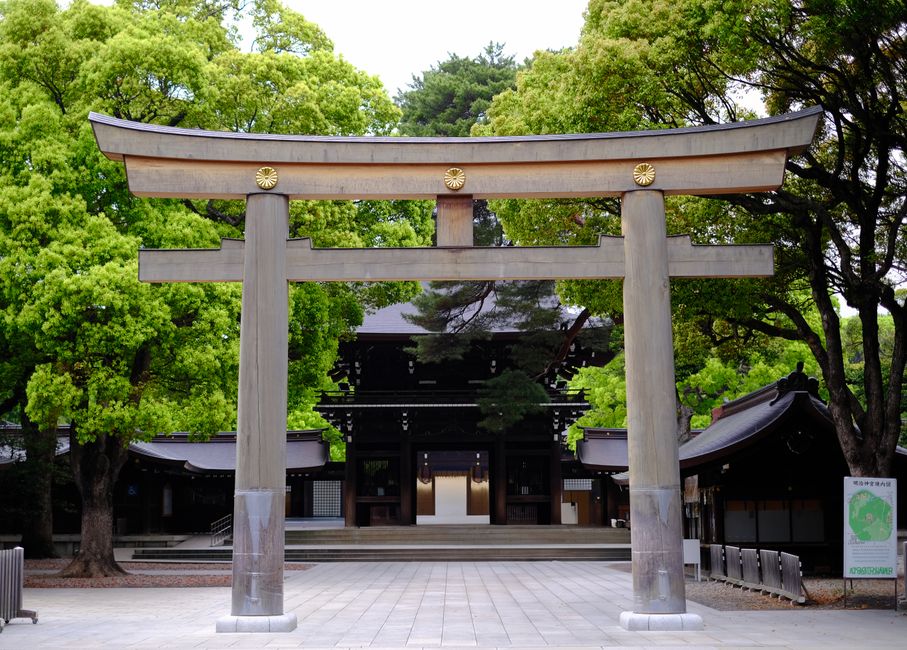
Meiji Shrine
Step beyond the frantic threshold of Harajuku into an eternal 170-acre forest, hand-planted in 1920 with 100,000 trees donated from across Japan to enshrine the deified spirits of Emperor Meiji and Empress Shōken. Passing beneath the colossal, twelve-meter-tall *torii* gate—hewn from centuries-old Taiwanese cypress—the metropolitan roar abruptly dissolves into the rhythmic crunch of pea gravel (*tamajarashi*) and birdsong. Along the winding cedar-shaded approach, towering tiers of straw-bound sake barrels (*kazaridaru*) sit opposite stacks of French oak wine casks from Burgundy, an enduring visual testament to Emperor Meiji’s embrace of Western modernity alongside sacred native customs. At the complex's heart sits the inner sanctuary, meticulously rebuilt in 1958 following its destruction in World War II. Fashioned in the elegant *Nagare-zukuri* style, the halls reject flamboyant ornamentation in favor of unlacquered cypress beams, warm timber grain, and sweeping, oxidized-green copper roofs. After purifying hands and mouth at the stone *temizuya* water pavilion, visitors bow twice, clap twice, and bow once more before the slatted offering box. In the sun-dappled courtyard, sacred camphor trees bound by straw *shimenawa* ropes shade racks of wooden *ema* prayer plaques, where travelers frequently encounter a traditional Shinto wedding procession led by priests and a bride draped in white *shiromuku*, gliding silently beneath a canopy of vermilion silk.
More in Tokyo
Photo credits (2)
- Syced, CC0, via Wikimedia Commons
- Stefano Vigorelli, CC BY-SA 4.0, via Wikimedia Commons