 New added
Mizdakhan Necropolis
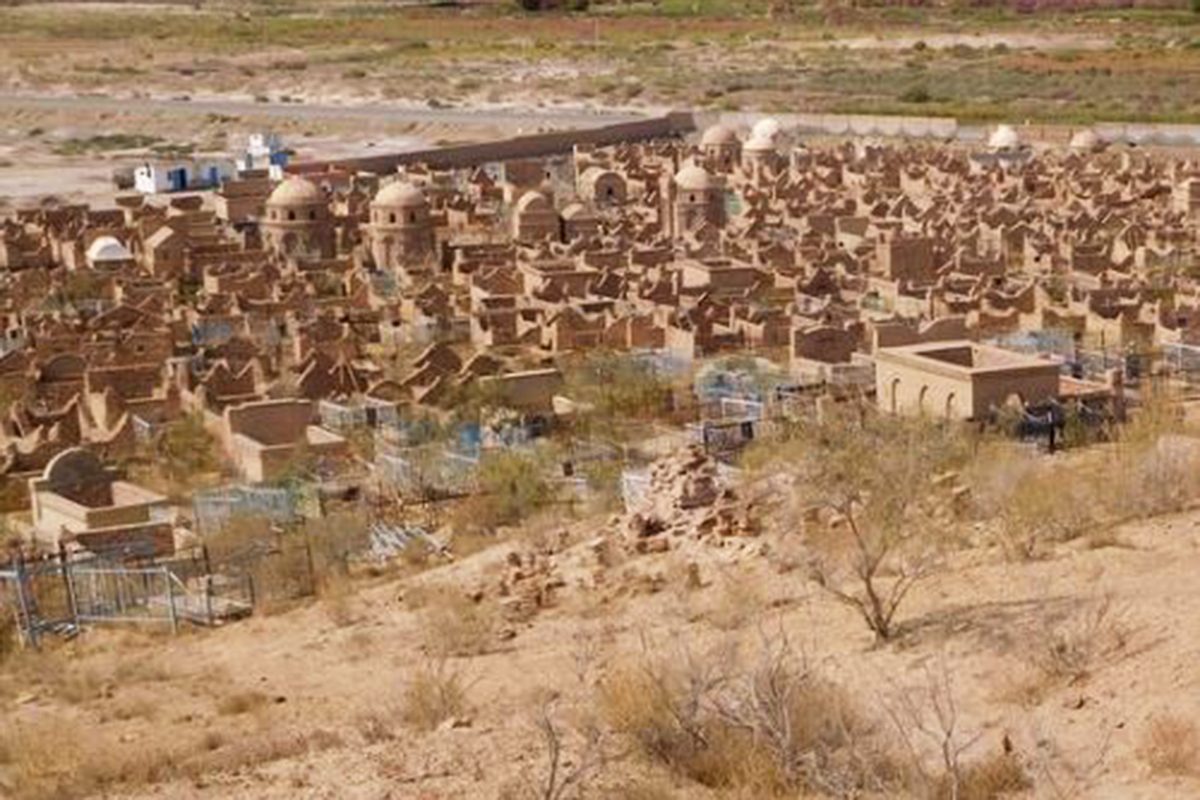
Sprawling across three wind-scoured hills outside Nukus, Mizdakhan encapsulates over two millennia of sacred desert history, tracing its lineage from a 4th-century BCE Zoroastrian city at the adjacent Gyaur-Kala fortress to an expansive medieval Islamic city of the dead. Local lore reveres this ground as the burial site of Adam—or the primordial Zoroastrian man Gayomard—a myth anchored by the crumbling 12th-century mausoleum of Erejeb Khalifa, locally dubbed the "World Clock." The necropolis’s architectural jewel is the subterranean, 14th-century Mazlumkhan Sulu Mausoleum. Descending into its cool, subterranean chamber reveals a vaulted octagonal hall crowned by an intricate central dome and framed by exquisitely preserved turquoise and cobalt majolica tiles, an astonishing remnant of Golden Horde craftsmanship preserved beneath the dry earth. Wandering through this silent labyrinth, visitors encounter thousands of tombs where centuries-old mud-brick crypts sit alongside modern, iron crib-shaped Kazakh and Karakalpak grave markers. The arid desert wind carries whispers through the long, seven-domed mausoleum of the giant venerated as Shamun Nabi, while pilgrims meticulously stack piles of seven fallen bricks around the collapsing World Clock to cast prayers and hold back the apocalypse. Standing on the desolate ridges at twilight, surrounded by countless mounds and the distant, sun-baked contours of the Gyaur-Kala citadel, travelers feel the haunting weight of a desert necropolis where civilizations have laid their dead to rest across twenty-four centuries.