
 New added
Byzantine Walls
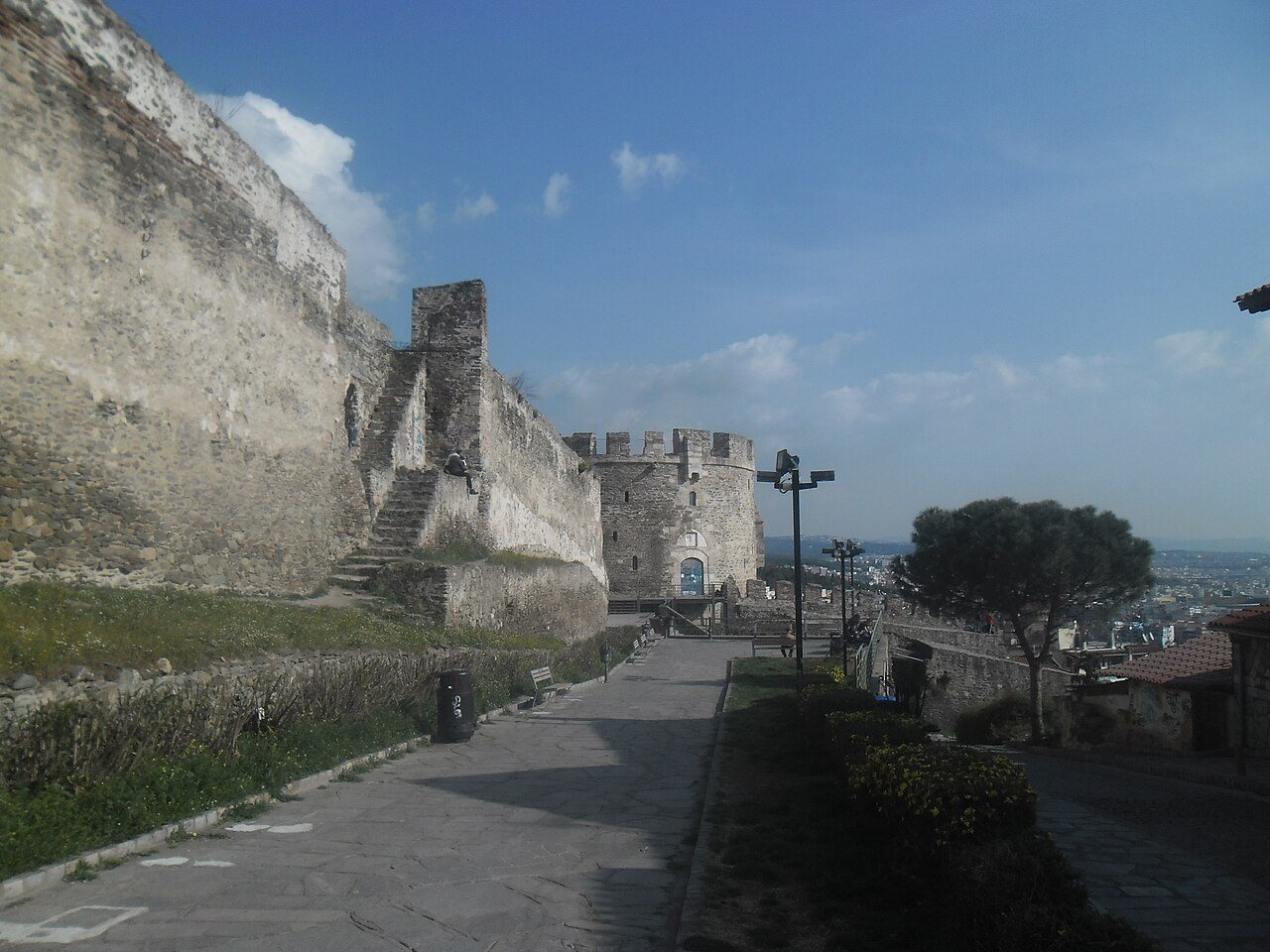
Cresting the ridgeline of Ano Poli, the Byzantine Walls of Thessaloniki trace over sixteen centuries of siege and imperial survival. First systematically engineered in the late fourth century under Emperor Theodosius I and extensively reinforced through the Palaiologan dynasty, this defensive circuit once formed a four-kilometer ring guarding the empire's co-capital. The surviving masonry reveals an architectural palimpsest: alternating courses of local rubble stone and narrow, terracotta-red brick bands, frequently embedded with carved marble spolia salvaged from Roman forums. Dominating the northeastern vertex stands the formidable Trigonio (Chain) Tower—a massive cylindrical artillery bastion erected following the 1430 Ottoman conquest—which abuts the jagged battlements of the Heptapyrgion acropolis. Travelers ascending the labyrinthine cobbled stairways of the Upper Town encounter these ramparts as a dramatic threshold between the city's past and present. Passing through the narrow arched lintel of the Anna Palaiologina Gate, the scent of wild mountain thyme mingles with the salty drafts of the Vardaris wind sweeping off the water. From the edge of the stone parapets, the vista opens completely: red-tiled Macedonian houses tumble down the hillside toward the Thermaic Gulf, where container ships cross the bay and the snow-crested crown of Mount Olympus hovers across the horizon. As twilight settles, the weathered lime mortar warms to amber, offering an unvarnished vantage over the historic port below.
More in Thessaloniki
Photo credits (3)
- August Dominus, CC BY-SA 4.0, via Wikimedia Commons
- User:JFKennedy, Public domain, via Wikimedia Commons
- Armineaghayan, CC BY-SA 4.0, via Wikimedia Commons