
Acropolis
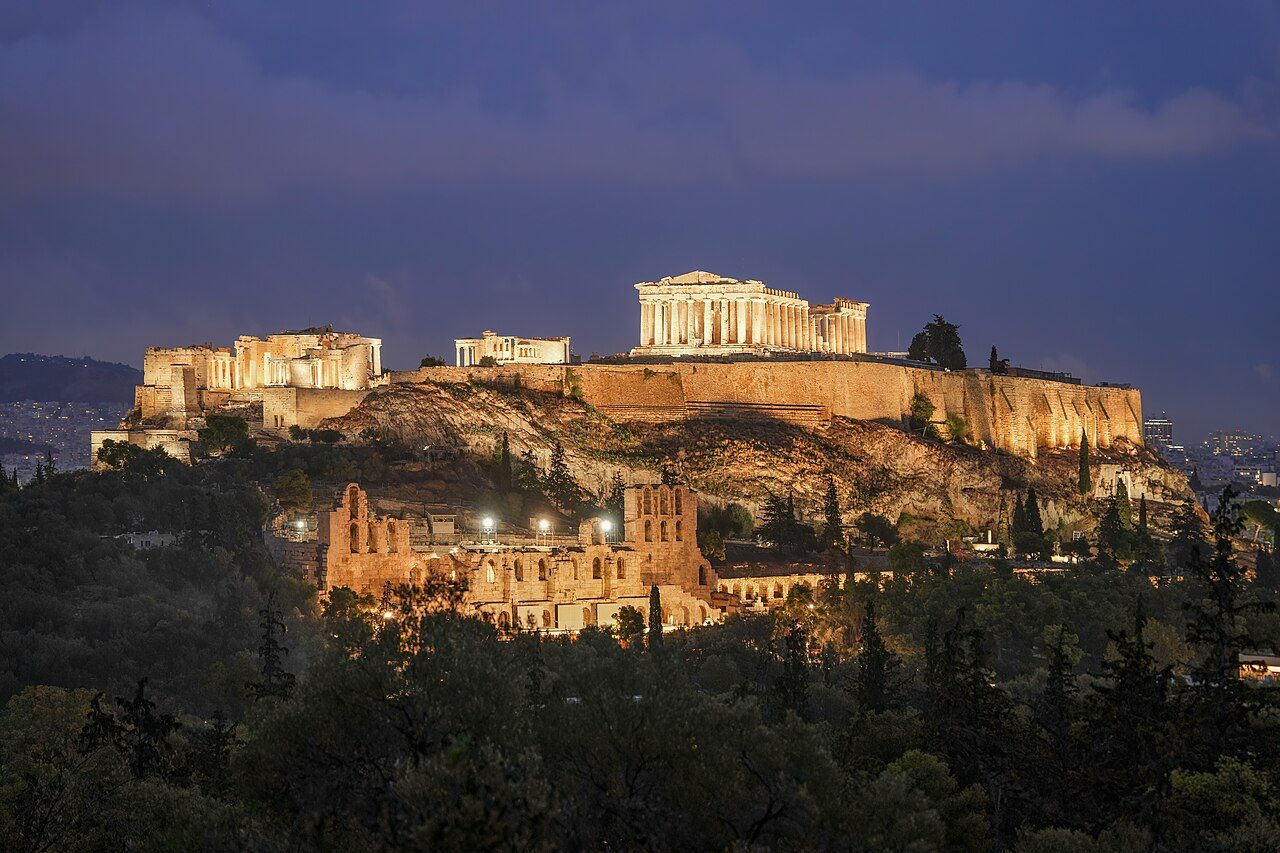
Rising 150 meters above the Attic plain, this jagged limestone citadel represents the crowning achievement of the Golden Age of Athens under the statesman Pericles. Erected primarily between 447 and 406 BCE following the Persian Wars, the sanctuary exemplifies High Classical Greek architecture. At its apex stands the Parthenon, a monumental Doric temple engineered by Ictinus and Callicrates under the artistic direction of the sculptor Phidias. Its 46 fluted exterior columns possess subtle optical refinements, such as *entasis*—an intentional swelling designed to counter visual distortion and make the marble appear weightless. Just north, the Erechtheion contrasts this power with asymmetrical Ionic grace, famously anchored by the Porch of the Maidens, where six draped Caryatid figures shoulder the heavy stone entablature with effortless poise. Passing through the monumental gateway of the Propylaea, travelers navigate pale Pentelic marble worn glass-smooth by twenty-five centuries of footsteps. High above the urban din, the Mediterranean wind whips through the open colonnades, carrying the dry scent of pine and sun-baked earth. The intense Aegean sunlight draws out a warm, honey-toned oxidation within the ancient stone, throwing sharp geometric shadows across the bedrock. Standing along the southern precipice near the compact, elegant Temple of Athena Nike, the sprawling white rooftops of modern Athens unfold toward the shimmering blue expanse of the Saronic Gulf, placing you at the precise physical nexus where Western philosophy, democracy, and monumental art took tangible form.
More in Athens
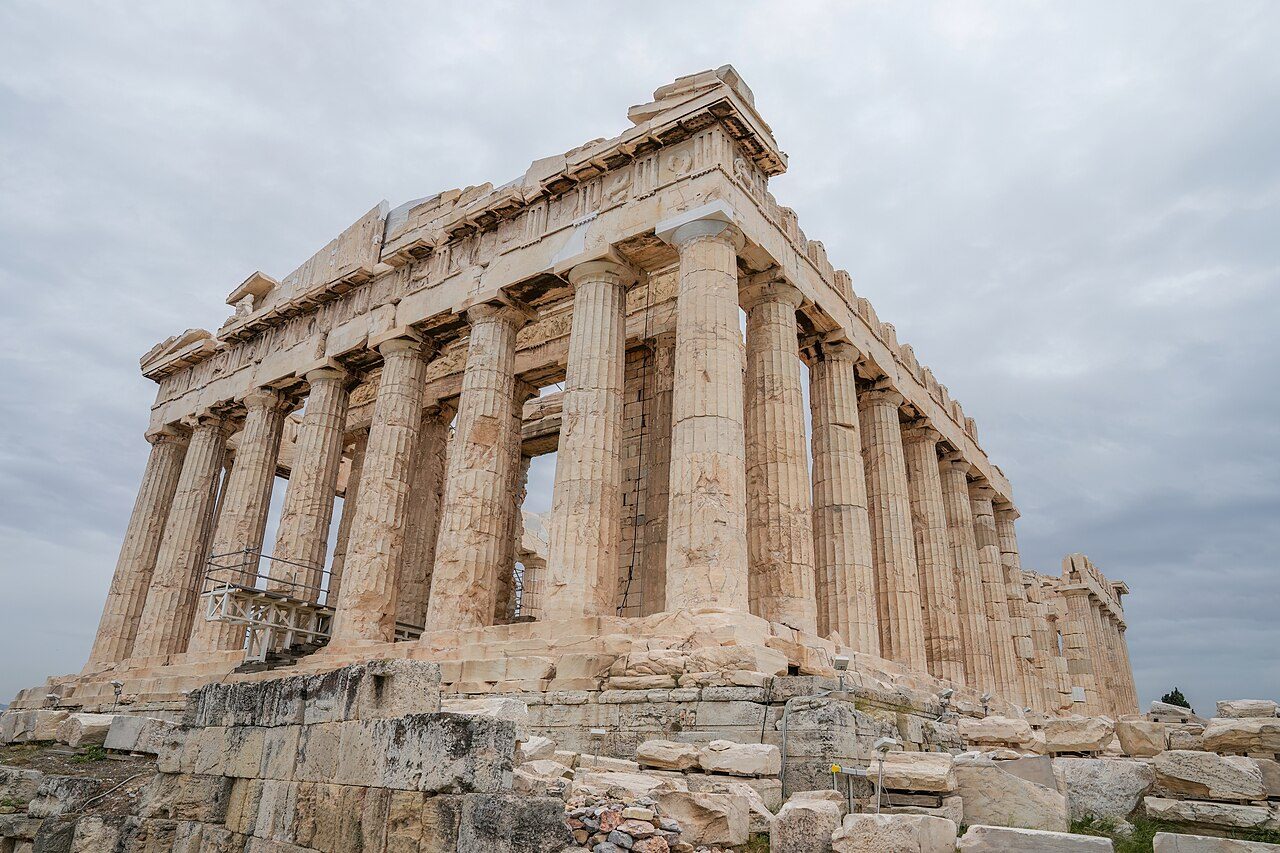
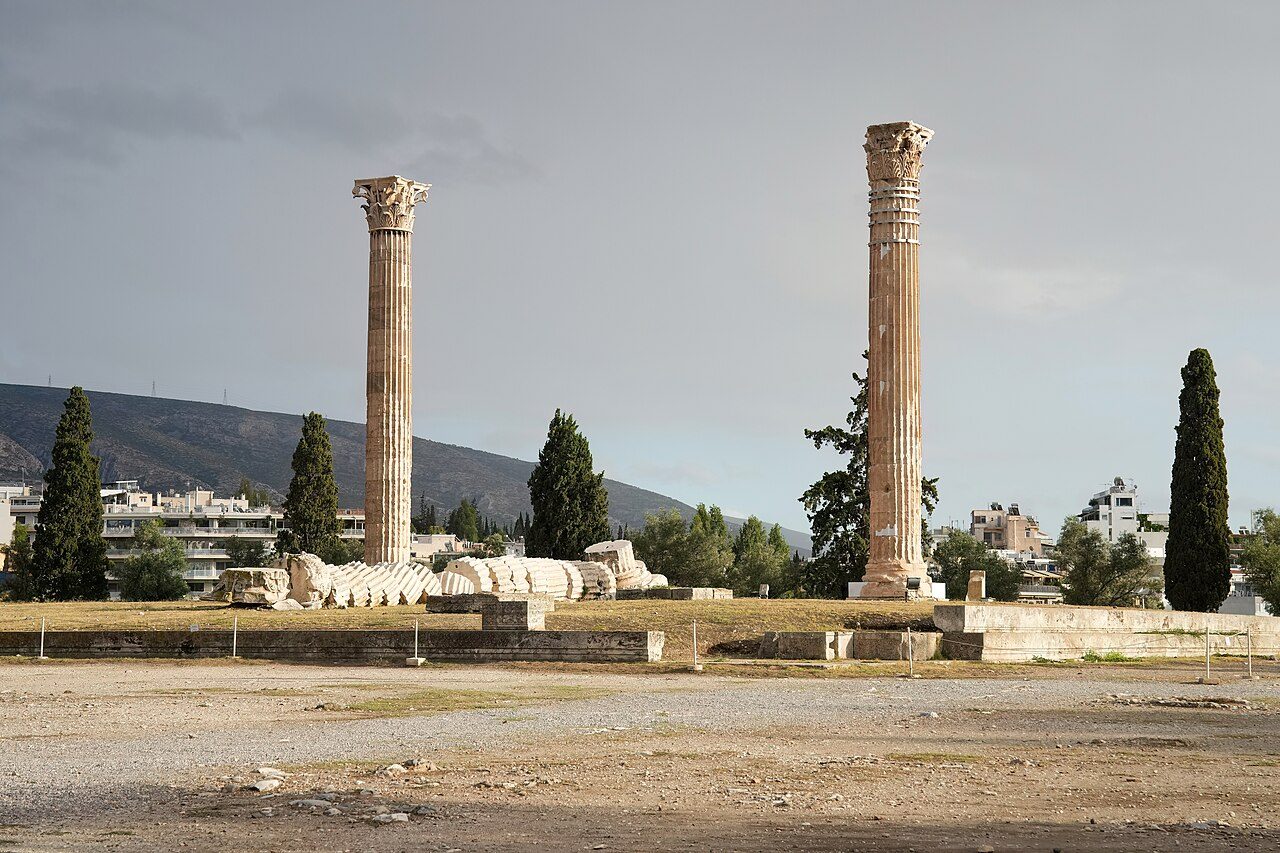
Photo credits (5)
- Giles Laurent, CC BY-SA 4.0, via Wikimedia Commons
- Srishti Sethi, CC BY-SA 4.0, via Wikimedia Commons
- Giles Laurent, CC BY-SA 4.0, via Wikimedia Commons
- JFKennedy at English Wikipedia, Public domain, via Wikimedia Commons
- Giles Laurent, CC BY-SA 4.0, via Wikimedia Commons