 New added
Royal Chapel
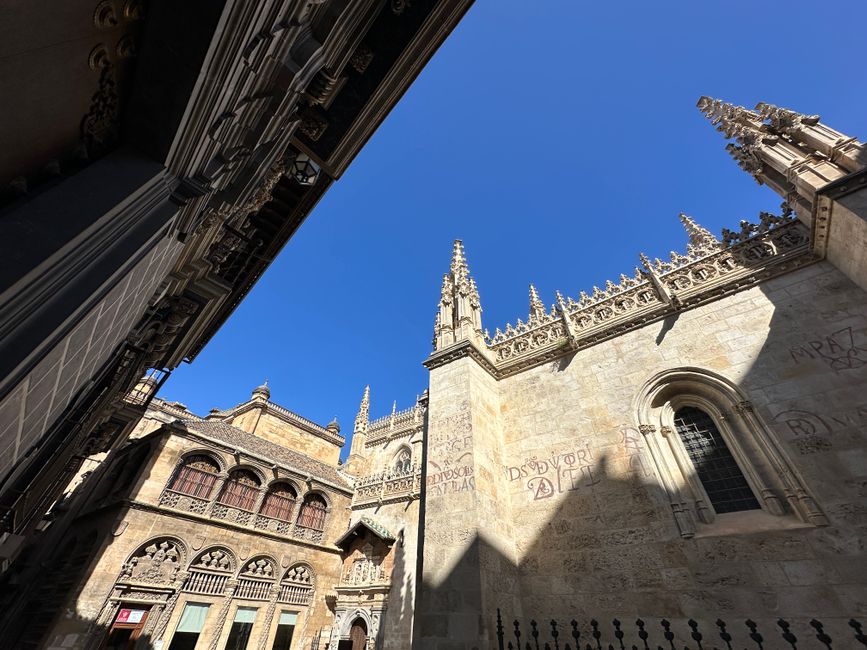
Commissioned by Queen Isabella I and King Ferdinand II in 1504 and completed in 1517, Granada’s Capilla Real stands as the definitive monument to the dawn of unified Spain. Adjoining the city's later Renaissance cathedral, this masterpiece of Isabelline Gothic architecture radiates solemn power through soaring ribbed vaults, elaborate crests, and floriated stone tracery. At its center, framed by an immense, three-tiered gilded wrought-iron screen crafted by master blacksmith Bartolomé de Jaén, lie two grand renaissance cenotaphs sculpted from luminous Carrara marble. Chiseled by Domenico Fancelli and Bartolomé Ordóñez, the effigies of the Catholic Monarchs rest alongside their daughter Joanna of Castile and her husband Philip the Handsome, their stone visages rendered with intimate, lifelike poise. A steep stone staircase delivers visitors from this sunlit grandeur into the austere subterranean crypt below. The sudden drop in temperature and absence of ornamentation amplify the visceral impact of the space: sitting just feet away upon a simple brick ledge are the raw, blackened lead coffins actually containing the sovereigns' bones. Returning to the adjacent sacristy museum, the historical narrative becomes startlingly personal. Travelers peer into glass vitrines displaying Isabella’s own gilded silver crown and Ferdinand’s battle sword, surrounded by the queen’s exceptional private art collection of Flemish masterworks by Rogier van der Weyden, Hans Memling, and Dirk Bouts.