 New added
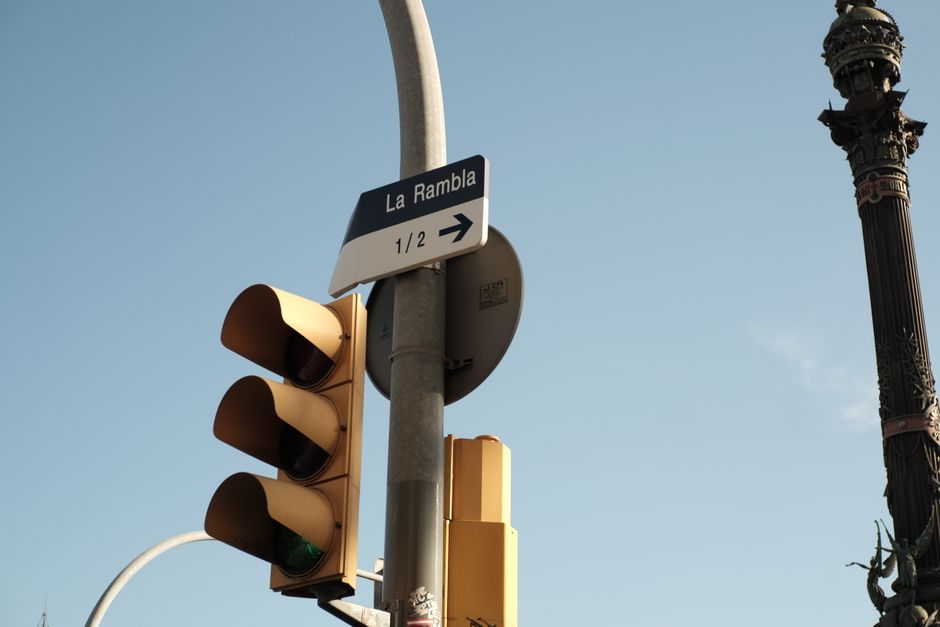
La Rambla
Tracing the contours of a medieval drainage channel outside the 13th-century city walls, this 1.2-kilometer corridor evolved into a grand pedestrian promenade following the demolition of the ramparts in 1766. Beneath an arched canopy of London plane trees, the walkway bridges the Gothic Quarter and El Raval, displaying centuries of civic transformation. Midpoint along the avenue, travelers tread directly across Joan Miró’s 1976 *Pla de l’Os* mosaic, a circular pavement installation embedded with cobalt blue, terracotta red, and sunshine yellow tiles. Just paces away stands the neoclassical Gran Teatre del Liceu, an opera house inaugurated in 1847 that survived two devastating fires, its velvet halls anchoring the cultural legacy that poet Federico García Lorca famously wished would never end. At the northern crest, visitors gather around the 19th-century cast-iron Font de Canaletes, drinking from curved bronze spouts to fulfill the legend that a single sip guarantees a return to the city. Drifting southward past the art nouveau umbrellas and carved dragon clinging to Casa Bruno Cuadros, the air thickens with roasted almonds, crushed ice, and sea brine. Beneath the sweeping 1914 wrought-iron roof of the Mercat de Sant Josep de la Boqueria, sensory chaos erupts among pyramids of blood oranges, cured legs of *jamón ibérico*, and glistening Mediterranean catches. The stone boulevard slopes gently toward the harbor's Christopher Columbus Monument, filled with the rustle of dry leaves and the clink of porcelain on outdoor café terraces.