 New added
Pompeii
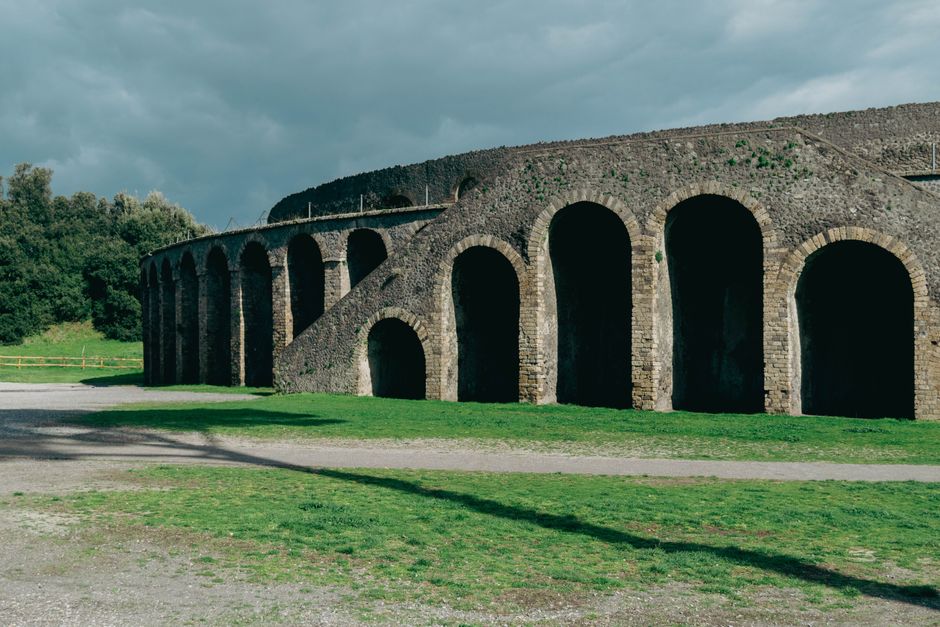
Frozen in the autumn of 79 AD beneath a catastrophic deluge of pumice and ash from Mount Vesuvius, Pompeii preserves the daily mechanics of the early Roman Empire with startling intimacy. Stepping onto the Via dell’Abbondanza, your boots meet massive polygonal basalt paving stones, still scored with deep ruts carved by iron-rimmed chariot wheels. Raised pedestrian crossing stones bridge the high sidewalks—originally engineered to keep citizens dry above street runoff—leading toward the expansive Forum, where the ruined Temple of Jupiter stands framed against the jagged, ever-looming caldera that dictated the city’s sudden demise. Beyond the public basilicas and thermal baths, domestic sanctuaries like the sprawling House of the Faun showcase classic atrium-and-peristyle architecture, where fluted tufa columns enclose once-verdant gardens. In the semi-suburban Villa of the Mysteries, walls still glow with vibrant cinnabar-pigmented "Pompeian red," displaying life-sized fresco cycles of Dionysian rites that retain their rich luster after two millennia buried in darkness. The modern hum of neighboring Naples vanishes amid the roofless masonry, leaving travelers in an eerie stillness, punctuated by direct encounters with the haunting plaster casts of victims caught in their final, desperate postures of defense.