 New added
Allianz Arena
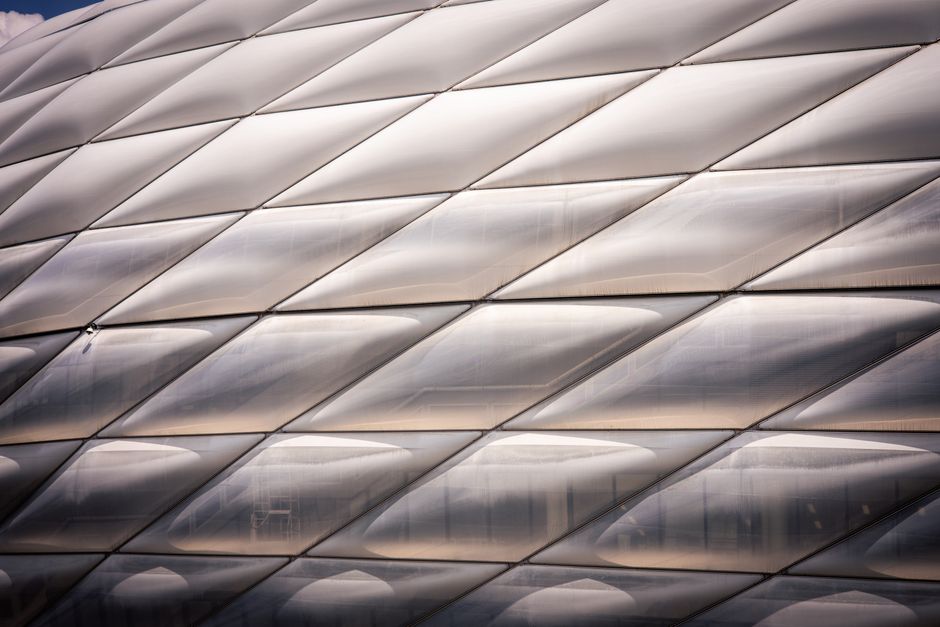
Approaching across the windswept Esplanade in Munich’s northern Fröttmaning district, the Allianz Arena rises like an ethereal, luminous vessel against the Bavarian sky. Conceived by Swiss architects Jacques Herzog and Pierre de Meuron and inaugurated in May 2005 just ahead of the 2006 FIFA World Cup, this triumph of contemporary structural expressionism abandoned traditional stadium masonry for radical translucency. Its exterior shell comprises 2,784 diamond-shaped ETFE (ethylene tetrafluoroethylene) foil cushions, continuously fed by air pumps. Come dusk, this pneumatic skin transforms into Europe's most famous architectural canvas, blazing in vivid, electric red to signal home turf for FC Bayern Munich. Stepping beyond the pneumatic outer skin, travelers enter a cavernous, three-tiered colosseum of 75,000 steeply raked seats, engineered so tightly that crowd noise funnels into an ear-splitting acoustic roar over the pristine hybrid pitch. Touring the complex takes you from the sensory-rich players' tunnel—where LED arrays mimic matchday adrenaline—directly to the adjacent FC Bayern Museum, the largest club museum in Germany. Standing pitchside beneath the cantilevered roof, the sheer scale of modern engineering reveals itself, blending the clinical precision of 21st-century German design with the palpable, historic ghosts of Franz Beckenbauer and European football glory.