 New added
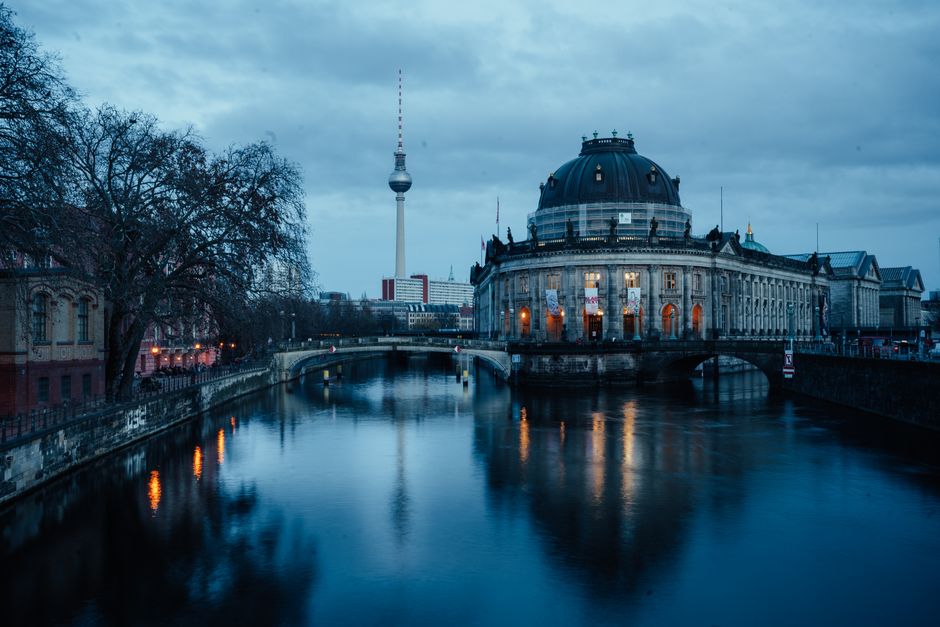
Museum Island
Conceived in 1841 by King Friedrich Wilhelm IV as a sanctuary for art and science, this sand-bank enclave in the River Spree represents the pinnacle of Prussian Enlightenment ambition. Master architect Karl Friedrich Schinkel established its neoclassical tone with the Altes Museum (completed 1830), where eighteen fluted Ionic columns front an expansive rotunda inspired by Rome’s Pantheon. Wandering the granite-paved promenades along the water, visitors face an architectural timeline stretching from the neo-Baroque copper dome of the Bode Museum to the stark, modern limestone colonnades of the James-Simon-Galerie. The exterior facades still bear the pockmarked scars of World War II artillery, left intentionally exposed beneath the soaring pediments as tangible markers of 20th-century devastation. Step beyond the threshold of the Neues Museum, and the ambient hum of river traffic gives way to an awe-inspiring stillness. Beneath soft, directional gallery lighting stands the painted limestone bust of Queen Nefertiti (circa 1345 BCE), her delicate, stucco-layered contours and singular crystal eye commanding an entire octagonal room. Nearby, travelers crane their necks before the towering, glazed lapis-lazuli bricks of Babylon’s Ishtar Gate and the colossal marble facade of the Roman Market Gate of Miletus. Standing amid these towering relics, one feels the visceral weight of millennia of human craft, framed within a landscape rebuilt with breathtaking architectural precision.