
 New added
Katara Cultural Village
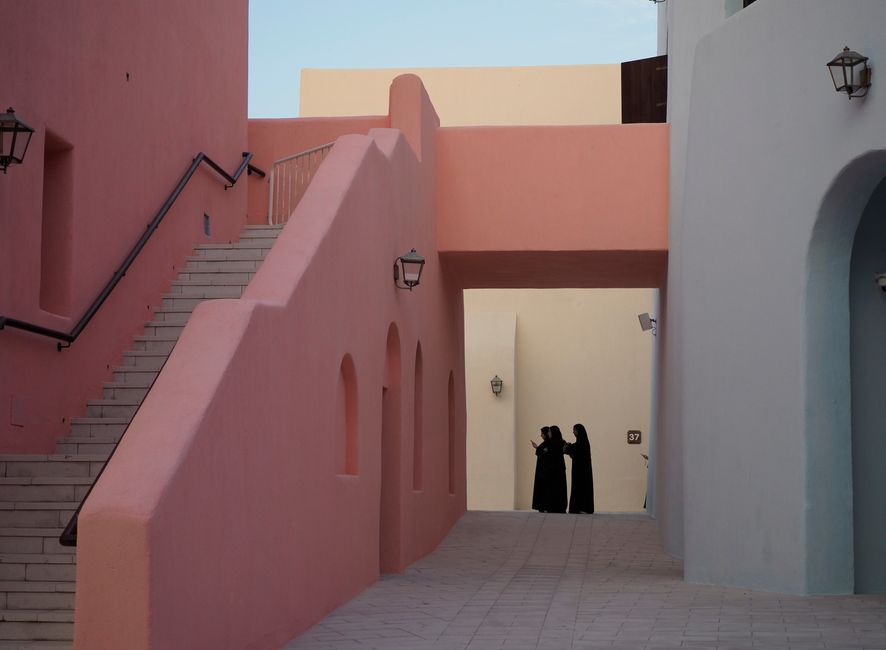
Conceived under the vision of Father Emir Sheikh Hamad bin Khalifa Al Thani and inaugurated in October 2010 to coincide with Doha’s tenure as the Arab Capital of Culture, Katara revives the peninsula’s oldest cartographic moniker—"Catara," documented by geographer Claudius Ptolemy in 150 CE. Rather than mimicking modern high-rise urbanism, the complex reinterprets the traditional Qatari *freej* (neighborhood), interlacing narrow, shaded alleyways with grand monuments. Anchoring the waterfront stands a massive 3,275-square-meter Greco-Roman amphitheater carved from pale limestone, engineered to seat 5,000 spectators while framing panoramic views of the Persian Gulf through soaring, Islamic-arched porticoes. Wandering through the winding *sikkak* (passageways), travelers encounter striking contrasts of color and form, beginning with the Katara Mosque, designed by Turkish architect Zeynep Fadıllıoğlu. Its exterior glows with intricate Persian- and Ottoman-inspired tilework rendered in deep lapis, turquoise, and violet, offset by an ornate, cylindrical minaret. Steps away, two perforated, conical mud-brick pigeon towers slice upward into the desert sky, preserving an ancient regional form of vernacular architecture. Standing between these earthen structures and the lustrous, sun-drenched mosaics of the nearby Ottoman-style Gold Mosque, visitors catch the briny sea breeze mingling with frankincense, surrounded by hand-carved gypsum friezes and the gentle wash of waves against the marble-paved corniche.
More in Doha
Photo credits (2)
- Christine und Hagen Graf, CC BY 2.0, via Wikimedia Commons
- Musab.hawamda, CC BY-SA 4.0, via Wikimedia Commons