
 New added
Souq Waqif
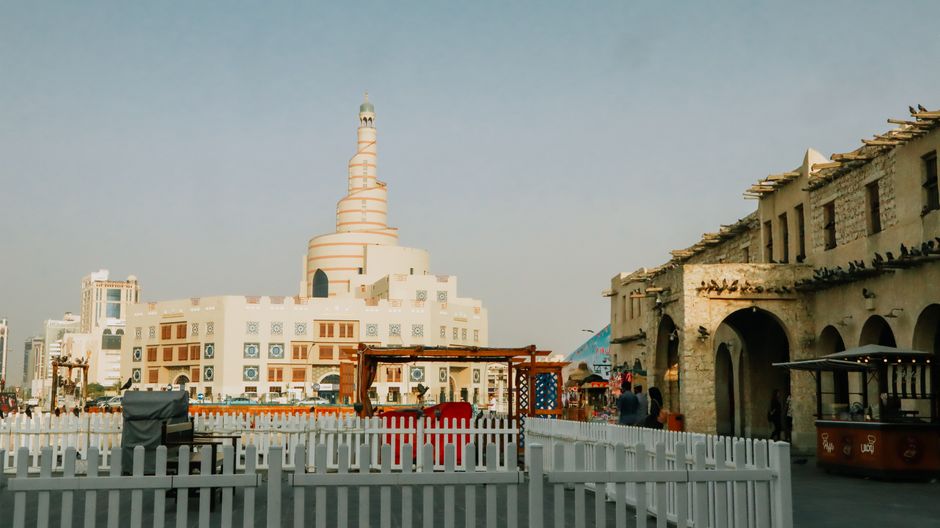
Long before Doha’s glass skyline rose, Bedouin nomads gathered at the mouth of the dried riverbed, Wadi Musheireb, to trade livestock, wool, and pearls while standing above tidal waters—giving rise to the name Souq Waqif, or "the standing market." Following a devastating fire in 2003, Qatari architect Mohamed Ali Abdulla directed a painstaking 2006 restoration that peeled away modern concrete to revive 19th-century Gulf vernacular architecture. Today, the marketplace's labyrinthine passages are framed by thick, mud-rendered stone walls, heavy timber doors, and shaded colonnades supported by exposed *danchal* mangrove beams lashed with split bamboo and woven palm mats. Winding through the dim, cooling alleyways, travelers step into an intoxicating sensory tapestry saturated with the resinous perfume of burning *oud* and the tang of burlap sacks mounded with Iranian saffron, sumac, and sun-cured black limes. At the specialized Falcon Souq, hooded peregrines and gyrfalcons sit silently upon cushioned perches beside velvet-lined treatment rooms and leather hood makers. As twilight cools the limestone flagstones, the courtyards erupt in ambient life: the clatter of backgammon tiles spills from open-fronted tea houses, brass *dallah* pots pour steaming streams of cardamom-spiced *gahwa*, and purebred Arabian horses are led past lantern-lit archways back to their royal stables.
More in Doha
Photo credits (2)
- Christine und Hagen Graf, CC BY 2.0, via Wikimedia Commons
- Musab.hawamda, CC BY-SA 4.0, via Wikimedia Commons