
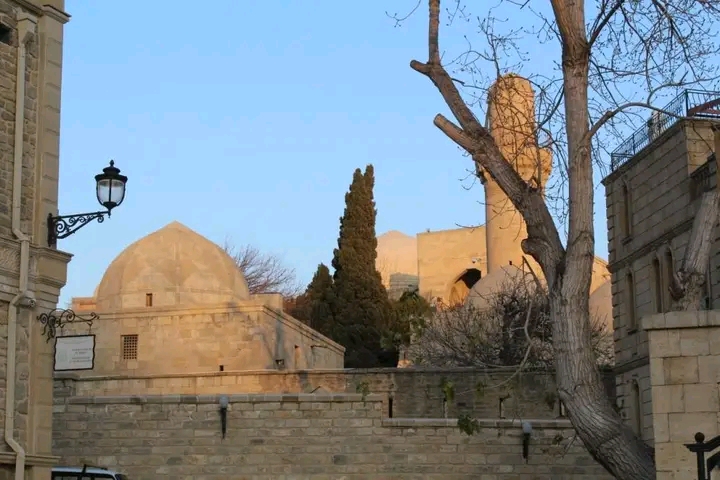
Icherisheher
Enclosed within double ramparts fortified by the Shirvanshah ruler Manuchehr II in the twelfth century, Icherisheher preserves Baku’s medieval heart in weathered, honey-hued Absheron limestone. At the quarter's highest crest sits the fifteenth-century Palace of the Shirvanshahs, commissioned after Khalilullah I relocated the dynastic capital following a devastating earthquake in Shamakhi. The palace complex showcases the Shirvan-Absheron architectural school, marked by the octagonal stone pavilion of the Divankhana, petal-domed bathhouses, and the blue-glazed tiles of the royal mausoleum. Anchoring the lower quarter against the Caspian waterfront, the enigmatic Maiden Tower rises nearly thirty meters high, its cylindrical basalt-and-limestone drum reinforced by a massive eastern buttress whose exact Zoroastrian or defensive origins remain fiercely debated. Wandering this car-free labyrinth pulls travelers into a dense sensory tapestry of shifting light and Silk Road heritage. Narrow alleys twist beneath enclosed wooden balconies that cast sharp geometric shadows over basalt cobblestones. In the vaulted archways of fourteenth-century caravanserais—once resting stops for merchants from Multan and Bukhara—antique dealers display crimson Shirvan flatweaves, brass samovars, and hand-hammered daggers. Salty Caspian gales sweep through the narrow stone corridors, carrying the rich scents of lamb kofta, dried sumac, and brewing thyme tea from subterranean taverns, while the call to prayer rings clear from the unadorned stone minaret of the eleventh-century Muhammad Mosque.
More in Baku
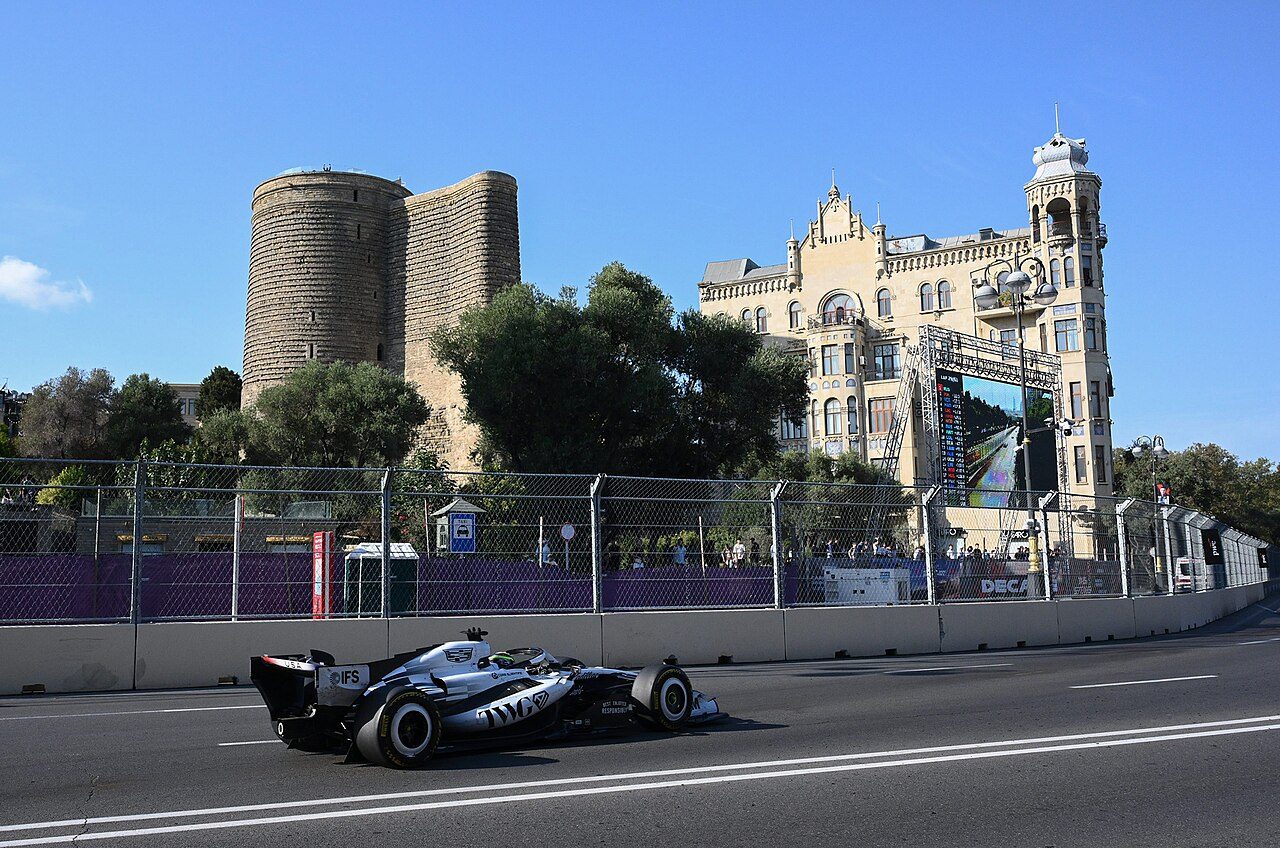
Photo credits (6)
- Press Service of the President of the Republic of Azerbaijan, CC BY 4.0, via Wikimedia Commons
- Avisadehh, CC0, via Wikimedia Commons
- Jesper Ahlin Marceta, CC BY-SA 4.0, via Wikimedia Commons
- Frokor, CC BY-SA 3.0, via Wikimedia Commons
- Rufatazizzade, CC BY-SA 4.0, via Wikimedia Commons
- Interfase, CC BY-SA 3.0, via Wikimedia Commons