
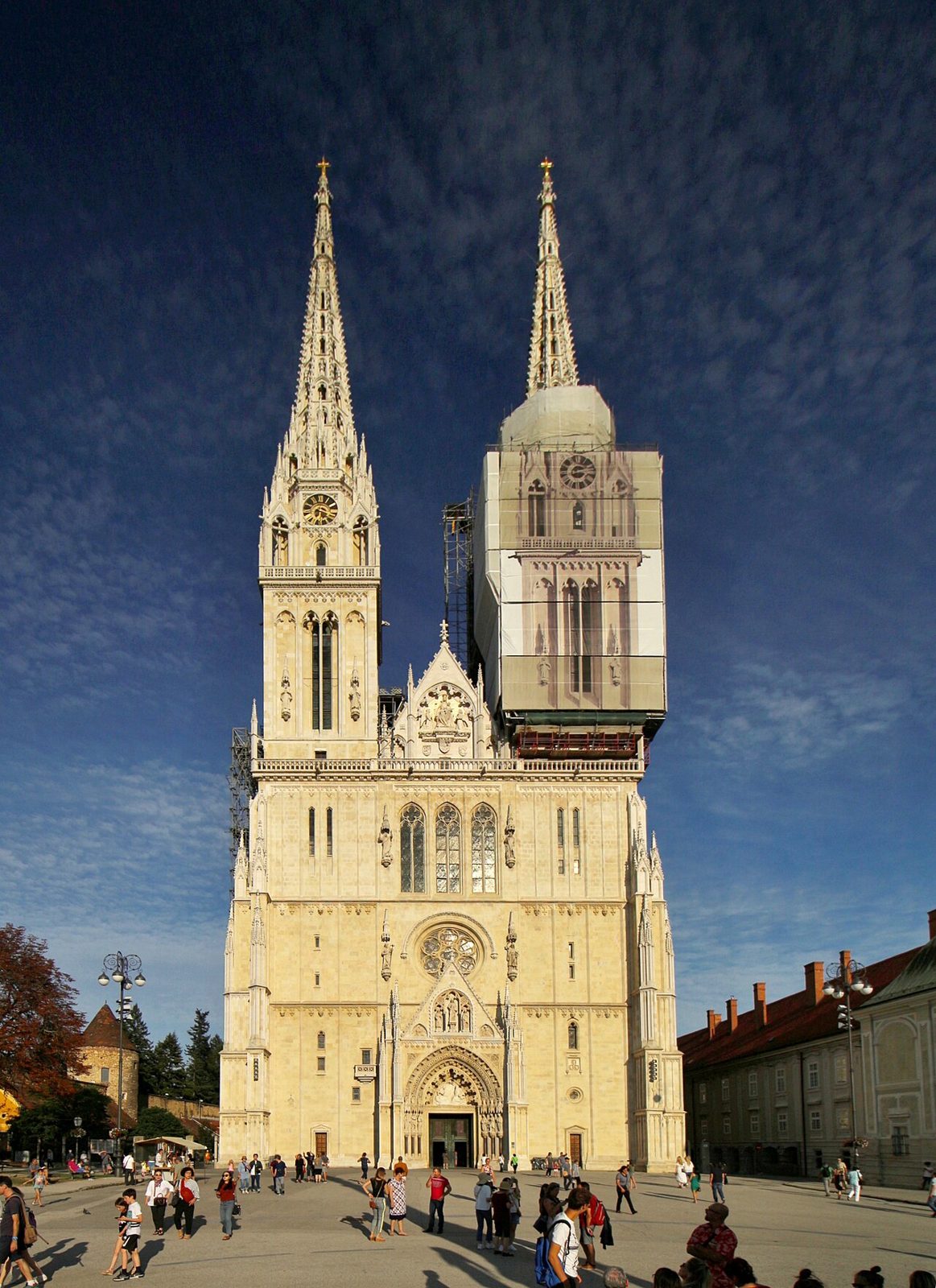
Zagreb Cathedral
Dominating Kaptol’s gentle rise, the Cathedral of the Assumption of the Blessed Virgin Mary serves as Zagreb’s defining vertical anchor. Though King Ladislaus I of Hungary established the diocese here in 1094, the monument standing today is the product of catastrophic resilience. After a devastating earthquake battered the city in 1880, Austrian architect Hermann Bollé re-envisioned the fractured medieval and Baroque edifice into a soaring Neo-Gothic marvel. Encircled by thick 16th-century Renaissance defensive walls and stout round bastions built to repel Ottoman raids, the cathedral's pale limestone facade culminates in twin spires reaching over 100 meters, which have commanded the Upper Town skyline through centuries of political upheaval and periodic tremors. Passing the gilded statue of the Virgin Mary atop the square's Baroque fountain, visitors step beneath pointed portals into an echoing, cavernous sanctuary. Within the dim nave, slender clustered columns shoot upward into intricate ribbed vaulting, casting daylight through stained-glass windows in vibrant pools across polished stone. Behind the high altar rests the cathedral’s emotional and historical core: the crystal and silver sarcophagus of Cardinal Aloysius Stepinac, adorned with expressive reliefs by master sculptor Ivan Meštrović. Standing before the apse, travelers encounter a dense tapestry of Croatian memory, where the quiet scent of frankincense mingles with remnants of 13th-century frescoes and ancient Glagolitic script carved directly into the southern walls.
More in Zagreb
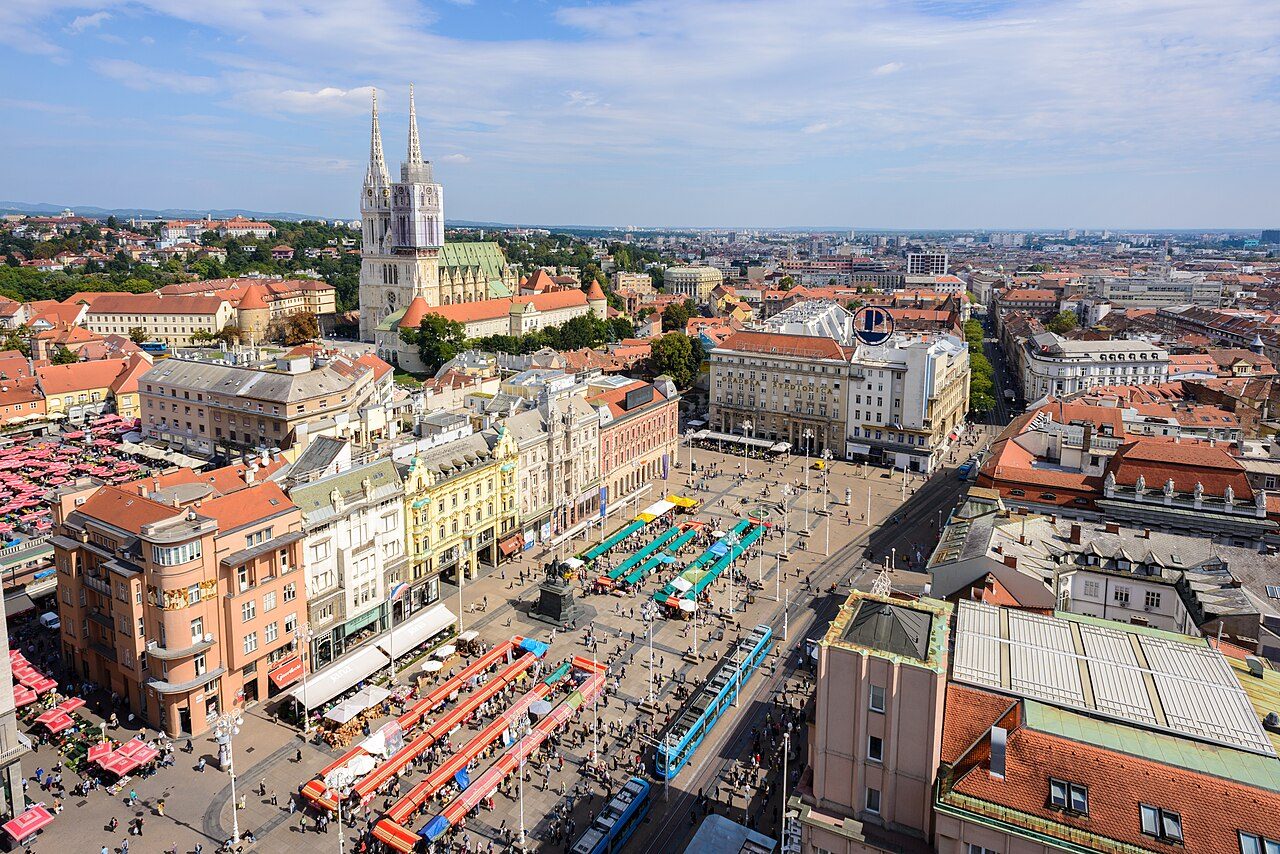
Photo credits (4)
- VitVit, CC BY-SA 4.0, via Wikimedia Commons
- Jorge Franganillo, CC BY 2.0, via Wikimedia Commons
- Robert Nyman, CC BY 2.0, via Wikimedia Commons
- Nick Savchenko from Kiev, Ukraine, CC BY-SA 2.0, via Wikimedia Commons