
Pacaya
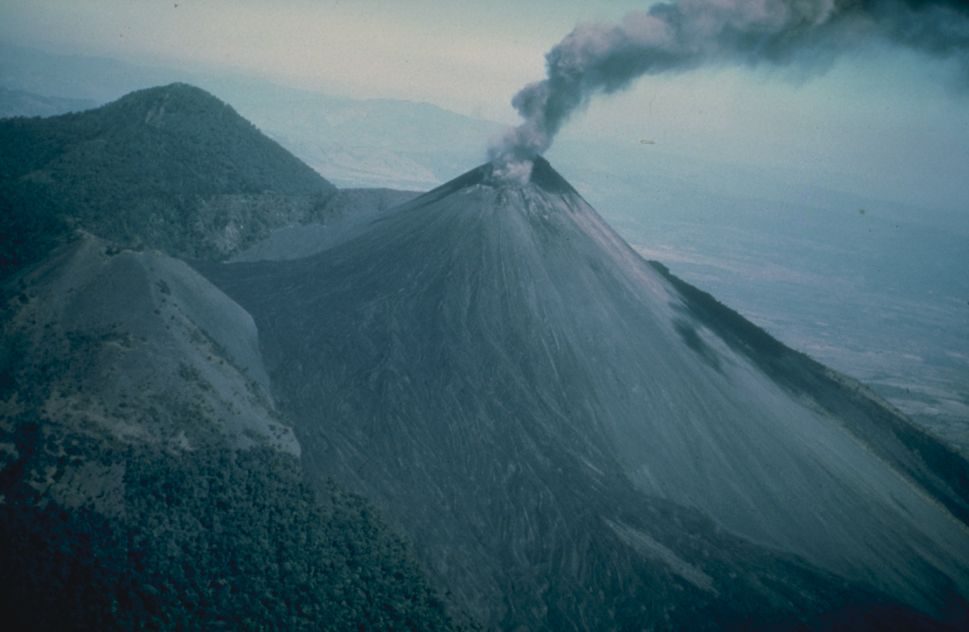
Towering within the Central American Volcanic Arc, Pacaya is a restless basaltic complex whose explosive history has intertwined with nearby colonial Santiago de los Caballeros (Antigua Guatemala) since the Spanish recorded its massive 1565 eruption. After lying dormant for over a century, the mountain dramatically awoke in 1965, steadily constructing the restless Mackenney Cone that commands the skyline today. The terrain is defined by violent contrasts; alpine farmland and highland pine forests terminate abruptly at the rim of an ancient, collapsed caldera, surrendering to a desolate moonscape forged from centuries of overlapping *‘a‘ā* and *pāhoehoe* lava flows. Traversing the shifting volcanic gravel of the mountain's flank, hikers witness this living geology firsthand as the surrounding air grows thick with the scent of sulfur. Reaching the plateau beneath the 2,552-meter summit, subterranean thermal energy radiates directly through the soles of trekking boots, while steam hisses from yellow-crusted fumaroles where travelers roast marshmallows over subterranean heat pockets. Across the jagged, obsidian-black basalt fields, the scorched wasteland offers an arresting vantage point: on clear afternoons, the towering volcanic sentinels of Agua, Acatenango, and the actively smoking Fuego stand in sharp relief against the horizon.
More in Antigua Guatemala
Photo credits (2)
- USGS, Public domain, via Wikimedia Commons
- Unknown author, Public domain, via Wikimedia Commons