
Antigua Guatemala
Framed by the volcanic peaks of Agua, Acatenango, and the smoldering Fuego, Antigua rests in the Panchoy Valley of Guatemala’s central highlands. Walking its strict grid of uneven cobblestones means moving between single-story, pastel-washed walls that hide leafy courtyard gardens and burbling stone fountains from the street. Established in 1543 as the seat of the Spanish Kingdom of Guatemala, the city saw its prominence halted by the catastrophic Santa Marta earthquakes of 1773. The resulting architectural landscape blends functioning colonial buildings with open-sky ruins. The bright yellow Santa Catalina Arch famously spans 5a Avenida Norte, built to allow cloistered nuns to pass between convent buildings without touching the public road. A few blocks away, the facade of Iglesia de la Merced displays dense stucco carvings, while the partially collapsed Convento de las Capuchinas preserves a subterranean crypt and a circular ring of individual monastic cells. Daily life thrives at the bustling Mercado Central, where vendors ladle out bowls of pepián, a rich, roasted-chili and pumpkin-seed stew, beside handwoven textiles. During Semana Santa, the town slows down as residents spend full nights crafting intricate alfombras—carpets of dyed sawdust, flower petals, and pine needles—over the stone streets for religious processions. The historic core is best explored on foot during the dry season between November and April; wear thick-soled shoes to comfortably navigate the historic pavements, and start early in the morning before the afternoon clouds gather over the mountain ridges.
Read more
What to see in Antigua Guatemala
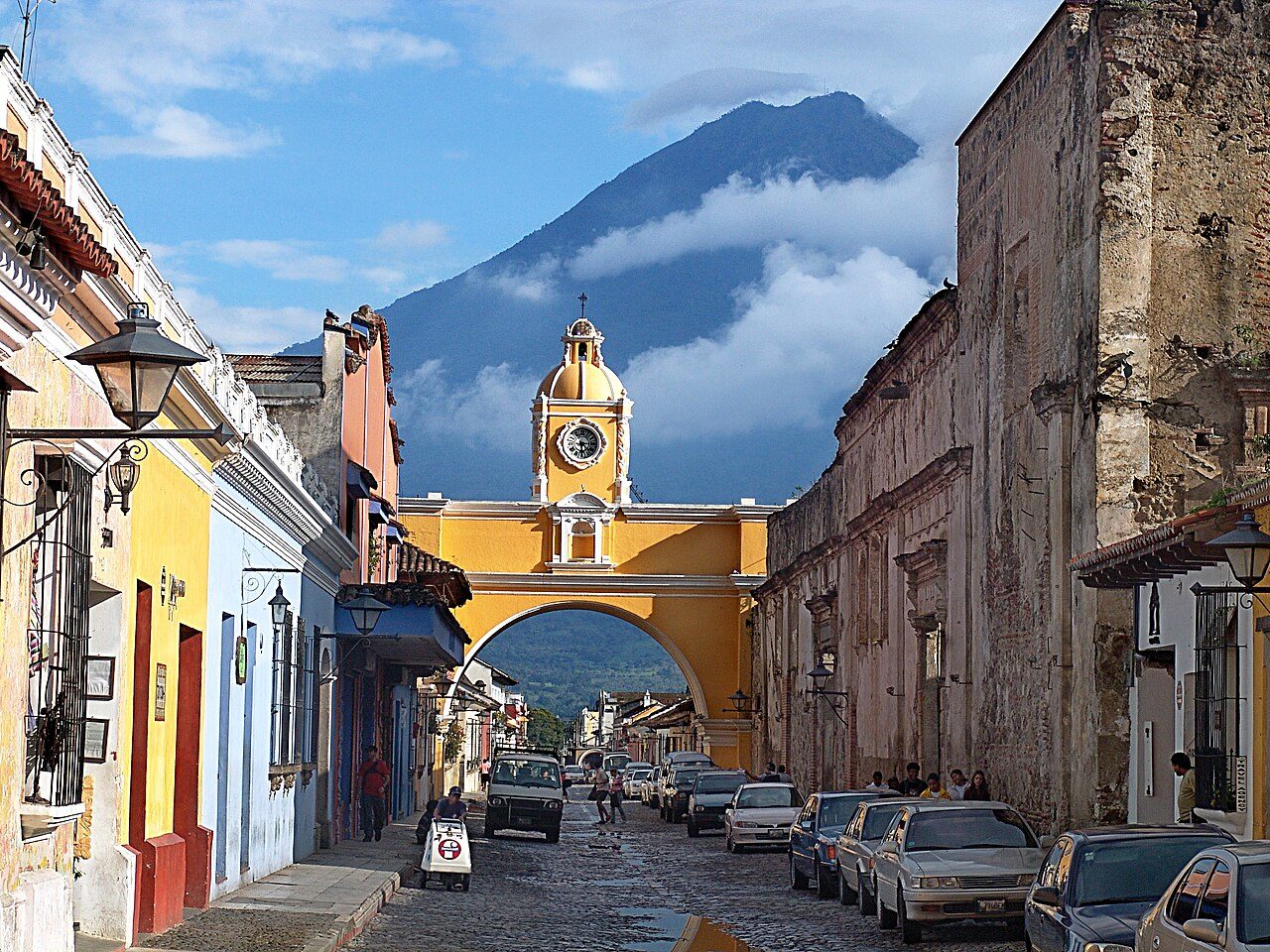
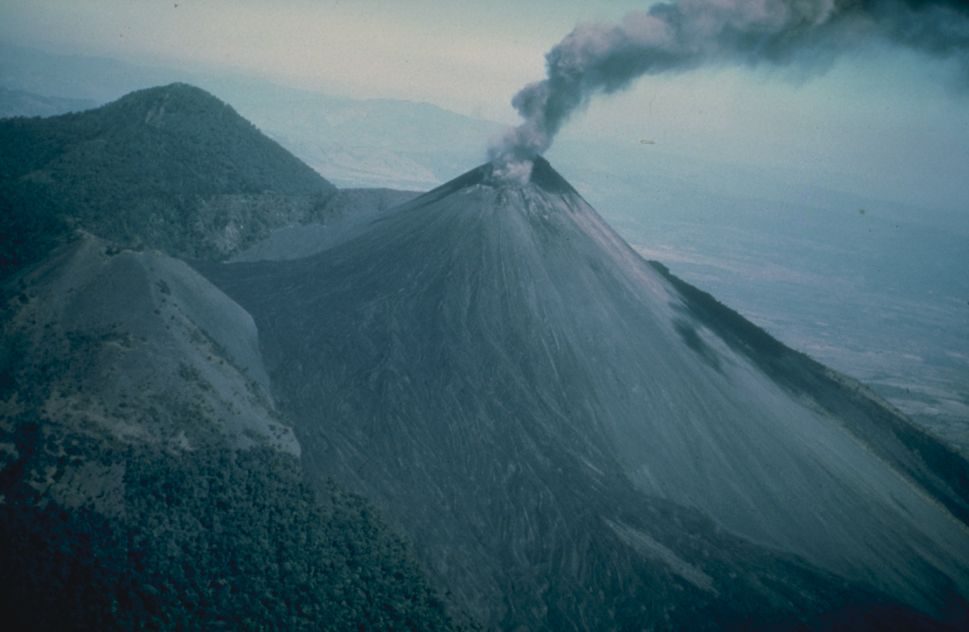
Photo credits (3)
- BladimiroAlvarado, CC BY-SA 4.0, via Wikimedia Commons
- Unknown author, Public domain, via Wikimedia Commons
- USGS, Public domain, via Wikimedia Commons