
Valle de los Ingenios
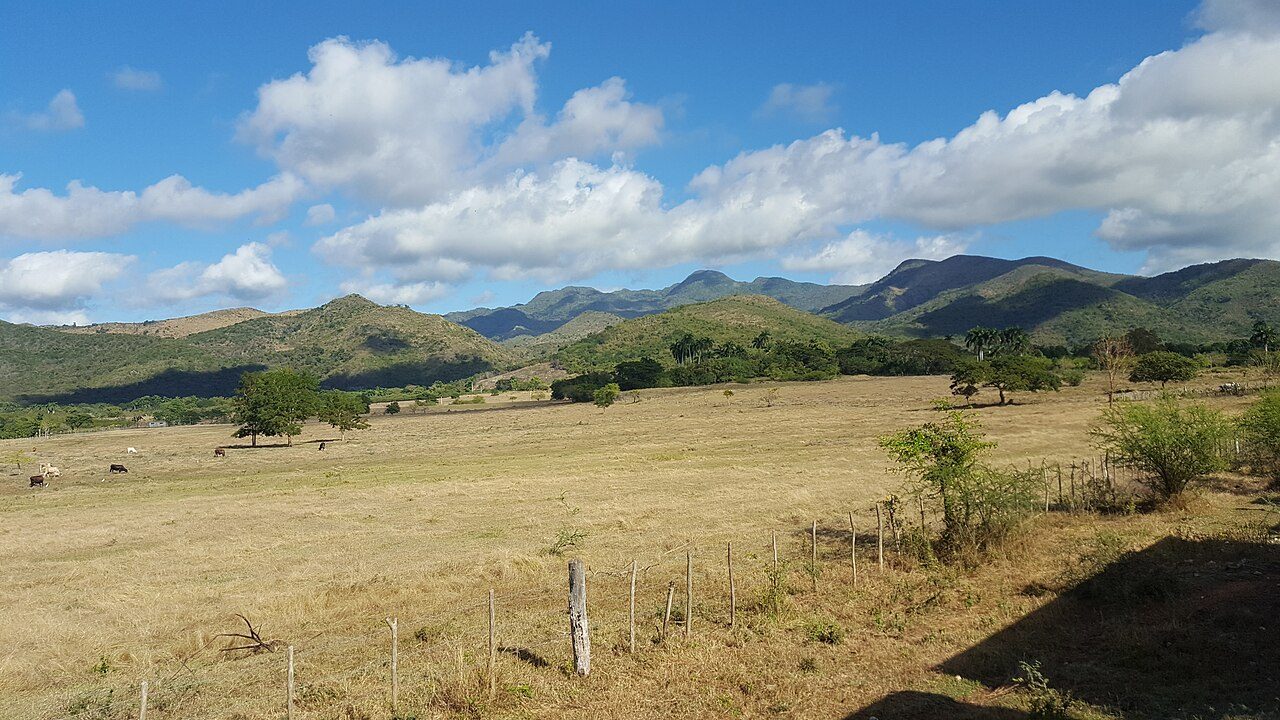
Spreading across one hundred square miles outside Trinidad, the Valle de los Ingenios preserves the monumental machinery and somber legacy of Cuba’s nineteenth-century sugar empire. At its apex around 1827, over fifty steam- and animal-powered mills operated across these plains, sustained by the forced labor of more than eleven thousand enslaved Africans who enriched magnates like Alejo María del Carmen Iznaga. The valley’s architectural anchor is the 1816 Manaca Iznaga Tower, a forty-five-meter neoclassical campanile rising in seven alternating square and octagonal tiers. Originally equipped with a tolling bell to control the grueling dawn-to-dusk shifts in the cane fields, it looms over the yellow-stuccoed plantation house, red-tile storehouses, and the crumbling foundations of communal slave barracks (*barracones*). Today, travelers arrive to the steady cadence of hand-cranked wooden presses extracting cloudy, chilled *guarapo* (sugarcane juice) and the sight of local women displaying intricate *deshilado* needlework beneath shade trees. Ascending the tower’s 137 creaking wooden steps brings visitors past the historic iron bell onto open-air observation platforms. From the top, the trade winds sweep in from the Caribbean across an unbroken panorama: emerald seas of sugar cane, the jagged purple ridges of the Escambray Mountains, and rusted nineteenth-century boiling cauldrons quietly rusting in the grass—a striking juxtaposition of natural grandeur and industrial human history.
More in Trinidad
Photo credits (2)
- Jan Pešula, CC0, via Wikimedia Commons
- Dieter Mueller, dino1948, CC BY-SA 3.0, via Wikimedia Commons