
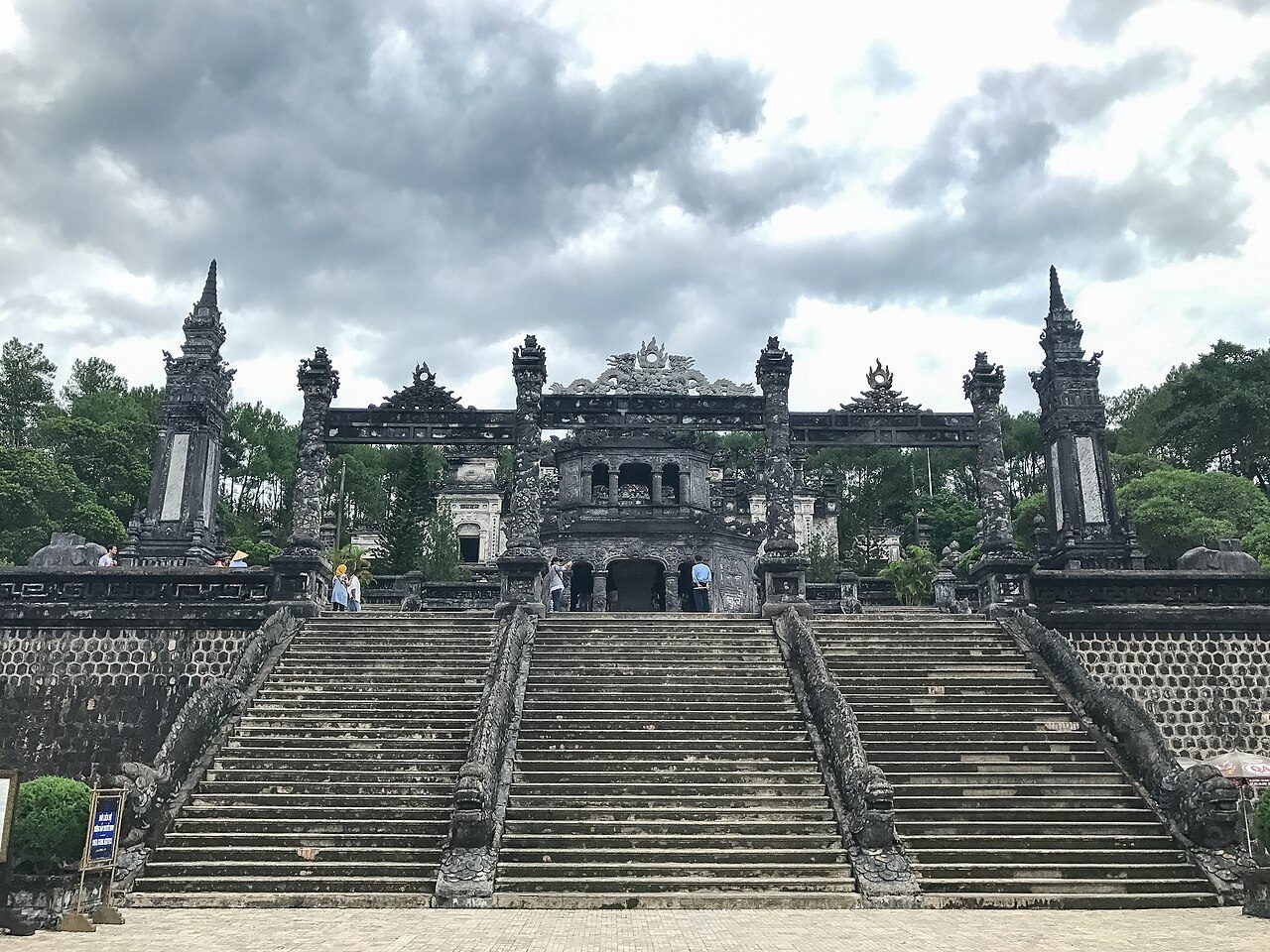
Tomb of Khai Dinh
Clinging to the steep, pine-covered slopes of Chau Chu Mountain, this monument commissioned by Emperor Khải Định took eleven years to construct (1920–1931) and embodies the contentious, French-dominated twilight of the Nguyễn Dynasty. Ascending the 127 dragon-flanked steps, you encounter a stark, blackened-concrete fortress bristling with Gothic spires, Baroque balustrades, and Hindu-inspired reliefs—a jarring departure from the pastoral Confucian harmony of earlier imperial tombs. In the tiered Honor Courtyard, double rows of weathered stone bodyguards, horses, and war elephants stand frozen in allegiance before an octagonal stele pavilion, framing an arresting view of the Annamite foothills below. Crossing into the inner sanctum of the Thiên Định Palace reveals a startling metamorphosis: the brooding gray exterior yields to an opulent, kaleidoscopic explosion of color. Master artisans painstakingly inlaid millions of fragments from broken porcelain bowls, salvaged French wine bottles, and imported glassware into relief mosaics depicting mythical beasts, blooming lotus trees, and four-season motifs. Overhead stretches Phan Văn Tánh’s famed ceiling mural, *Nine Dragons Amidst the Clouds*, painted using his feet and hands. Beneath a one-ton, silk-fringed concrete canopy sits a life-sized, gold-leafed bronze effigy of the emperor—cast in Paris in 1920—shimmering under golden chandeliers directly above his crypt, leaving you surrounded by the extravagant, eccentric defiance of Vietnam’s penultimate ruler.
More in Hue
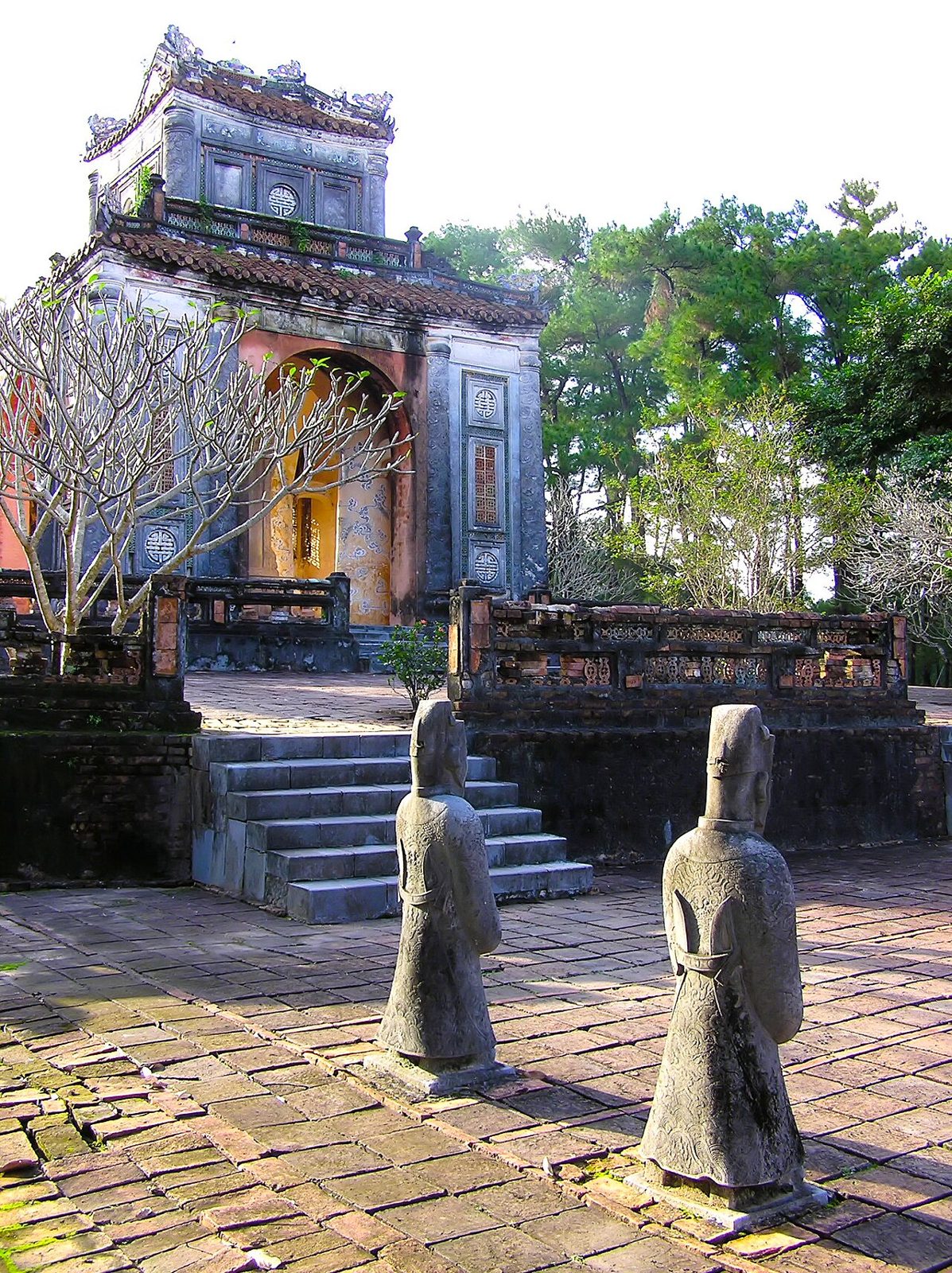
Photo credits (4)
- dronepicr, CC BY 2.0, via Wikimedia Commons
- Kandukuru Nagarjun, CC BY 2.0, via Wikimedia Commons
- Lưu Ly, Public domain, via Wikimedia Commons
- BluesyPete, CC BY-SA 3.0, via Wikimedia Commons