
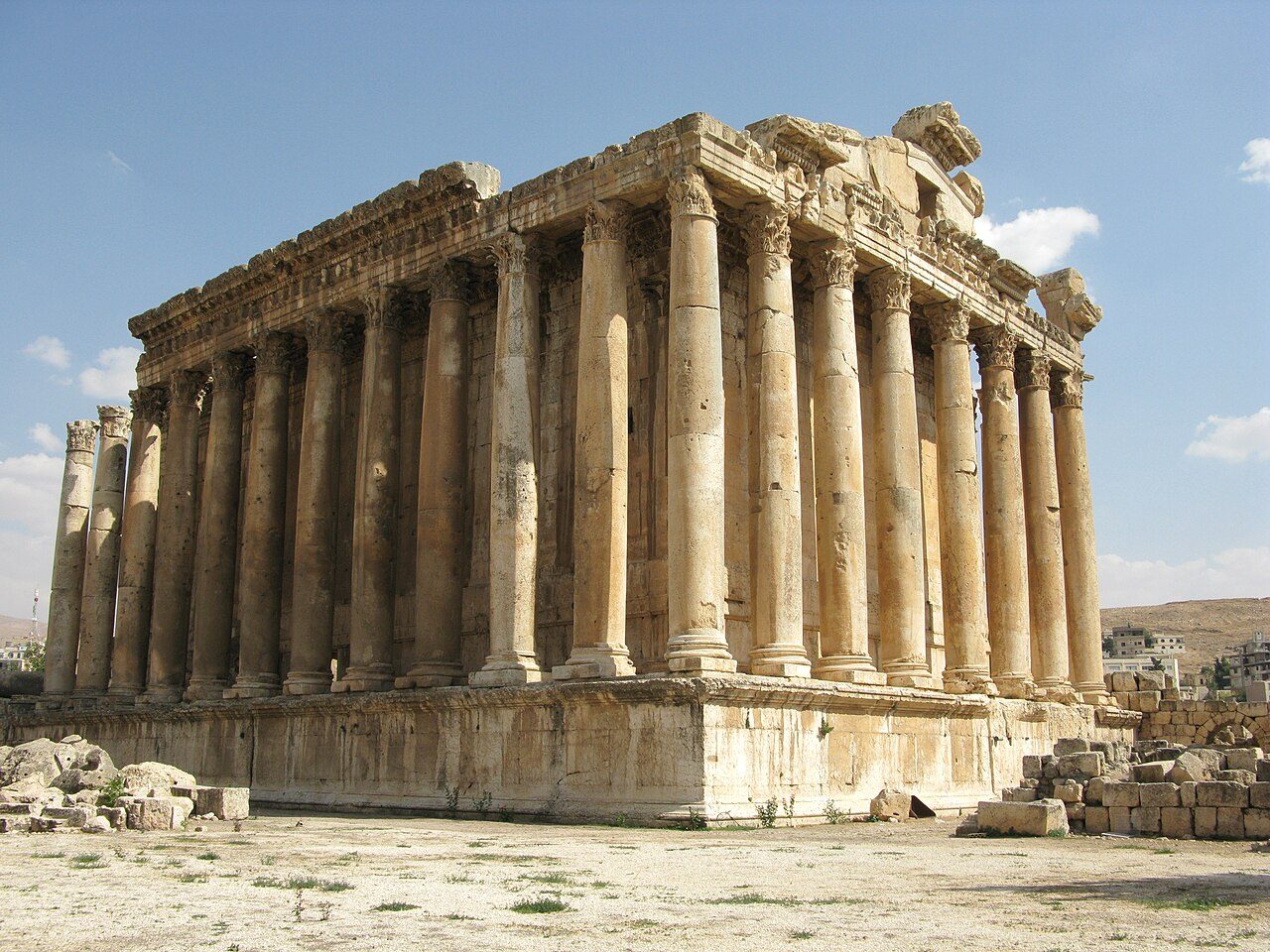
Temple of Bacchus
Commissioned during the reign of Emperor Antoninus Pius around 150 CE and completed under Septimius Severus, the Temple of Bacchus stands as antiquity's most intact and colossal surviving Roman sanctuary. Dwarfing the Parthenon in sheer scale, this Imperial Roman masterpiece commands the Bekaa Valley with forty-two towering Corinthian columns quarried from local honey-gold limestone, each soaring nearly twenty meters high. Walking beneath the peripteral colonnade reveals a monumental entrance portal, its monolithic jambs carved with astonishing precision. Here, deep stone reliefs swirl with bacchic iconography: twining grapevines, laughing satyrs, dancing maenads, and heads of grain that celebrate both ecstatic intoxication and agricultural fertility. Stepping across the threshold into the roofless, cavernous *naos*, visitors are immediately humbled by the sheer megalithic engineering of the ancient world. Morning light cuts through the shadows, illuminating two tiers of fluted, engaged half-columns and sculpted wall niches that once sheltered pagan idols. Ascending the worn stone steps toward the elevated *adyton*—the inner sanctum where mystery rites unfolded—travelers encounter a striking stillness scented by dry mountain cedar, framed by the jagged peaks of the Anti-Lebanon range. Standing amidst these colossal, tumbled architraves and soaring entablatures, the enduring, theatrical might of Rome’s eastern frontier feels startlingly immediate.
More in Baalbek
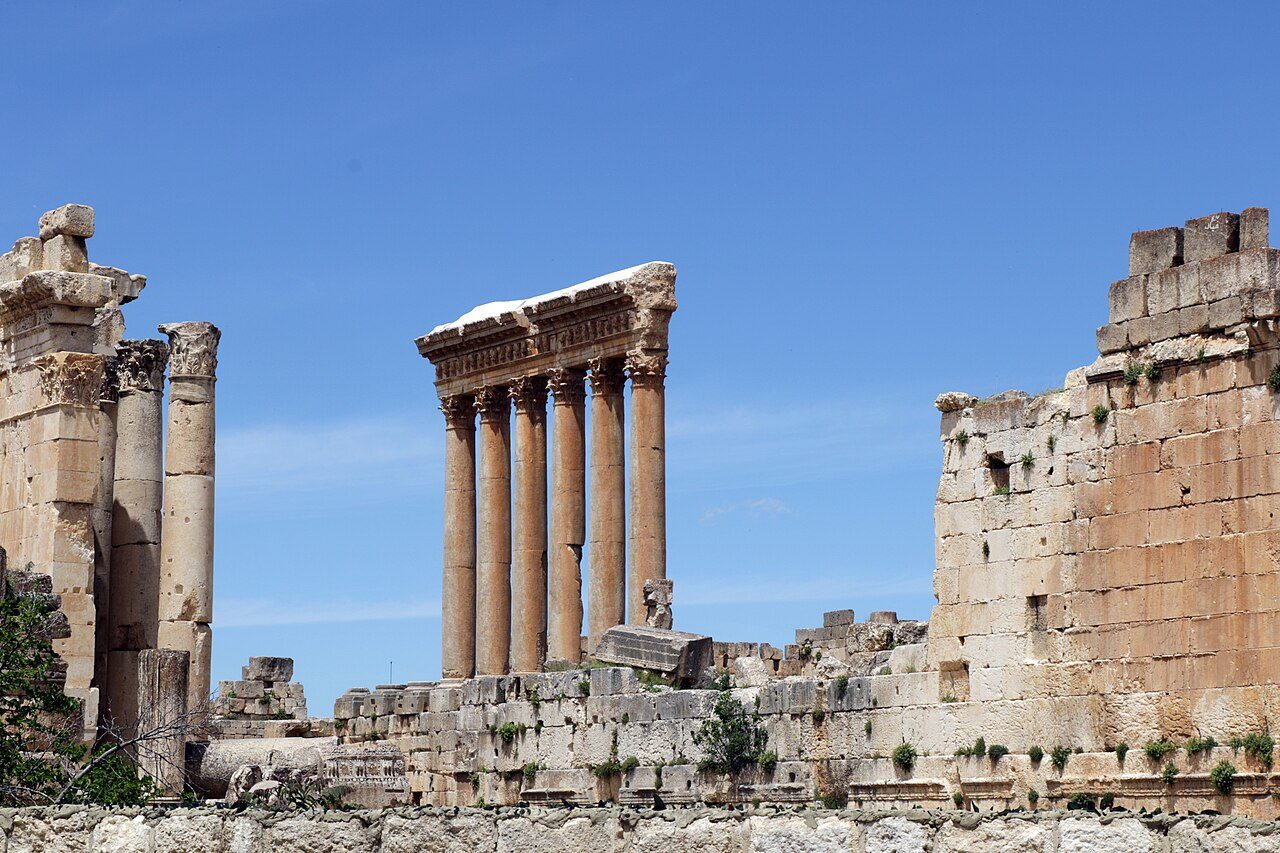
Photo credits (2)
- Vyacheslav Argenberg, CC BY 4.0, via Wikimedia Commons
- NidalSolh, CC BY-SA 4.0, via Wikimedia Commons