
Baalbek
Perched at an elevation of 1,170 meters in the fertile Bekaa Valley, Baalbek rests between the Mount Lebanon and Anti-Lebanon ranges. Walking its sun-bleached avenues feels intimate yet monumental, as ordinary residential quarters and fruit orchards give way abruptly to colossal limestone monoliths. The dry mountain air carries the scent of roasted coffee and woodsmoke through streets where daily commerce unfolds directly in the shadow of antiquity. Under the Emperor Augustus around 15 BC, the Roman Empire transformed this ancient sanctuary into Heliopolis, embarking on centuries of grand construction. Travelers can trace this ambition at the Temple of Jupiter, where six standing Corinthian columns reach over twenty meters high, and at the neighboring Temple of Bacchus, notable for its intact exterior walls and finely carved stone portal. Just south of town lies the ancient quarry containing the Hajar al-Hibla, an abandoned monolith weighing roughly one thousand tons, while across from the ruins, the 1874 Hotel Palmyra preserves antique furniture and guestbooks signed by generations of travelers. Local bakeries anchor community life, filling the air with the aroma of sfiha Baalbakiyya, square pastries packed with minced lamb, pine nuts, and tangy pomegranate molasses. In July and August, the Roman courtyards host the Baalbeck International Festival, staging classical concerts and theatre under the evening sky. For clear light and cool temperatures, visit during spring or autumn. Arriving in the early morning ensures peaceful access to the temple precinct, and the compact town center is easily navigated on foot.
Read more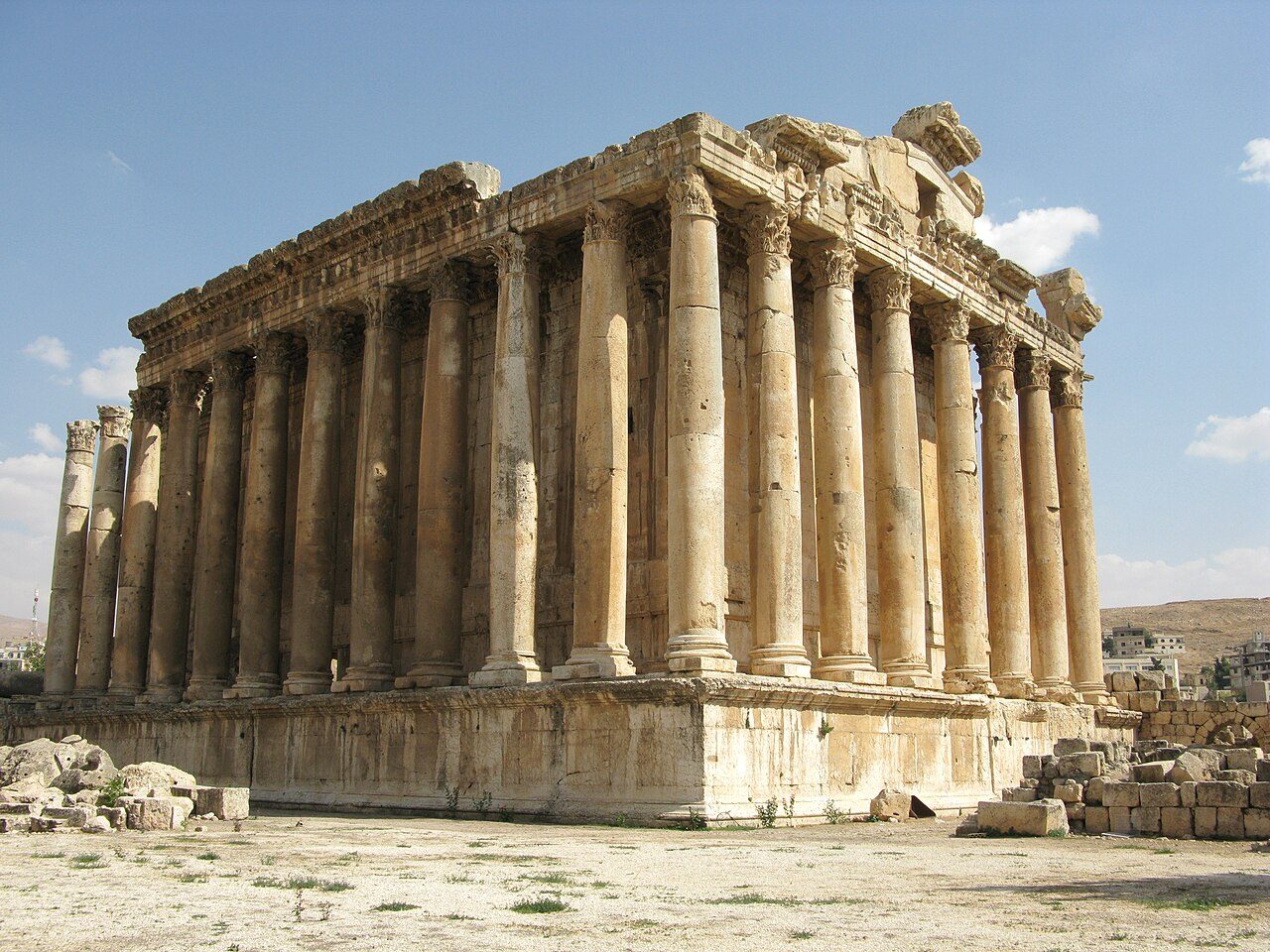
What to see in Baalbek
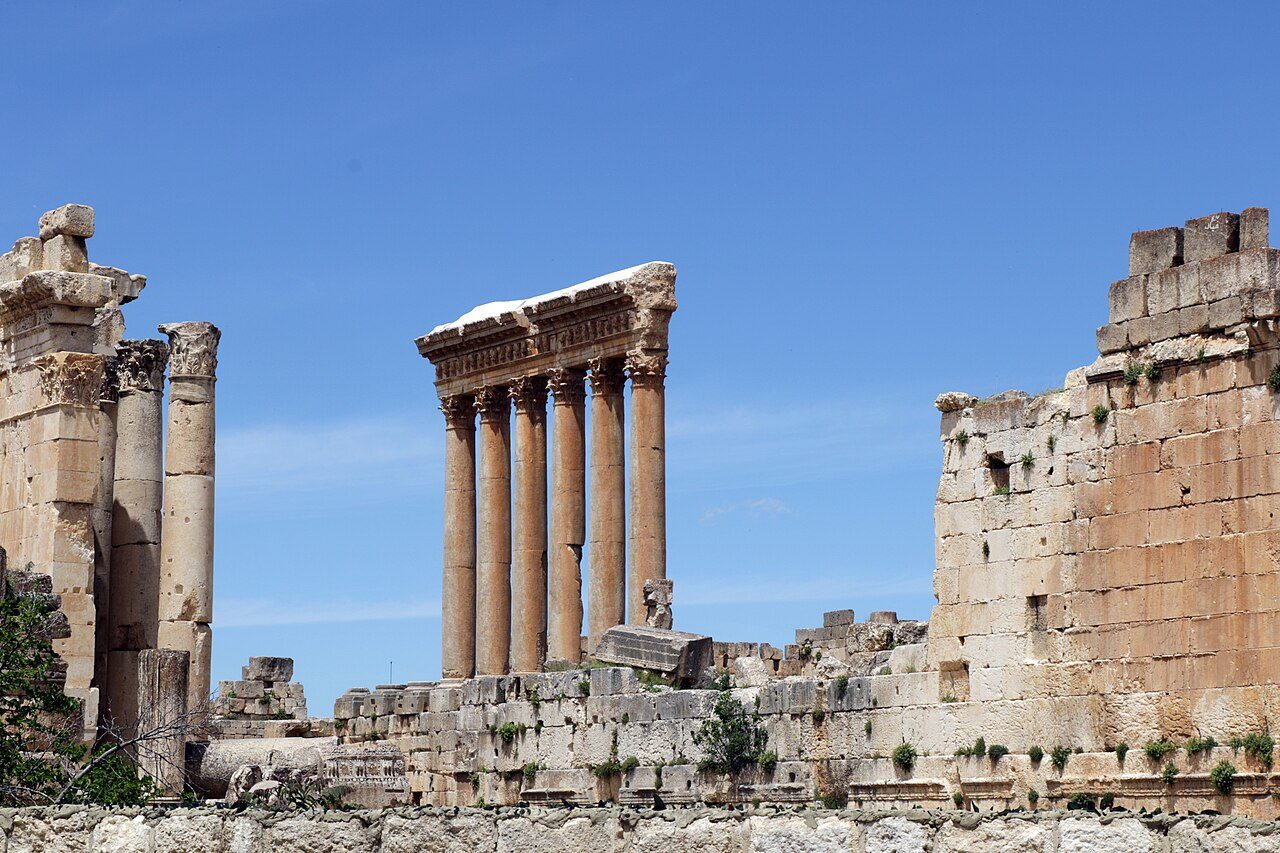
Photo credits (2)
- Vyacheslav Argenberg, CC BY 4.0, via Wikimedia Commons
- NidalSolh, CC BY-SA 4.0, via Wikimedia Commons