
Baalbek
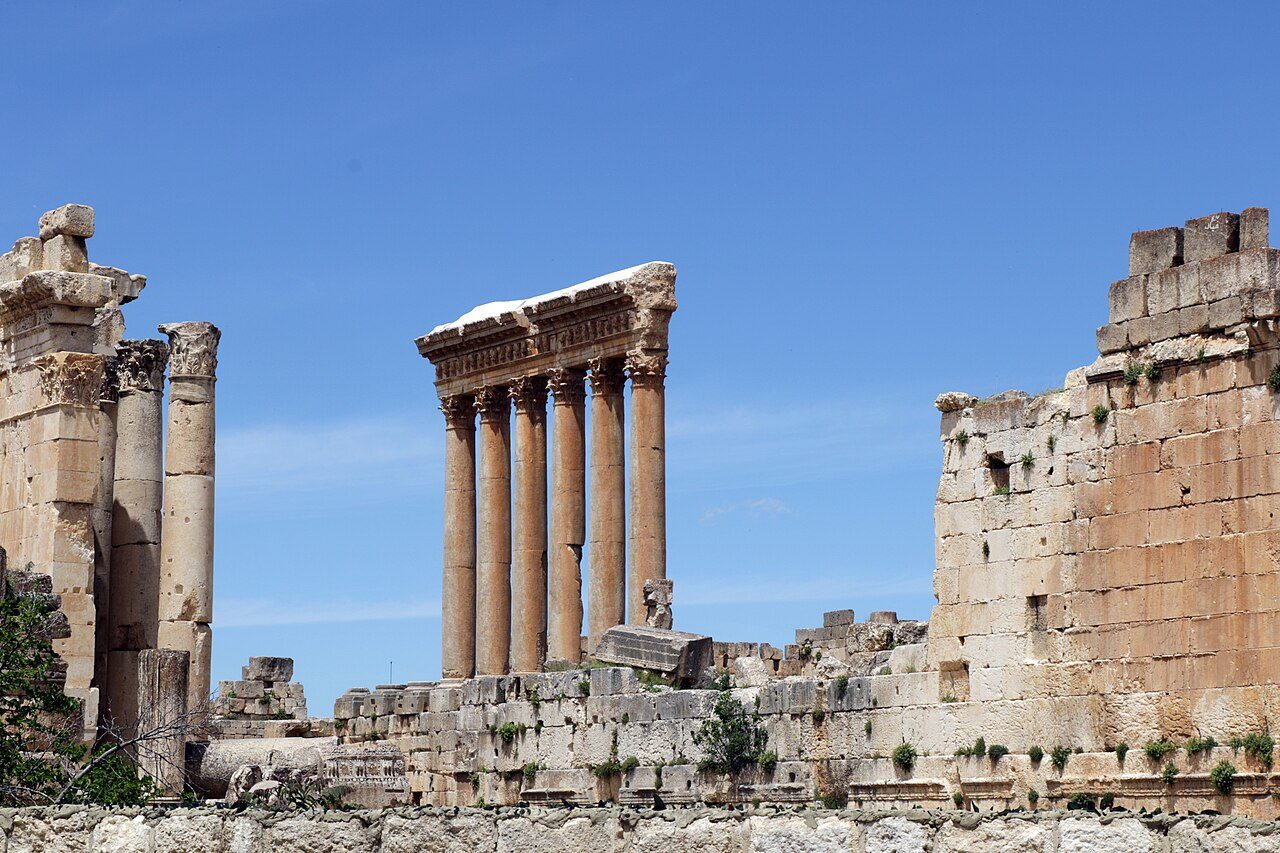
Rising from the fertile plains of Lebanon’s Beqaa Valley, ancient Heliopolis represents the absolute zenith of Roman imperial architecture. Commissioned during the reign of Augustus in the late first century BCE and expanded over three centuries by emperors including Antoninus Pius and Septimius Severus, this sanctuary grafted classical Roman majesty onto an ancient Phoenician cult center dedicated to Hadad-Baal. Modern visitors emerge from the massive Propylaea and the vast Great Court to face the colossal remnants of the Temple of Jupiter. Here, six towering Corinthian columns—each soaring over 20 meters high from an original ring of 54—cleave the sky above the Trilithon: a megalithic podium built from three individual limestone blocks weighing approximately 800 tons each, challenging modern comprehension of ancient engineering. Steps away stands the Temple of Bacchus, recognized as the most extraordinarily preserved classical temple in the world. Walking beneath its monumental eight-meter-tall portal, travelers crane their necks to admire pristine bas-reliefs carved with dancing bacchantes, entwined grapevines, and opium poppies honoring the god of ecstasy. Inside the lofty, unroofed cella, fluted engaged Corinthian columns line walls punctured by ornate niches, giving the space an intimate grandeur. Walking the sun-baked podiums, one is enveloped by the radiant amber hue of the weathered limestone, dwarfed by sheer monumental scale while listening to the wind whistle through limestone friezes carved with lion-headed water spouts and imperial eagles.
More in Baalbek
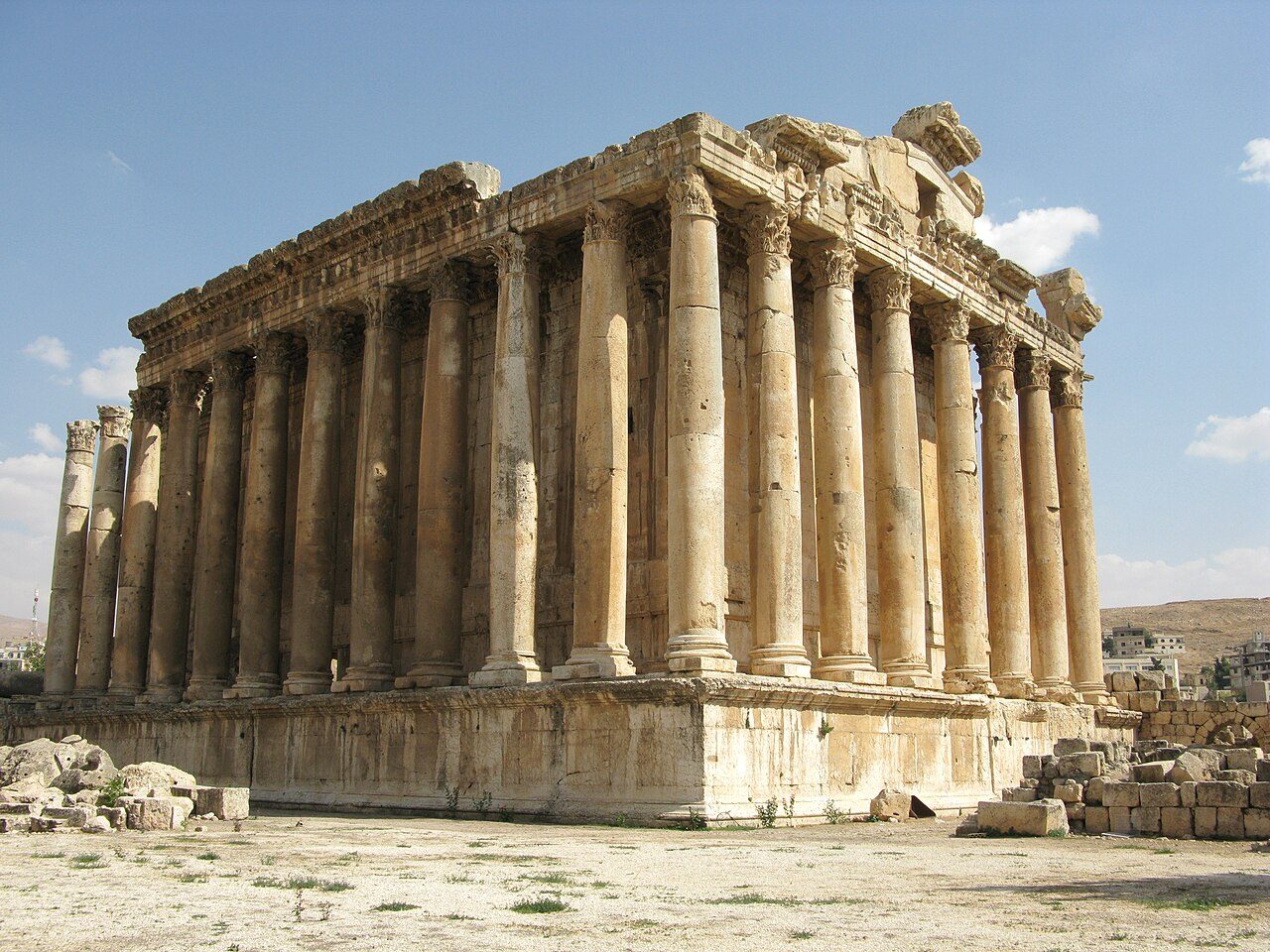
Photo credits (2)
- NidalSolh, CC BY-SA 4.0, via Wikimedia Commons
- Vyacheslav Argenberg, CC BY 4.0, via Wikimedia Commons