
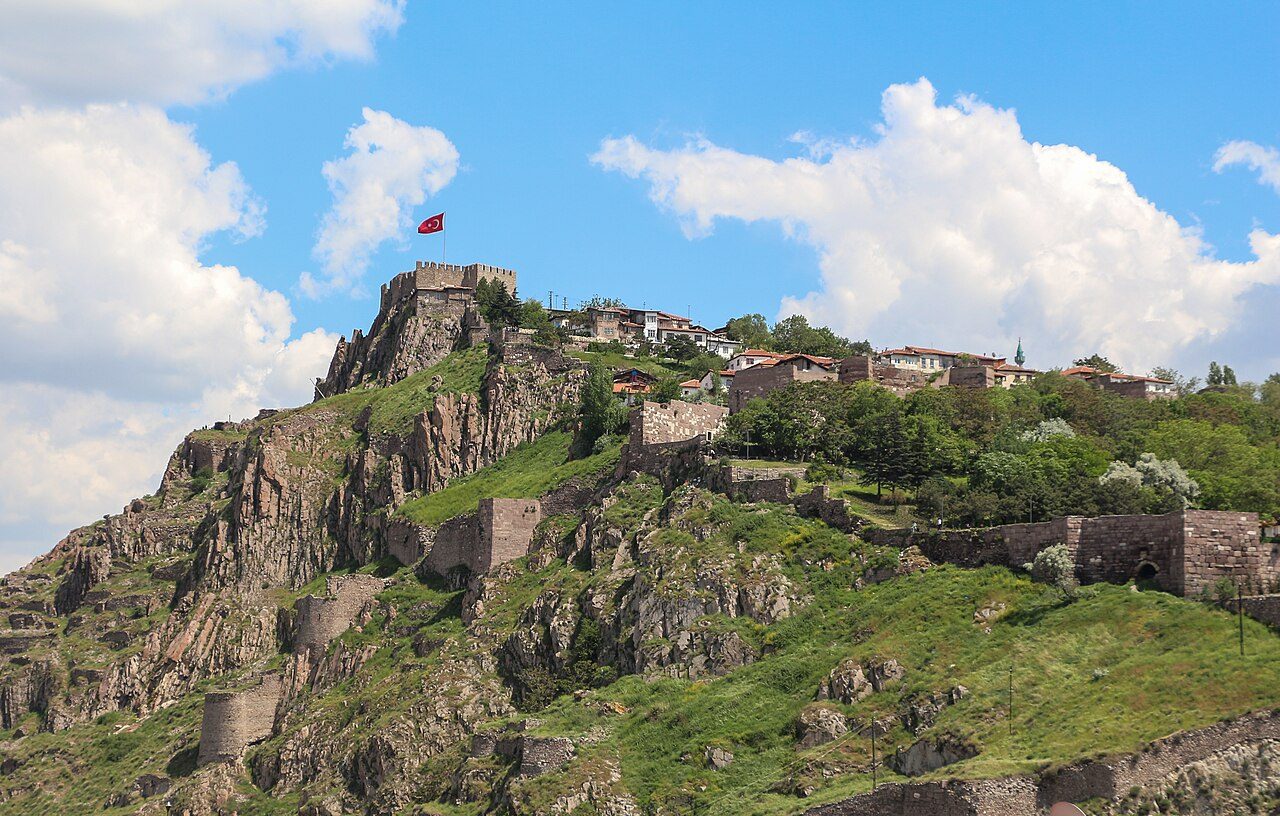
Ankara Castle
Crowning the volcanic crags high above the Turkish capital, this ancient citadel forms a millennia-long architectural palimpsest, reinforced sequentially by Galatians, Romans, Byzantines, and Seljuks. Major defensive overhauls occurred under Byzantine Emperor Constans II in the 660s to repel Arab incursions, followed by extensive reconstructions commissioned by Seljuk Sultan Alaeddin Keykubad I in 1222. The fortifications encompass a rugged outer perimeter and a formidable inner fortress (İç Kale) braced by 42 pentagonal bastions. Its most compelling structural feature is the dense integration of classical spolia: the mortar-and-basalt walls indiscriminately embed fluted Roman column drums, carved marble architraves, and Latin funerary inscriptions directly into medieval military masonry. Beyond the arched threshold of the Parmak Kapı, the roar of the metropolis dissolves into a medieval village of restored Ottoman timber-and-plaster *konaks*, distinguished by whitewashed walls, cantilevered upper storeys, and terra-cotta tiled roofs. Narrow cobblestone lanes, scented with roasted nuts and brewing black tea, wind upward toward the dizzying heights of Akkale (the White Castle). Scrambling onto the weathered stone parapets rewards visitors with a wind-whipped, 360-degree spectacle. Directly below, Roman ruins and historic shingle-roofed hamlets spill down the precipice, colliding dramatically with the sprawling grid of concrete mid-rises and gleaming minarets that define modern Anatolia.
More in Ankara
Photo credits (3)
- Bernard Gagnon, CC BY-SA 3.0, via Wikimedia Commons
- Kemal KOZBAEV, CC BY-SA 4.0, via Wikimedia Commons
- Georges Jansoone ( JoJan ), CC BY-SA 3.0, via Wikimedia Commons