
Kayakoy
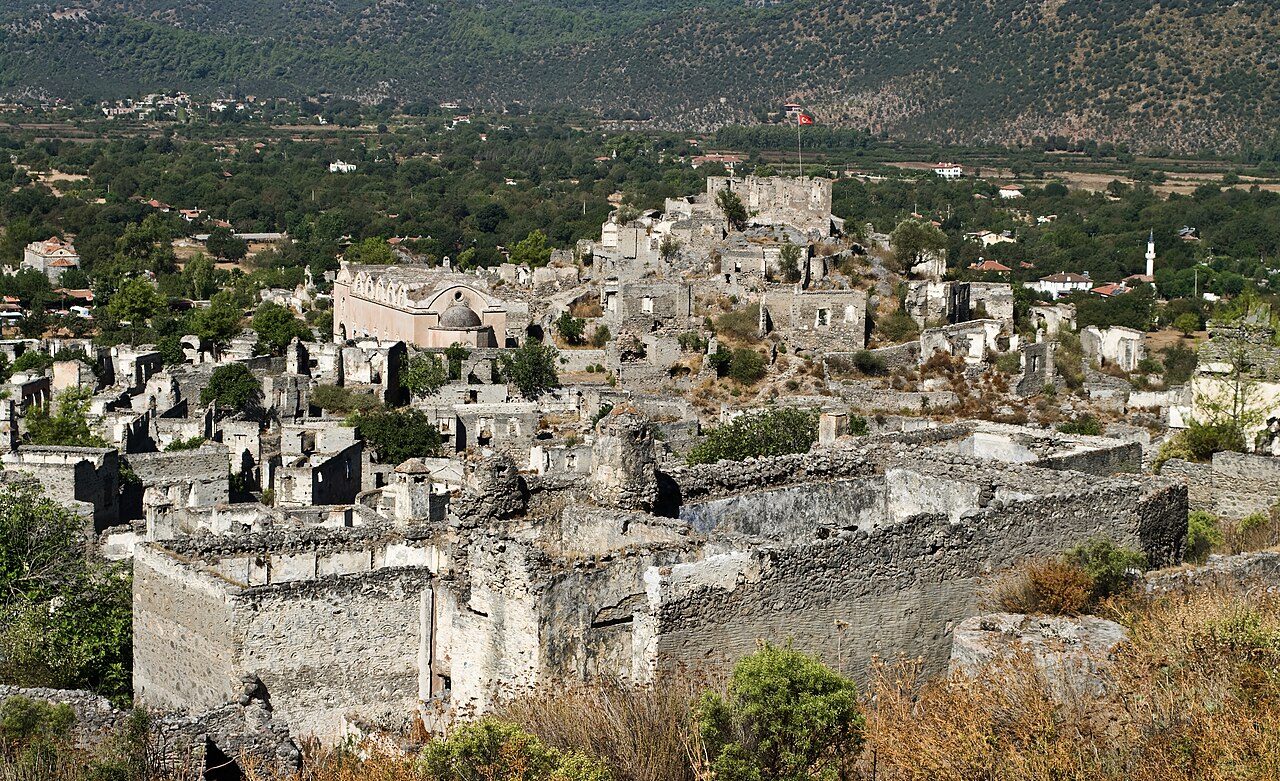
Clinging to a scrub-covered hillside southwest of Fethiye, the skeletal village of Kayaköy—formerly the Anatolian Greek settlement of Levissi—stands as an evocative monument to the 1923 Greco-Turkish population exchange mandated by the Treaty of Lausanne. Across these slopes, roughly a thousand multi-story stone dwellings cascade in strict stepped terraces, an architectural feat planned so that no home obstructed another’s sunlight. Between the roofless domestic ruins lie the village’s communal anchors: the Lower Church (Panagia Pyrgiotissa) and the Upper Church (Taxiarchis). Within these cavernous stone basilicas, travelers can still inspect remnants of faded cerulean wall plaster, crumbling barrel-vaulted ceilings, and *chochlakia* courtyards paved in intricate black-and-white sea pebble mosaics. Wandering the ascending labyrinth of rocky mule tracks, the prevailing sensation is one of poignant stillness, punctured only by the whistle of mountain breezes through empty doorways and the dry crunch of limestone underfoot. Wild fig trees, creeping ivy, and thyme sprout directly from neglected hearths and underground rainwater cisterns, slowly reclaiming the masonry. Reaching the crest near the abandoned hilltop chapel of Saint John rewards the climb with a stark visual contrast: on one side, hundreds of silent, sun-bleached facades spill into the fertile valley; on the other, a sudden panoramic vista reveals the deep turquoise waters of Coldwater Bay glistening beyond the pine ridges.
More in Fethiye
Photo credits (4)
- Nikodem Nijaki, CC BY-SA 3.0, via Wikimedia Commons
- Cobija, CC0, via Wikimedia Commons
- Dan Taylor, CC BY 2.0, via Wikimedia Commons
- Ezzeldin.Elbaksawy, CC BY-SA 4.0, via Wikimedia Commons