
Oludeniz
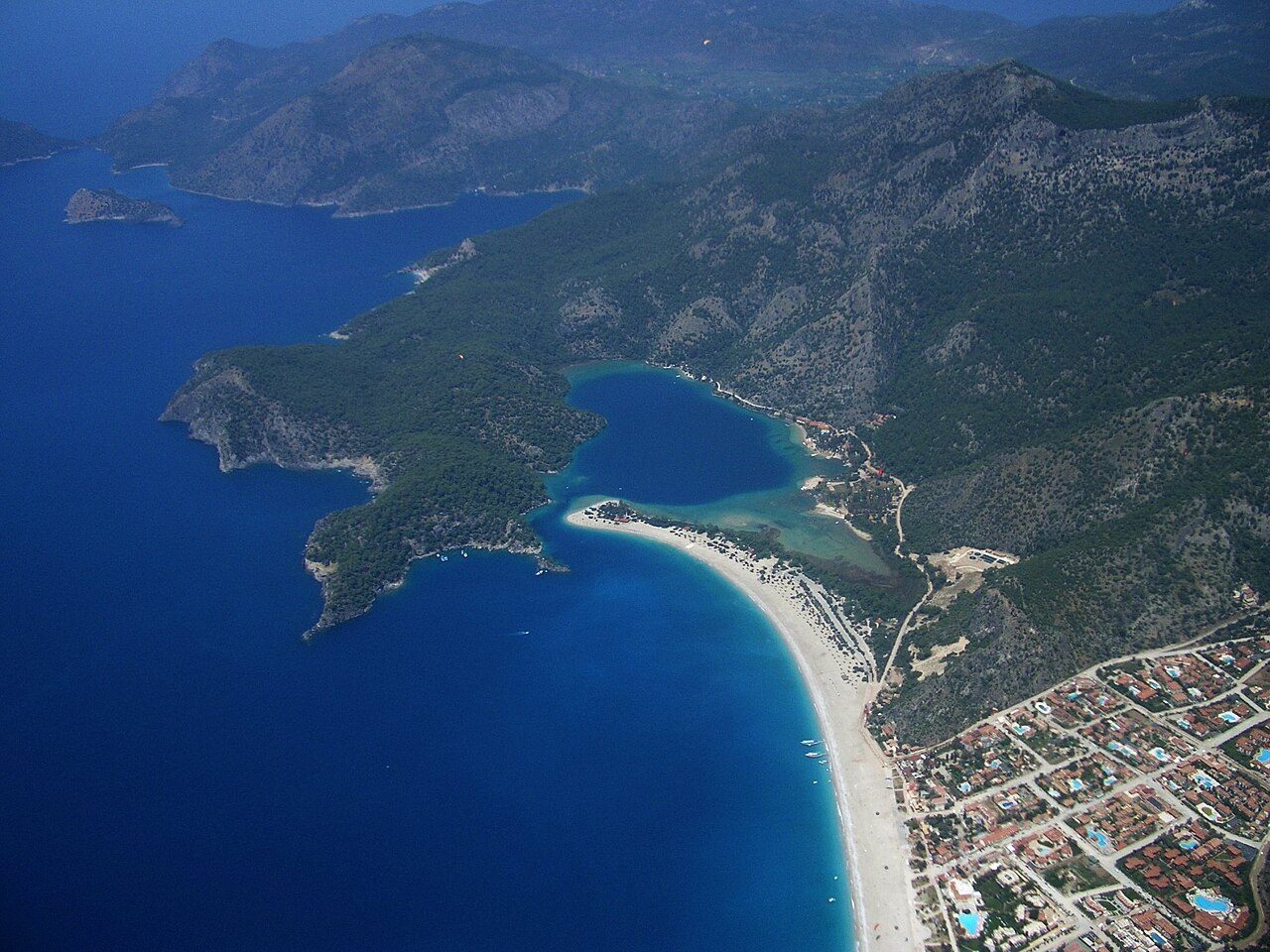
A sickle-shaped spit of pale quartz and limestone pebbles sweeps across the bay, severing the crashing Mediterranean surf of Belcekız Beach from the eerie stillness of the inner lagoon. Standing along the shoreline, the eye tracks a dramatic chromatic shift, where translucent aquamarine over shallow sands suddenly plunges into impenetrable cobalt. Overhead, the sheer 1,969-meter limestone precipice of Mount Babadağ dominates the horizon, releasing dozens of paragliders whose crimson and violet wings ride thermal updrafts before banking down toward the pebble strand. Within the sheltered basin of Kumburnu, incoming swells die against the bar, leaving swimmers floating effortlessly across glassine water framed by twisted Aleppo pines. Long before aviators navigated its thermals, this natural harbor served the maritime trade routes of ancient Lycia, functioning as an indispensable refuge for merchant vessels plying the waters between classical Telmessos and Rhodes. Between the fourth and sixth centuries CE, early Byzantine hermits transformed the surrounding seascape into a sacred haven, constructing limestone basilicas, vaulted tombs, and frescoed ceremonial corridors across nearby Gemiler Island. Local maritime lore immortalizes the coast through the legend of Belcekız, a maiden who plunged into the sea during an Aegean tempest after her lover’s ship foundered on the rocks. Today, the scent of wild mountain thyme cuts through the briny air, tethering this tranquil inlet to millennia of Lycian seafaring mythology.
More in Fethiye
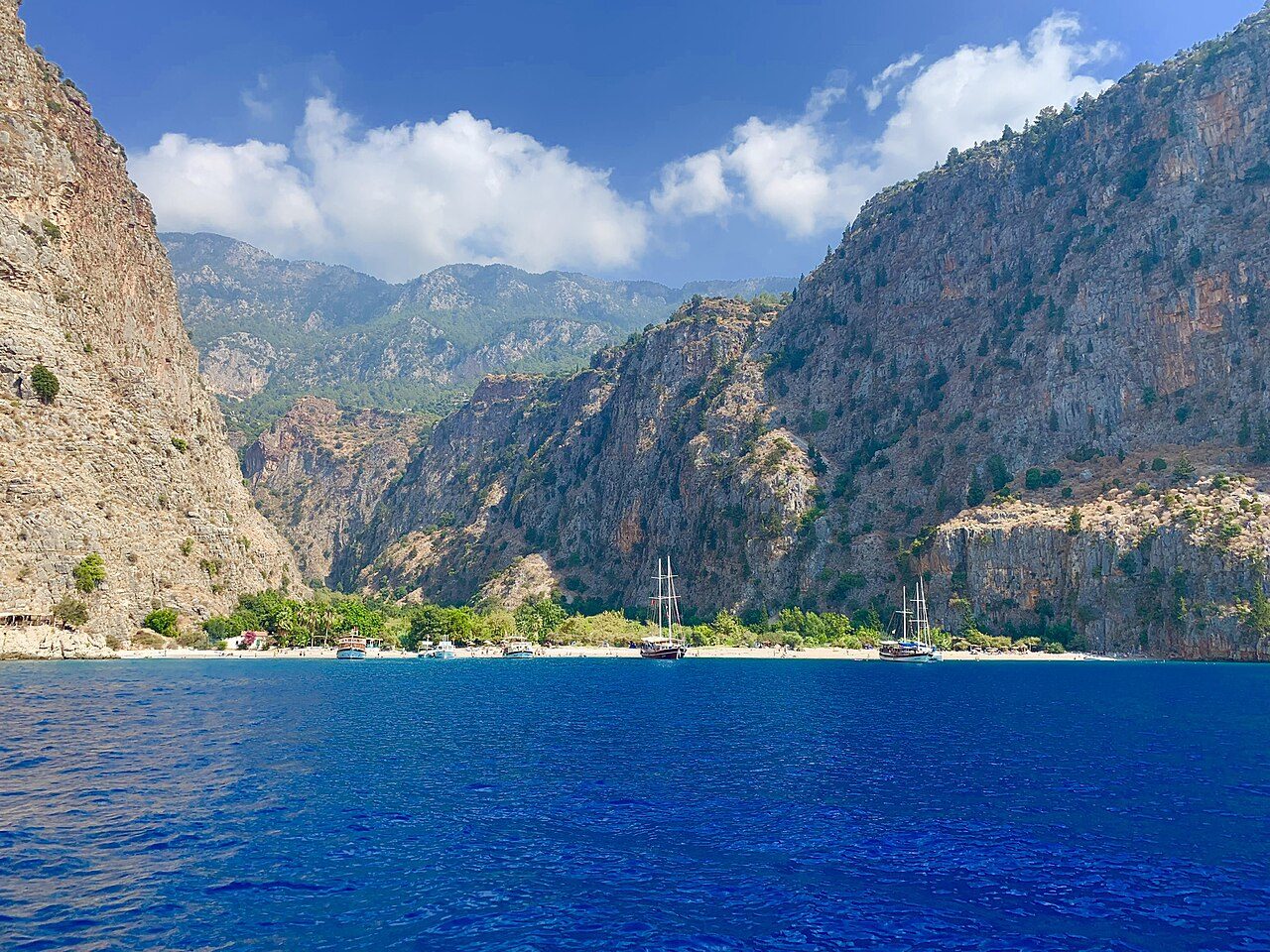
Photo credits (4)
- Dan Taylor, CC BY 2.0, via Wikimedia Commons
- Cobija, CC0, via Wikimedia Commons
- Nikodem Nijaki, CC BY-SA 3.0, via Wikimedia Commons
- Ezzeldin.Elbaksawy, CC BY-SA 4.0, via Wikimedia Commons