
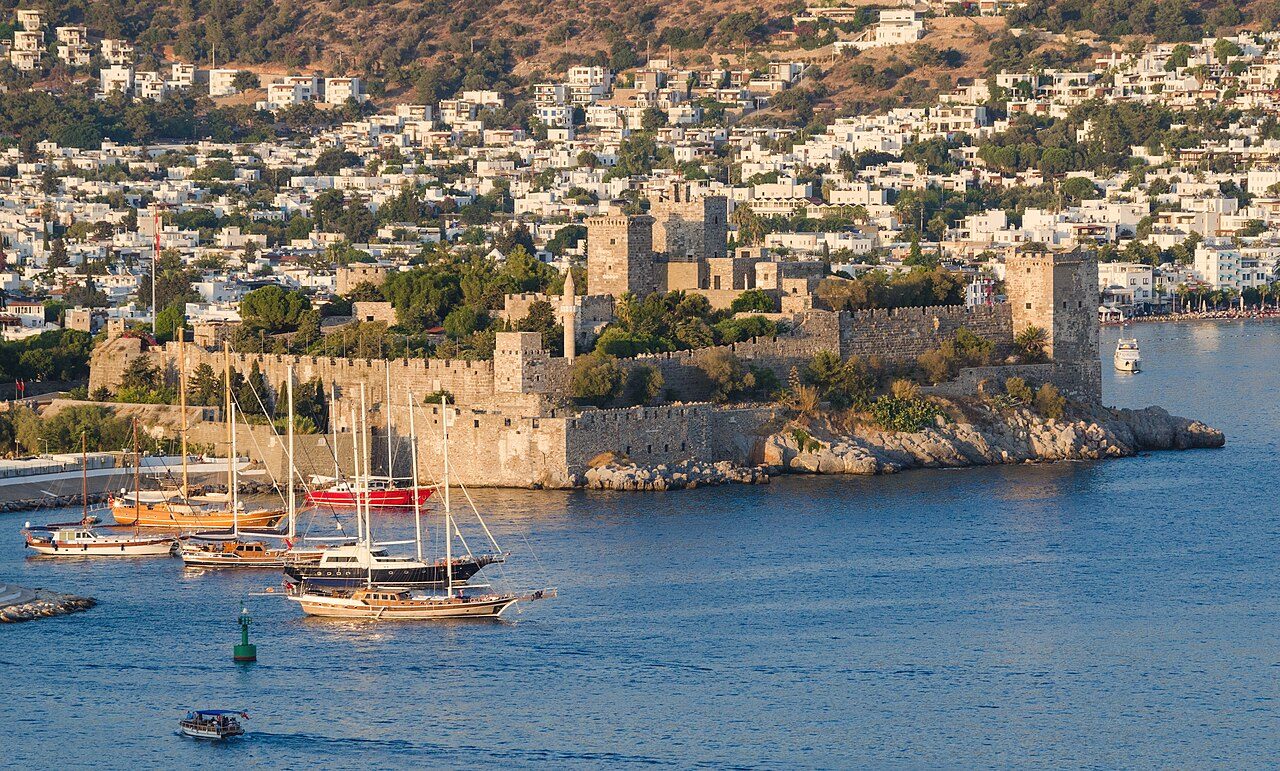
Bodrum Castle
Rising on a rocky promontory between two azure bays, Bodrum Castle—historically the Castle of St. Peter—was forged in 1402 by the Knights Hospitaller under the direction of German architect Heinrich Schlegelholt. This formidable crusader fortress incorporates green volcanic ashlar and marble reliefs salvaged directly from the ruins of the Mausoleum of Halicarnassus, one of the Seven Wonders of the Ancient World. Its multi-layered defense system is anchored by five national bastions: the French, English, Italian, German, and Snake Towers. Over 240 sculpted heraldic coats of arms, bearing the insignias of European grand masters and popes, remain chiseled into the stone parapets that withstood naval sieges for over a century. Passing through the sequence of seven inner gates, travelers enter a microclimate where free-roaming peacocks call across courtyards planted with pomegranates, Mediterranean cypress, and vibrant magenta bougainvillea. Inside the vaulted refectories and dark gunpowder magazines, the fortress houses the acclaimed Bodrum Museum of Underwater Archaeology, displaying glass ingots, gold scarabs, and clay amphorae recovered from the Late Bronze Age Uluburun shipwreck. Ascending the narrow, sun-bleached stairs to the ramparts of the English Tower, visitors are met with stiff Aegean breezes and sweeping panoramas of whitewashed hillsides, wooden *gulet* yachts bobbing in the harbour, and the hazy blue silhouette of the Greek island of Kos.
More in Bodrum
Photo credits (2)
- Serhio Magpie, CC BY 4.0, via Wikimedia Commons
- FollowingHadrian, CC BY-SA 4.0, via Wikimedia Commons