
Bodrum
Bodrum cascades down rugged, pine-dusted hills to meet the turquoise waters of the southwestern Aegean Sea. Walking its narrow lanes reveals a classic maritime rhythm: low-rise whitewashed houses trimmed with Aegean-blue doors, cascading bougainvillea casting shade over cobblestones, and the steady scent of salt and grilled sardines drifting from waterfront quays. The town curves around two distinct bays separated by a medieval promontory, keeping its ancient footprint intact despite its modern cosmopolitan energy. Once the ancient Carian capital of Halicarnassus and birthplace of the 5th-century BC historian Herodotus, the town wears its past openly. The imposing Castle of St. Peter, erected by the Knights Hospitaller in 1402 using stone salvaged from the ruined Mausoleum of Mausolus, now houses the Museum of Underwater Archaeology with Bronze Age shipwrecks. Up the slope, the 4th-century BC amphitheater still hosts evening concerts cut into the hillside, while the western quarter of Gümüşlük centers on submerged ruins of ancient Myndos visible beneath the shallows. Daily life revolves around the sea and peninsula harvests. The Friday food bazaar overflows with regional wild herbs, olives, and fragrant Bodrum mandarins, while seaside taverns serve çökertme kebab alongside Aegean meze. Every October, the Bodrum Cup regatta gathers handcrafted wooden gulets to honor the local boatbuilding heritage. To avoid intense summer heat, visit during May or late September, and use the network of white dolmuş minibuses to travel easily between the central otogar and outlying coastal villages.
Read more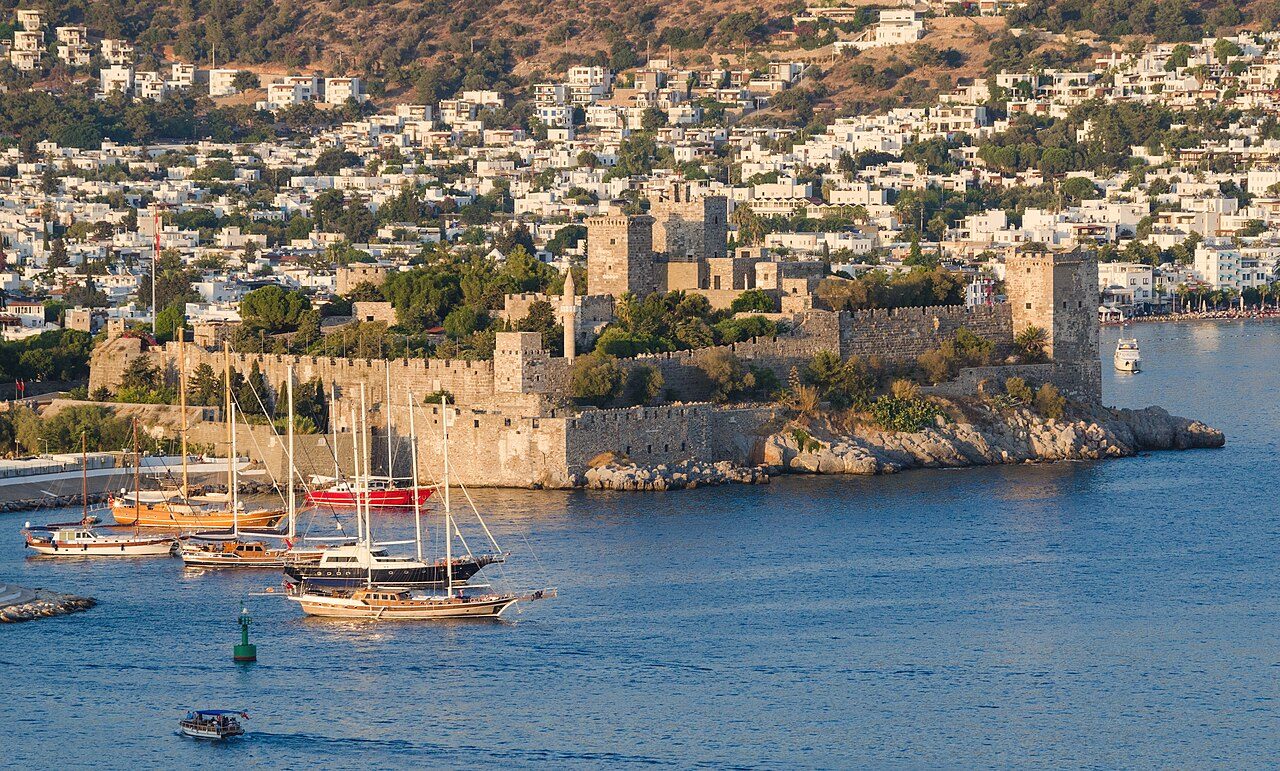
What to see in Bodrum
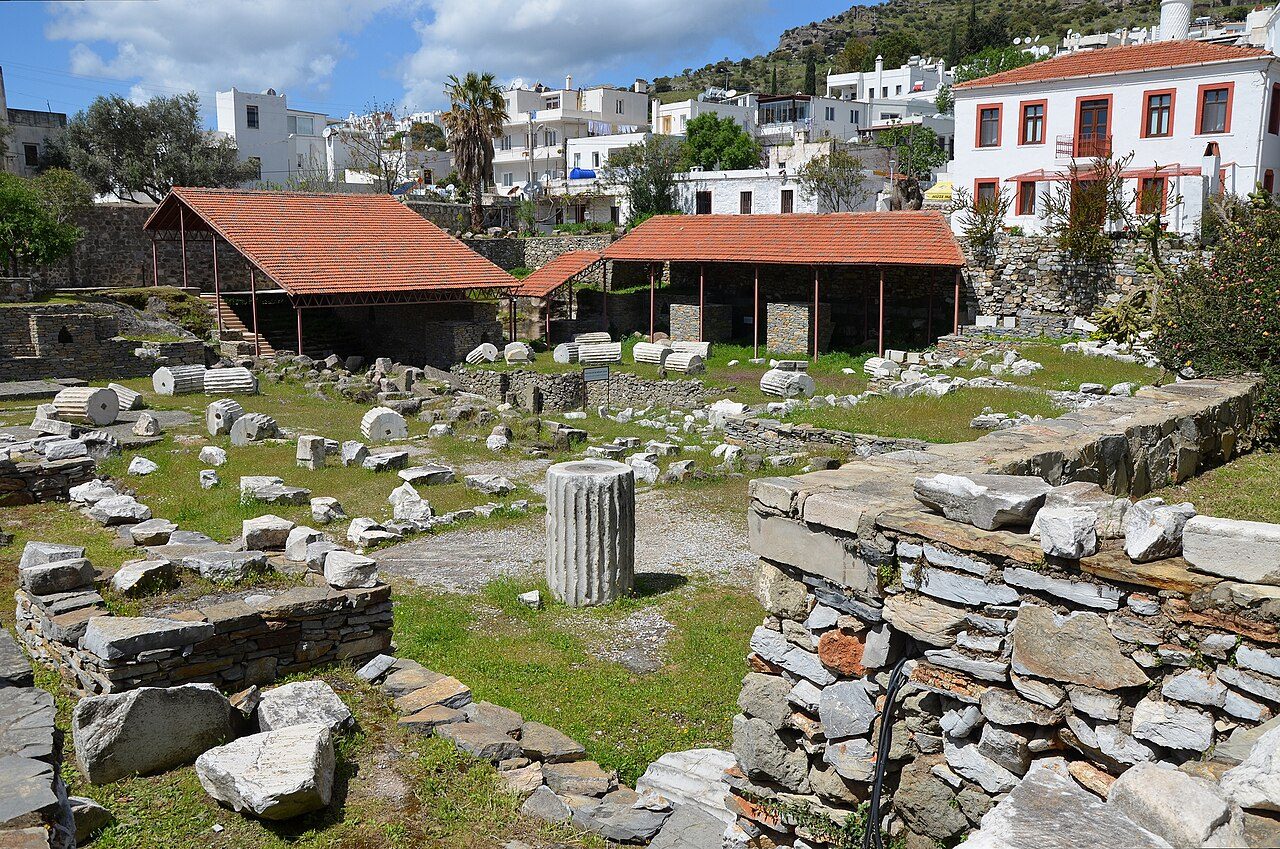
Photo credits (2)
- Serhio Magpie, CC BY 4.0, via Wikimedia Commons
- FollowingHadrian, CC BY-SA 4.0, via Wikimedia Commons