
Hierapolis
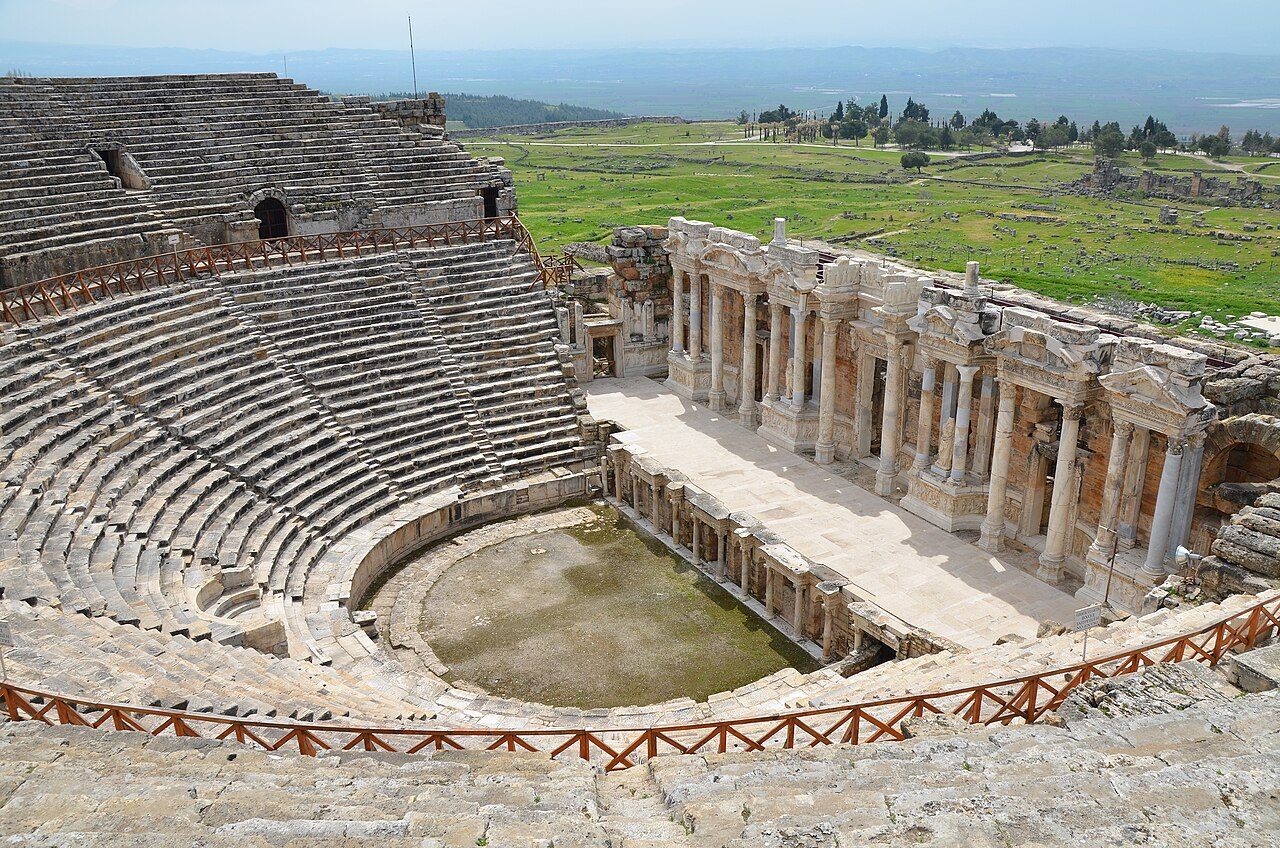
Founded in the late second century BCE by King Eumenes II of Pergamon, Hierapolis evolved under Roman imperial rule into a flourishing thermal spa metropolis. Its architectural pinnacle is the towering Roman theater, erected under Hadrian and refined during the reign of Septimius Severus; its fifty tiers of honey-hued travertine seats gaze down upon an ornate, three-story *scaenae frons* sculpted with mythological friezes of Apollo and Artemis. Outside the monumental Frontinus Gate, the northern necropolis sprawls for over two kilometers, preserving more than 1,200 limestone sarcophagi, tumuli, and family crypts. Nearby lies the Plutonium, the ancient sanctuary dedicated to the god of the underworld, where subterranean fissures still emit deadly concentrations of carbon dioxide, exactly as recorded by the geographer Strabo. Visitors traverse rutted limestone thoroughfares littered with toppled Doric capitals, met by the faint, sulfurous steam drifting from the geological fault lines. At the Antique Pool, swimmers submerge into warm, effervescent 36°C (97°F) waters, gliding directly above fluted marble columns and Ionic pediments hurled into the basin by a catastrophic seventh-century earthquake. The experience shifts seamlessly between raw geology and classical antiquity: stepping from the shadow of the martyrium of the Apostle Philip onto the edge of the plateau reveals blinding white travertine cascades falling away into the sweeping plains of the Lycus Valley.
More in Pamukkale
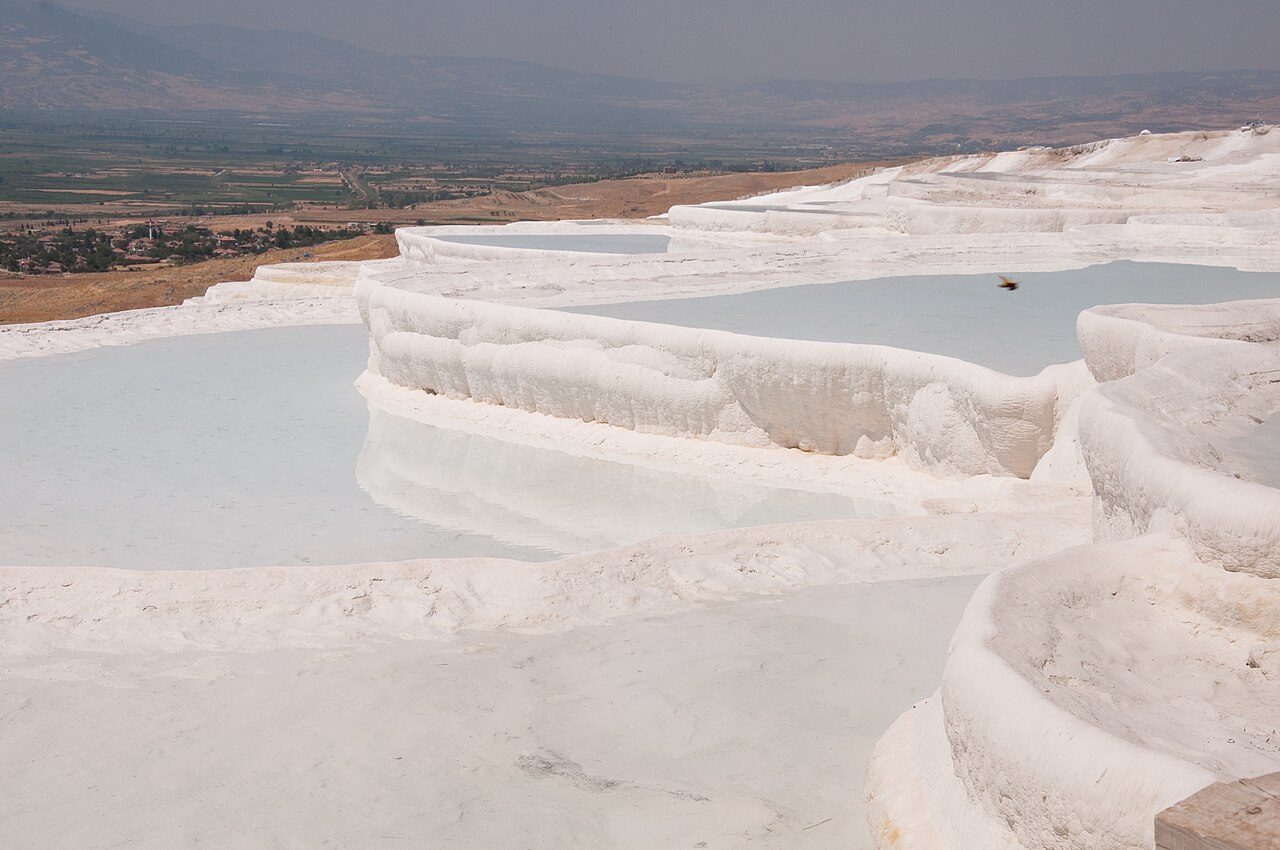
Photo credits (2)
- Carole Raddato, CC BY-SA 2.0, via Wikimedia Commons
- Filippo Salamone from Settimo Milanese (MI), Italia, CC BY-SA 2.0, via Wikimedia Commons