
Pamukkale
Rising above the fertile plains of the River Menderes valley in southwestern Anatolia, Pamukkale appears from afar like an immense glacier frozen against the slopes of the Çal Dağı mountains. Walking up the formation requires removing your shoes to protect the limestone crust, letting you feel warm, mineral-heavy water rippling over chalk-white travertine terraces and filling shallow, pale cyan pools underfoot. Below the terraces sits a small rural town where daily life moves between cotton fields, small guesthouses, and family-run thermal baths. Above these cascades stand the stone ruins of Hierapolis, established around 190 BC by King Eumenes II of Pergamon as a healing center. The city preserves an exceptionally intact second-century Roman theater with sculpted friezes decorating its marble facade, alongside one of the largest ancient necropolises in the Mediterranean, where more than a thousand stone sarcophagi stretch across the hillside. Nearby at the Antique Pool, visitors swim in naturally warm, effervescent water directly above Doric columns that collapsed into the basin during a seventh-century earthquake. In the village streets, dinners center on Denizli tandır kebab, tender lamb roasted in brick ovens and eaten by hand with fresh flatbread and charred tomatoes, accompanied by regional pomegranate wine. The surrounding valley still revolves around agriculture and the autumn cotton harvest. To avoid midday heat and the tour groups traveling from Antalya, enter on foot through the South Gate right at morning opening, keeping a small daypack handy to hold your footwear.
Read more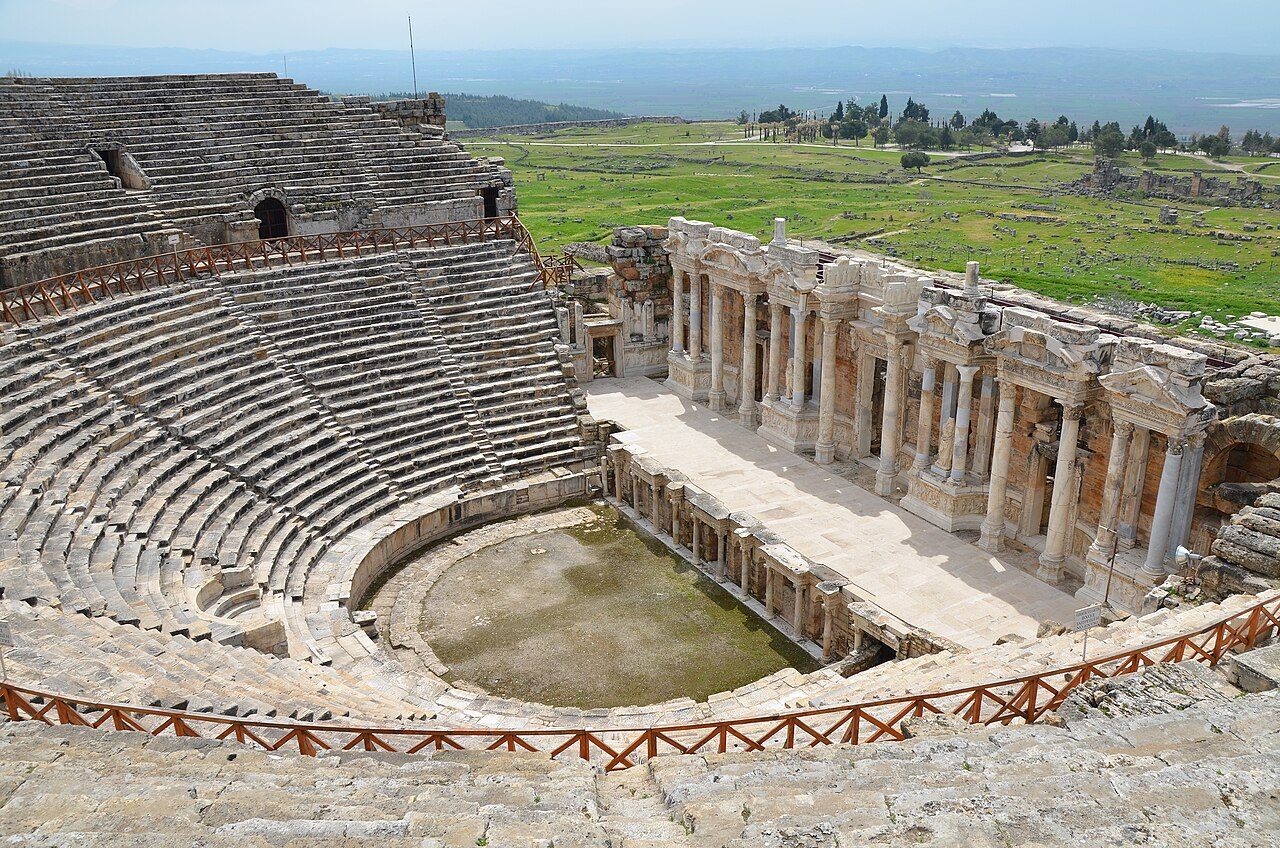
What to see in Pamukkale
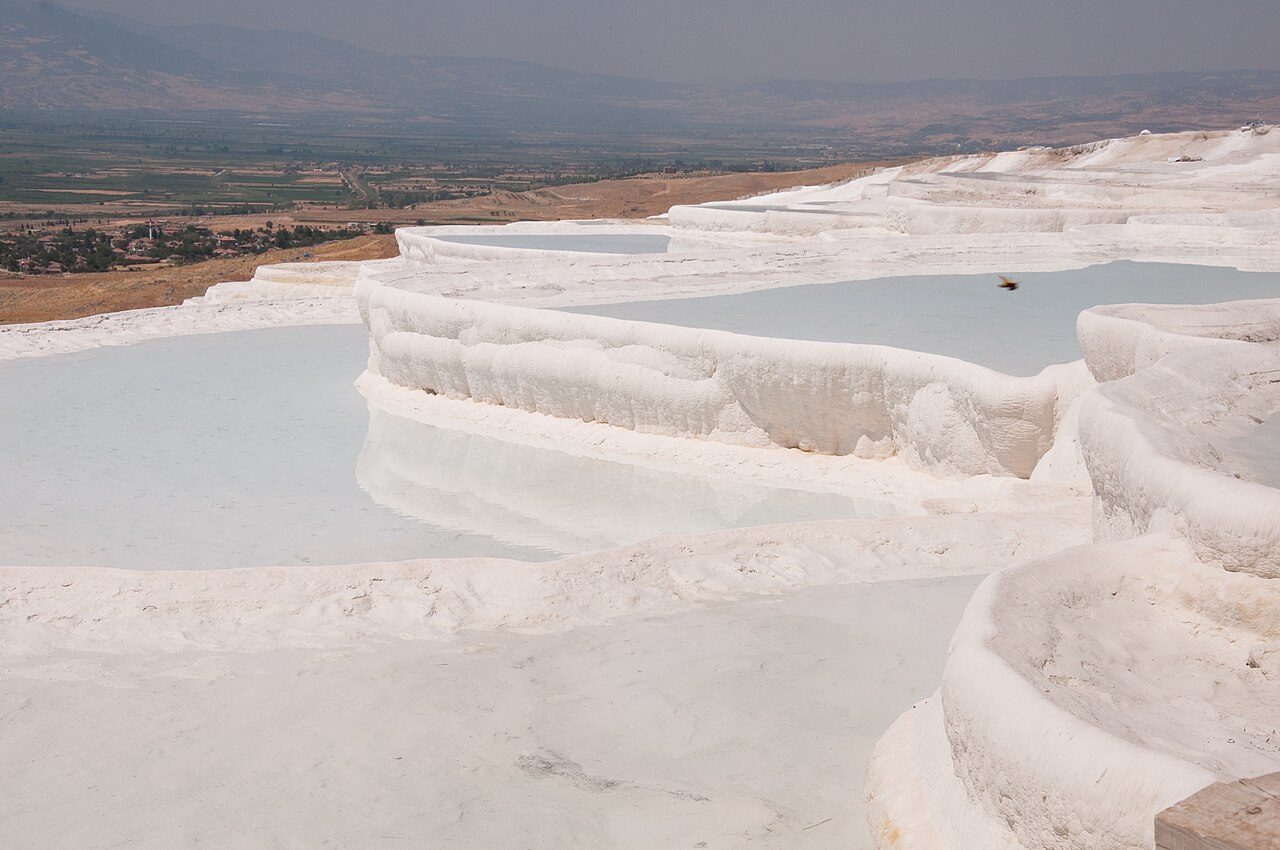
Photo credits (2)
- Carole Raddato, CC BY-SA 2.0, via Wikimedia Commons
- Filippo Salamone from Settimo Milanese (MI), Italia, CC BY-SA 2.0, via Wikimedia Commons