
Pamukkale Travertines
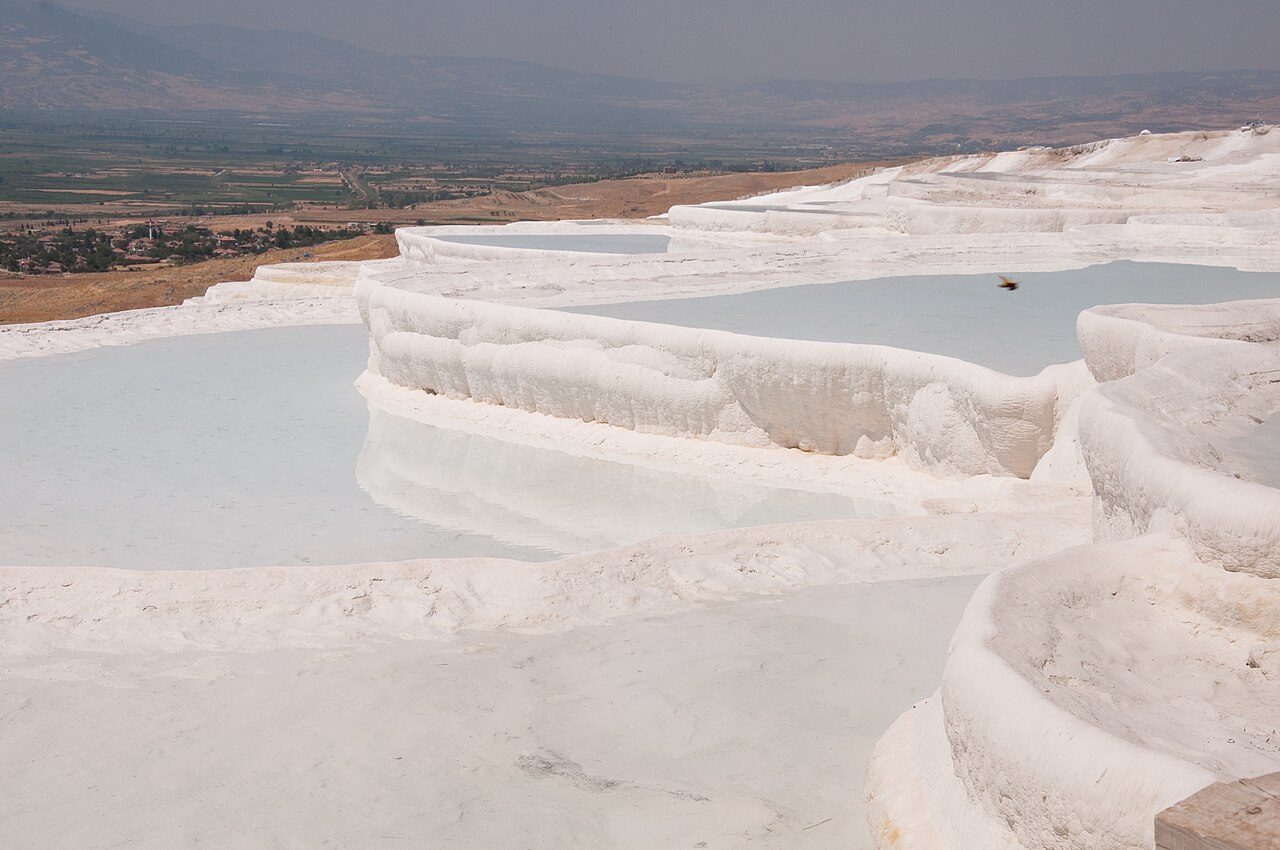
Cascading down the southwestern escarpment of the Çal Dağı plateau, the Pamukkale travertines form a monumental, petrified cascade of calcium carbonate shaped by seventeen geothermal springs. In the second century BCE, King Eumenes II of Pergamon capitalized on these mineral-rich waters to establish the thermal health resort of Hierapolis atop the plateau. Repeatedly shattered by seismic activity—most violently by an earthquake in 60 CE—the ancient colonnades and subterranean fault lines consistently reformed, allowing hot, mineral-saturated water at 36°C (97°F) to release carbon dioxide and continuously coat the cliffside in brilliant white travertine shelves, fluted rimstone pools, and scalloped terraces. To protect the delicate geological crust, travelers must traverse the mountain barefoot, stepping directly onto the damp, ribbed limestone ridges that provide natural traction against the slick stone. Warm, milky-turquoise water laps around ankles as shallow basins overflow, coating the skin in a chalky sediment of fine calcium silt. Looking across the tiered precipice, the dazzling glare of chalk-white stone contrasts sharply against the cobalt sky and the green expanses of the Lycus River valley, immersing visitors in a living landscape where antiquity’s thermal traditions still surge through petrified natural architecture.
More in Pamukkale
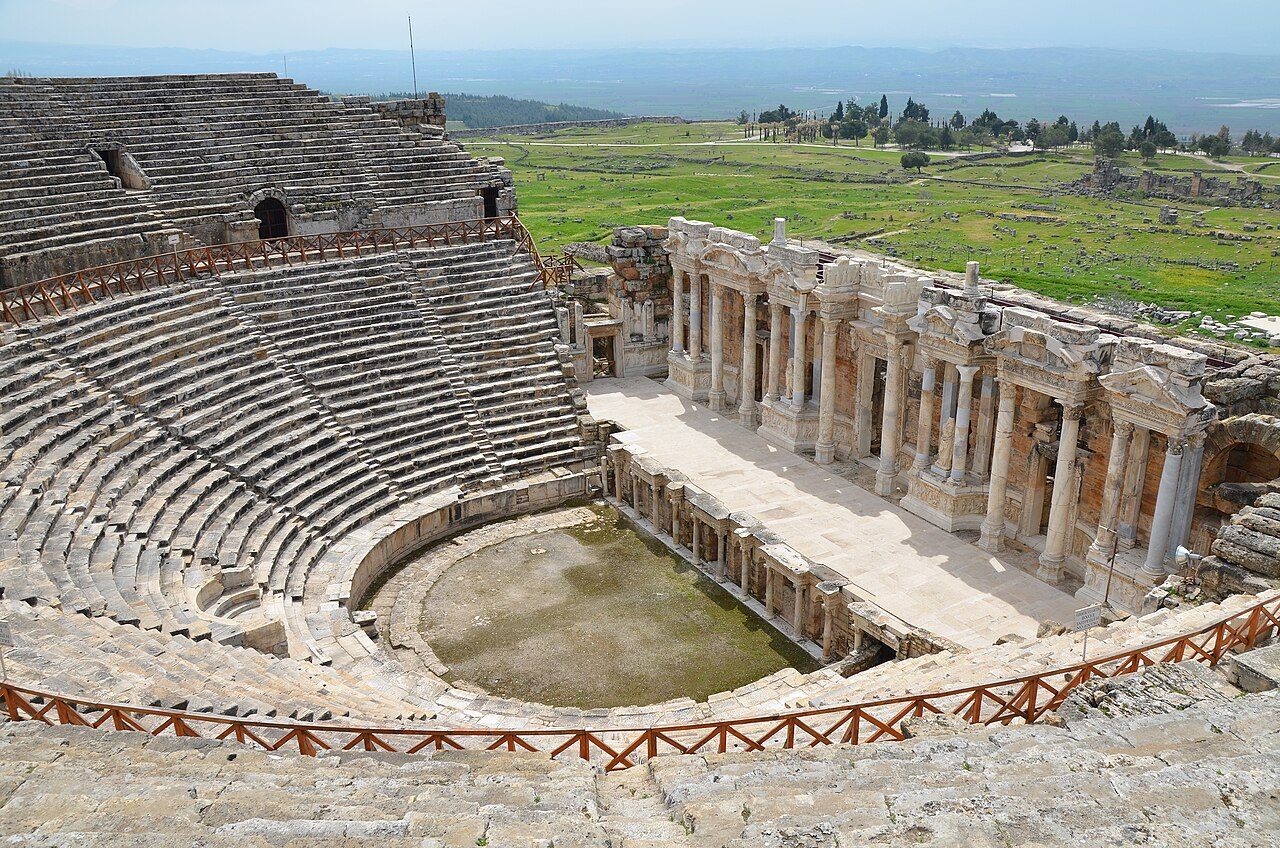
Photo credits (2)
- Filippo Salamone from Settimo Milanese (MI), Italia, CC BY-SA 2.0, via Wikimedia Commons
- Carole Raddato, CC BY-SA 2.0, via Wikimedia Commons