 New added
Agora Museum
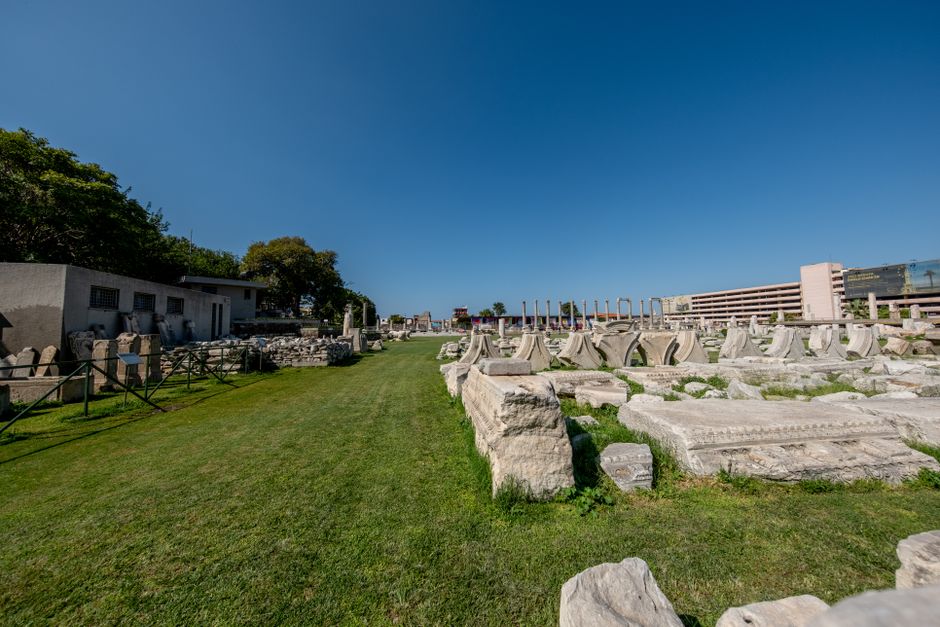
Rebuilt in 178 CE under the patronage of Roman Emperor Marcus Aurelius following a devastating earthquake, the Agora of Smyrna survives today as Izmir’s central open-air museum. Once the civic beating heart of the Hellenistic and Roman city, this rectangular forum showcases an exceptional three-story basilica set upon vast, vaulted subterranean galleries. Visitors pass beneath the monumental Faustina Gate, erected in honor of the emperor's wife, where weathered Corinthian capitals crown soaring marble colonnades framed by the modern skyline of the Namazgah quarter. Beneath the sunlit courtyard, the limestone-vaulted *cryptoporticus* preserves one of antiquity’s rarest treasures: extensive Greek graffiti scratched into ancient plaster, revealing gladiator duels, maritime vessels, and cryptic word puzzles etched by ordinary Roman citizens. Descending into these lower arcades, the stifling Aegean heat instantly dissolves into cool, shadow-draped air carrying the acoustic murmur of trickling spring water. Two-millennium-old stone aqueducts still channel crystal-clear currents through subterranean chambers, feeding the original fountains that sustained the ancient marketplace. Above ground, pathways wind past carved relief panels of Poseidon and Demeter, resting alongside toppled architraves and the slanting marble stelae of a later Ottoman cemetery. Standing amid the quiet colonnade, travelers encounter an evocative temporal juxtaposition, looking through rows of honey-hued Roman columns to the vibrant urban hillside of modern Izmir rising immediately beyond the excavation trench.