
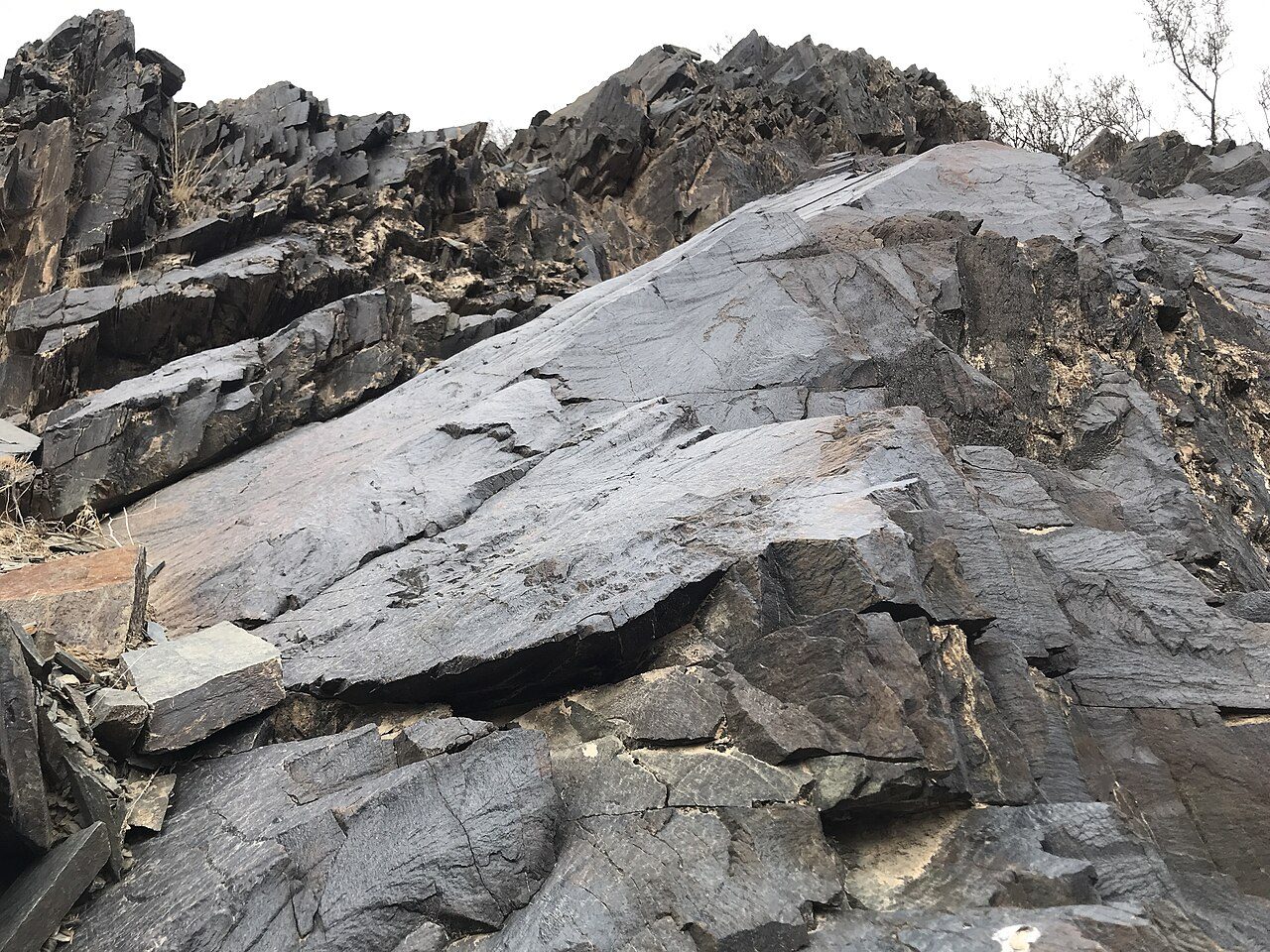
Sarmishsay Gorge
Carved into the rust-tinted shale and basalt slabs of the southern Karatau Mountains, Sarmishsay Gorge preserves Central Asia's premier open-air archive of rock art. Between the late Neolithic era around 3000 BCE and the rise of Saka-Scythian nomads in the early first millennium BCE, successive generations etched more than 4,000 petroglyphs across a two-kilometer canyon corridor. Chiseled through dark, manganese-rich desert varnish to expose the lighter stone beneath, these intricate figures record the lost ecology and spiritual life of the ancient steppe. Towering rock faces display curved-horned ibexes, extinct aurochs, stalking cheetahs, and masked shamans encircled by radiating solar discs. Entering the winding, narrow defile, you trace the stony banks of the Sarmish River amid the sharp scent of sun-baked mountain sage and wild mint. The trek demands scrambling over fractured red and slate-gray scree polished smooth by seasonal mountain floods. Sunlight shifting across the canyon walls continually animates the engravings, revealing fine Bronze Age bowmen alongside later Sogdian and early Arabic inscriptions carved into high, natural galleries. Standing against the heat-radiating basalt under the vast Kyzylkum sky, you feel an immediate, tactile connection to the millennia of human hands that scored their stories into this silent gorge.
More in Nurata
Photo credits (2)
- Alpasli, CC BY-SA 4.0, via Wikimedia Commons
- Carpodacus, CC BY-SA 3.0, via Wikimedia Commons