
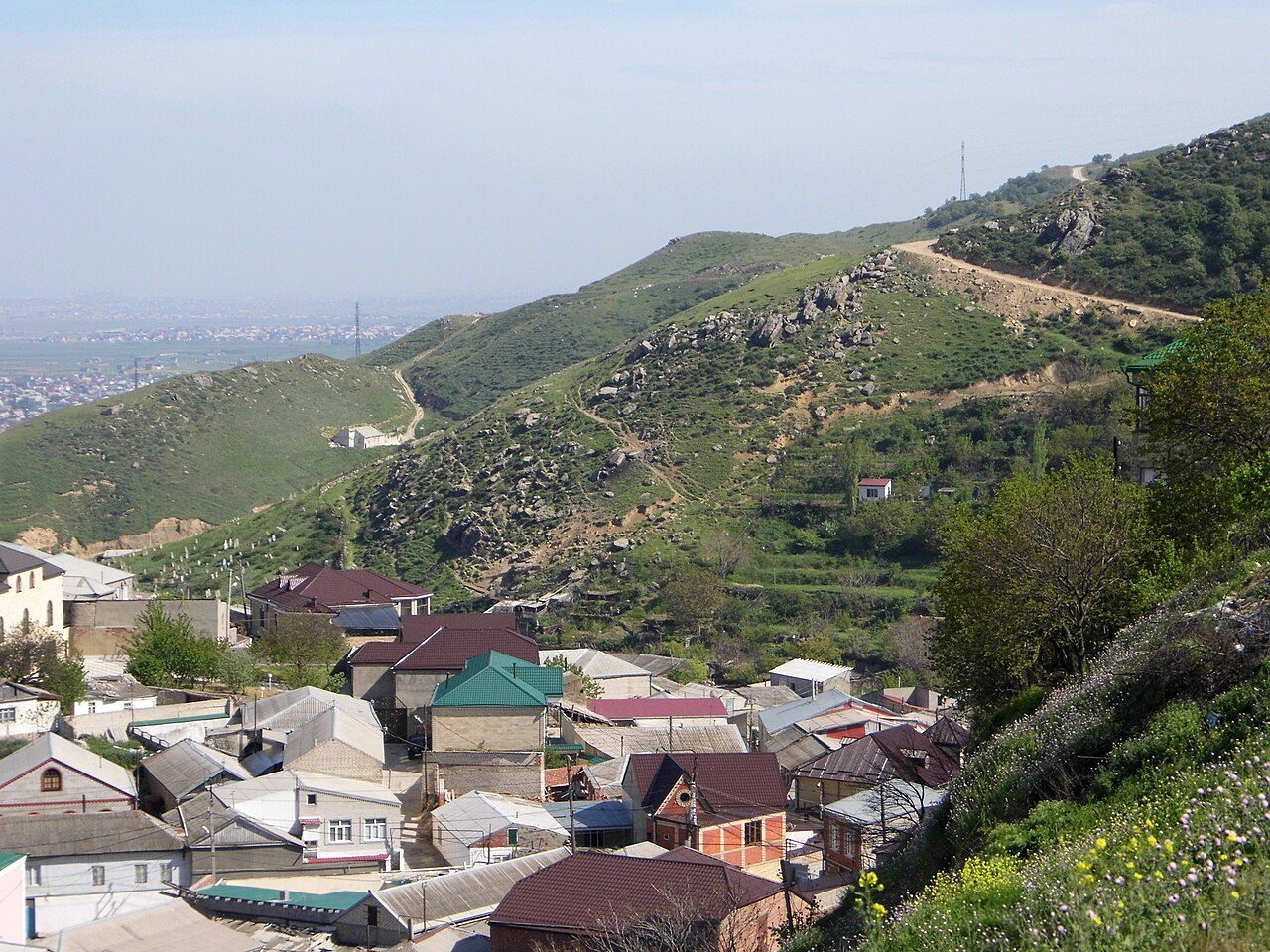
Tarki-Tau Mountain
Rising 725 meters above the Caspian depression, the limestone plateau of Tarki-Tau stands as Dagestan’s eternal stone sentinel, steeped in over a millennium of turbulent Caucasian history. Beneath its craggy brow sits the ancient aul of Tarki, once the seat of the Kumyk Shamkhalate along the trade routes linking the Eurasian steppe with Persia. Here, upon these strategic terraced scarps in 1821, Imperial General Aleksey Yermolov erected the Fortress of Burnaya—aptly named "Stormy"—to command the vital coastal corridor during the Caucasian War. Though the citadel’s stone bastions have largely crumbled into the pale Miocene cliffs, the mountain's broad, flat-topped ridge, fringed with wild hornbeam and oak groves, still retains the imposing character of an unyielding natural redoubt. Climbing to the high observation ledge, travelers meet a striking juxtaposition of raw foothill terrain and sweeping maritime panorama. Brisk winds sweeping upward carry the dry scent of mountain thyme and salty Caspian air. Below, the urban sprawl of Makhachkala unfolds in sharp relief: minarets and harbor cranes punctuate a dense grid pinned between the crags and the water's edge, bordered by the shimmering blue expanse of the sea. In the late afternoon, the limestone precipices flush a warm copper hue, casting long shadows across the ancient terraced slopes while the distant coastal railway glints beneath the fading Dagestani sun.
More in Makhachkala

Photo credits (3)
- Ksenia Romanenko, CC BY-SA 4.0, via Wikimedia Commons
- Vyacheslav Bukharov, CC BY-SA 4.0, via Wikimedia Commons
- Dinamik, CC BY-SA 4.0, via Wikimedia Commons