
 New added
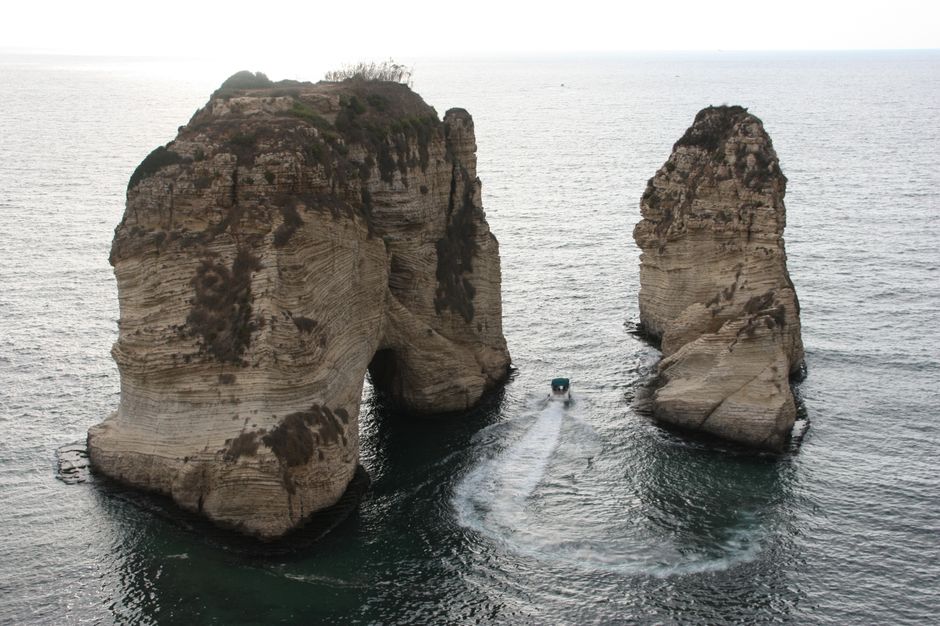
Pigeon Rocks Raouche
Rising sixty meters from the cobalt Mediterranean off Beirut’s westernmost cape, these two colossal limestone sentinels—chiseled by prehistoric seismic shifts and marine erosion—anchor the city's coastal identity. Known locally as *al-Raouche* (derived from the French *rocher* or Aramaic *rosh*, meaning headland), the formations bear deep historical roots: archaeological excavations along the adjacent clifftops uncovered Paleolithic flint tools, proving human habitation here tens of thousands of years ago, while folklore links the natural ramparts to the mythical petrification of the sea monster Cetus by Perseus. The larger monolith features a dramatic sea-level arch carved by millennia of tides, a natural vault wide enough for local fishing skiffs and daring cliff-divers to navigate during calm waters. Leaning against the wrought-iron railing of the seaside Corniche at dusk, visitors encounter a sensory collision of maritime breezes, the aroma of charcoal-roasted corn, and the sharp hiss of cardamom coffee poured from brass pots. As the sun sinks below the horizon, the stark calcarenite surfaces transform from chalky white to shades of ochre and burnished copper, backlighting the flocks of pigeons that nest within the porous cliff face. Below, the swell crashes violently against the sea-stack base, echoing beneath the clatter of backgammon dice and the hum of traffic along Avenue de Paris.
More in Beirut
Photo credits (2)
- FunkMonk, CC BY 3.0, via Wikimedia Commons
- Freedom's Falcon, CC BY-SA 3.0, via Wikimedia Commons