
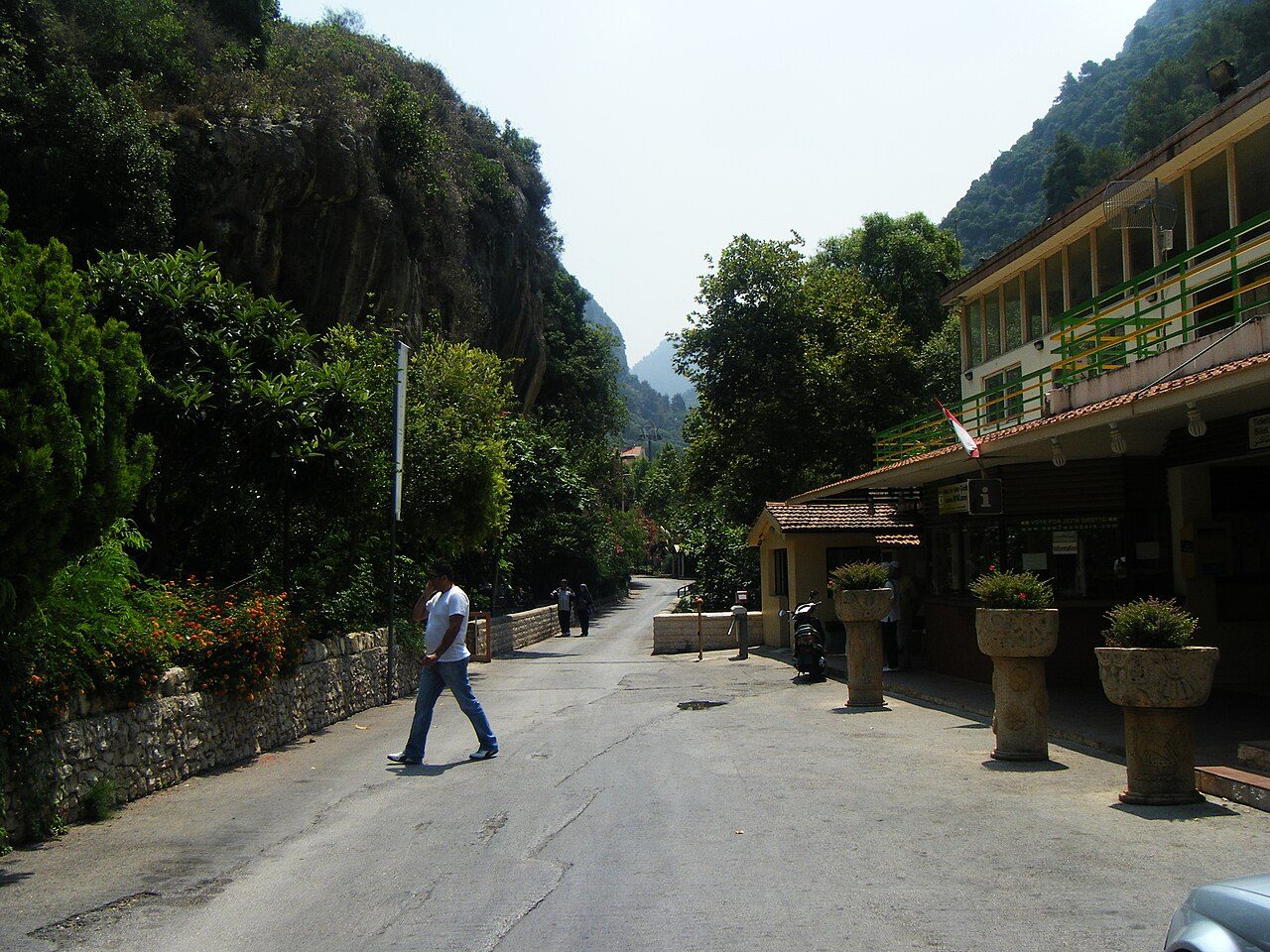
Jeita Grotto
Carved over millennia by the subterranean flow of the Nahr al-Kalb river, this dual-level limestone chasm entered modern history in 1836 when American missionary Reverend William Thomson fired a gun into the darkness, rediscovering the lower cavern. Lebanese speleologists later surveyed the upper gallery in 1958, unveiling a cathedral-like sanctuary of pure geological drama. Moving along suspended concrete catwalks within the upper cavern, visitors enter a cool, 16°C microclimate surrounded by sculpted mineral draperies and translucent calcite curtains that cascade from ceilings reaching heights of 120 meters. Dominating this upper chamber is one of the world’s largest known stalactites, an immense limestone spear measuring 8.2 meters in length, suspended in perpetual stillness above immense echoing halls. Descending to the lower grotto, the terrestrial trek gives way to a silent, aquatic journey. Visitors board flat-bottomed electric skiffs that drift across a 500-meter stretch of a subterranean lake, where concealed spotlights illuminate submerged stone formations and turn the clear waters a deep, glowing turquoise. The gentle hum of the motor and the periodic plink of mineral-rich water droplets echo off smooth, undulating canyon walls that twist deep into the Mount Lebanon ridge. Gliding beneath massive natural archways, travelers witness the ancient underground river that continues to serve as the primary source of drinking water for millions of Beirut's residents above.
More in Beirut

Photo credits (2)
- Freedom's Falcon, CC BY-SA 3.0, via Wikimedia Commons
- FunkMonk, CC BY 3.0, via Wikimedia Commons