 New added
Church of St Anne Vilnius
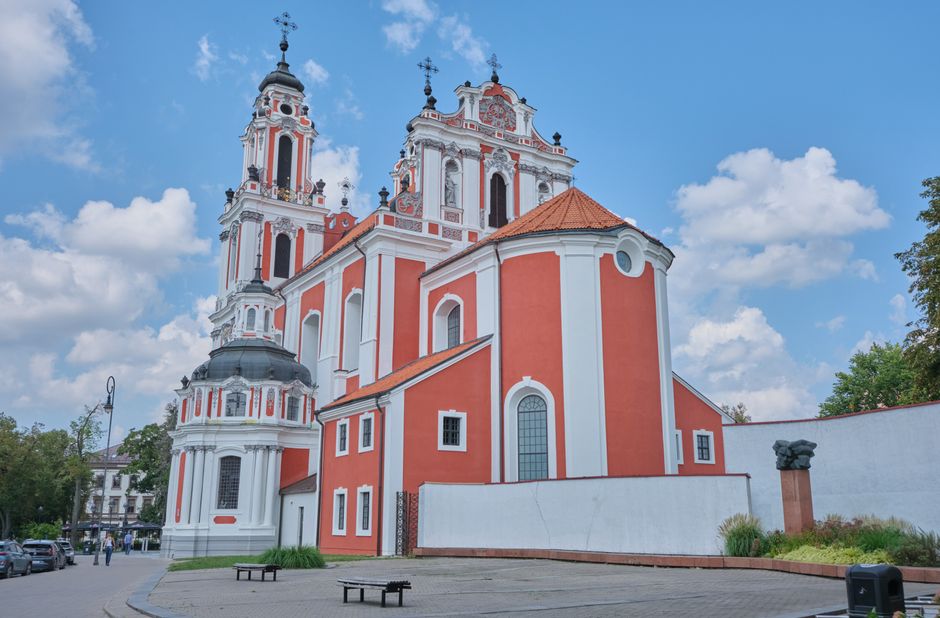
Rising like frozen flames above the Vilnia River’s bend, the Church of St. Anne represents the absolute zenith of Flamboyant Brick Gothic architecture. Completed around 1500 under the patronage of Grand Duke Alexander Jagiellon, this masterwork was meticulously engineered using thirty-three distinct varieties of clay bricks. Master masons arranged the fired terracotta into a dazzling facade of interlocking ogival arches, slender buttresses, and delicate pinnacles that seem to defy gravity. Local lore famously recounts that in 1812, an enraptured Napoleon Bonaparte gazed up at the structure and lamented that he could not carry it back to Paris in the palm of his hand. Viewed from the cobblestones of Maironio Street, St. Anne’s airy, sculptural red-brick tracery creates a striking theatrical contrast against the hulking, fortified mass of the Bernardine monastery rising directly behind it. Stepping through the pointed portal, visitors leave the dizzying kinetic energy of the exterior for an intimate, hush-filled sanctuary. Soft Baltic daylight pours through tall lancet windows, washing over white-ribbed vaults and wooden pews scented with aged oak and beeswax. While devastating fires in the sixteenth and eighteenth centuries prompted the addition of dynamic Baroque altars inside, the nave retains its soaring, medieval sense of elevation. Lingering beneath the vaulted ceiling, travelers encounter an atmosphere of quiet reverence, where shifting shadows across the gilded side altars echo over five centuries of unbroken Lithuanian devotion.