 New added
Gediminas Tower Vilnius
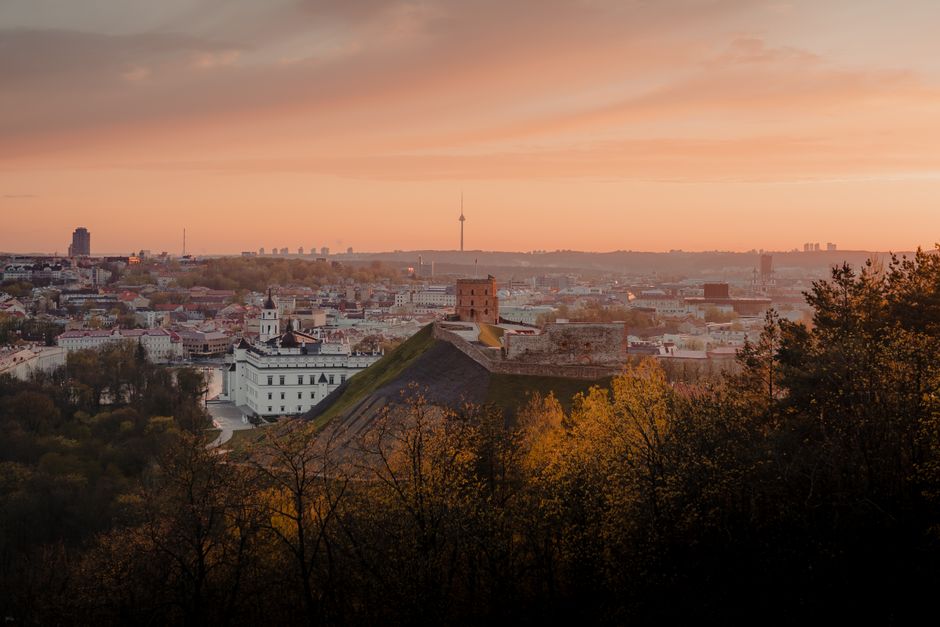
Perched atop a steep hill where the Vilnia and Neris rivers converge, this three-story, red-brick octagonal bastion is the lone surviving sentinel of the 14th-century Upper Castle. Born from Grand Duke Gediminas’s legendary 1323 dream of an iron wolf howling on a hilltop, the defensive complex was fortified with Gothic brickwork by his grandson, Vytautas the Great, following the Great Fire of 1419. Its weathered masonry of fieldstone and Baltic clay withstood centuries of Teutonic assaults and Muscovite sieges, eventually transforming into a powerful political talisman where Lithuania’s yellow, green, and red tricolor was raised during the 1988 Sąjūdis independence movement. Ascending the summit via a spiraling, cobbled pathway or the short funicular, travelers emerge onto an open plateau crowned by the tower’s rugged ramparts. Inside, narrow spiral stairs wind past displays of 14th-century chainmail and scale models of the vanished castle walls, leading up to an uninhibited observation deck. Standing beneath the fluttering national standard, visitors feel the brisk Baltic wind carry the chiming bells of the UNESCO-listed Old Town below—a sweeping panorama of terracotta roofs punctuated by the stark white spires of Vilnius Cathedral and the baroque belfry of St. John’s Church.