
 New added
Golestan Palace
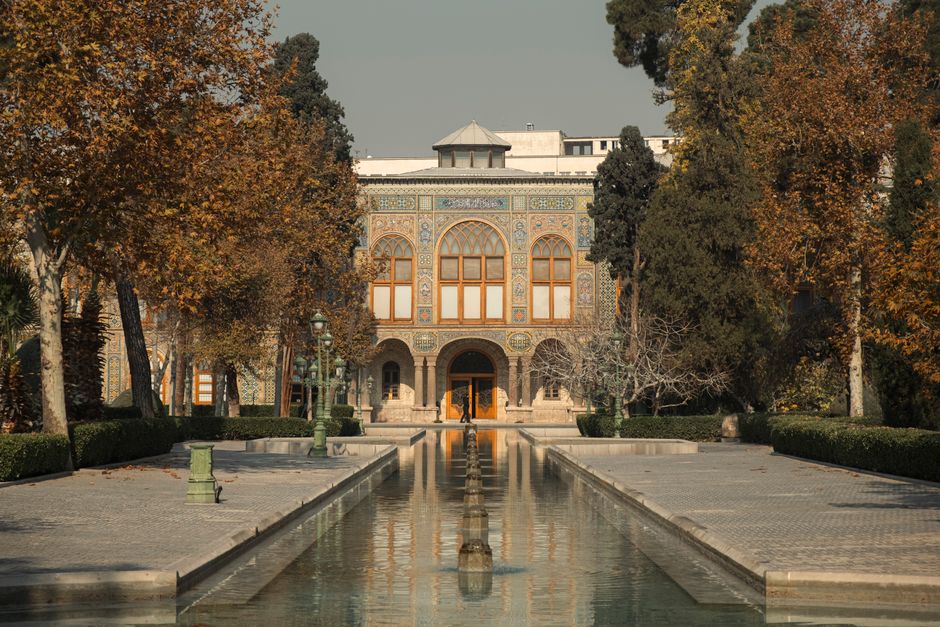
Enclosed within the heart of Tehran, the Golestan Palace complex stands as a monumental testament to the Qajar era (1789–1925). Transformed after Agha Mohammad Khan established Tehran as his imperial capital, the palace reached its architectural zenith under Nasser al-Din Shah, who boldly merged classical Persian forms with 19th-century European neoclassical and baroque tastes. Traversing the central walled garden, visitors encounter tranquil turquoise reflecting pools framed by the towering Shams-ol-Emareh (Edifice of the Sun). Built in 1867, this five-story structure features twin clocktowers adorned with thousands of vibrant yellow, cobalt, and rose-pink glazed tiles, depicting stylized hunting scenes, mythical birds, and Victorian-inspired floral motifs. Inside the pavilions, the sensory impact is immediate and dazzling. Stepping into the famed Talar-e Ayaneh (Hall of Mirrors)—the historic staging ground for royal receptions and Pahlavi coronations—visitors are enveloped in a kaleidoscope of light refracted by millions of microscopic mirror mosaics that coat the vaulted ceilings and walls. Outside on the open-fronted veranda stands the Takht-e Marmar (Marble Throne), an imposing seat carved from sixty-five slabs of translucent, pale-yellow Yazd marble, supported by sculpted marble demons and angels. The cool, hushed ambiance of these ceremonial halls stands in sharp, atmospheric contrast to the bustling bazaar just beyond the palace gates, immersing travelers in the glittering dawn of modern Iranian architecture.
More in Tehran
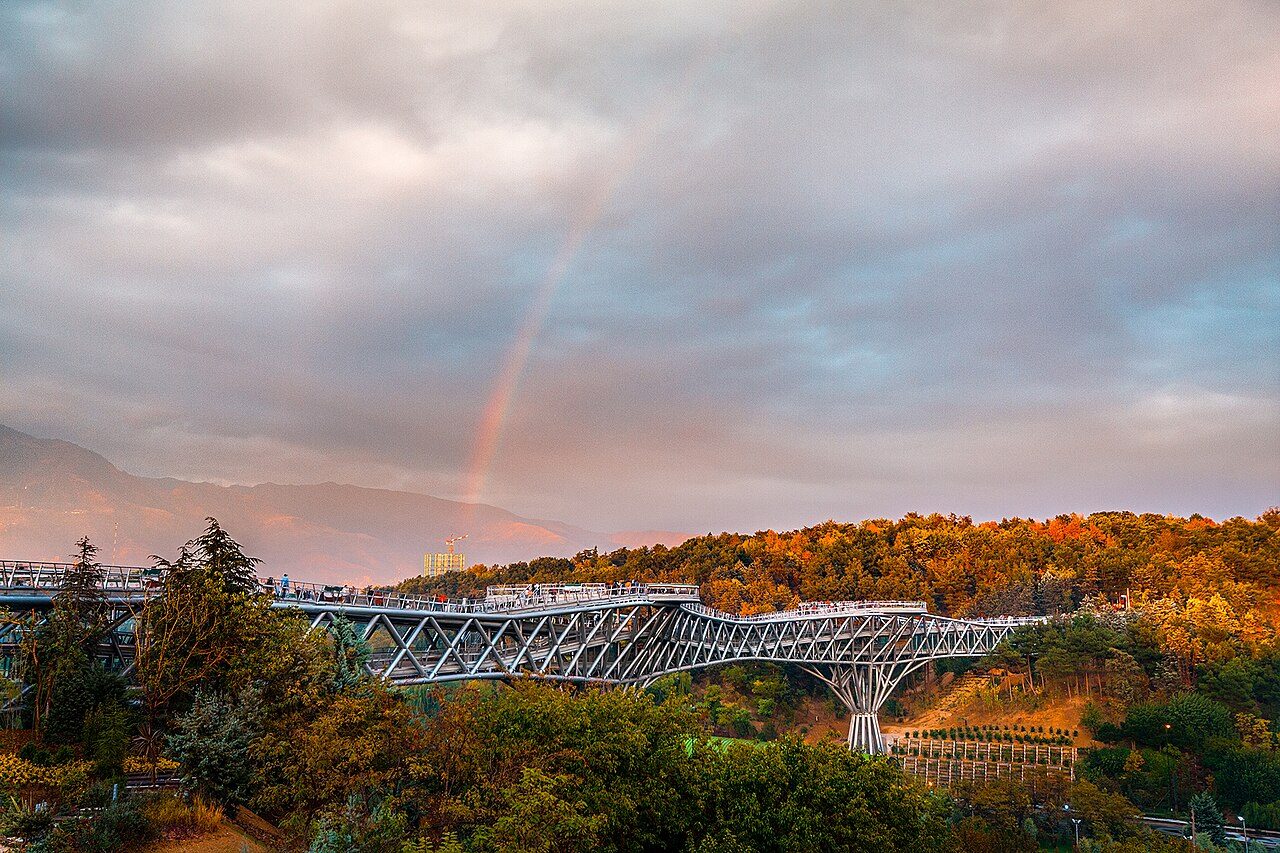
Photo credits (2)
- سید محمود جوادی, CC BY 3.0, via Wikimedia Commons
- Diba Tensile Architecture, CC BY-SA 4.0, via Wikimedia Commons