 New added
Plaza de Armas Santiago
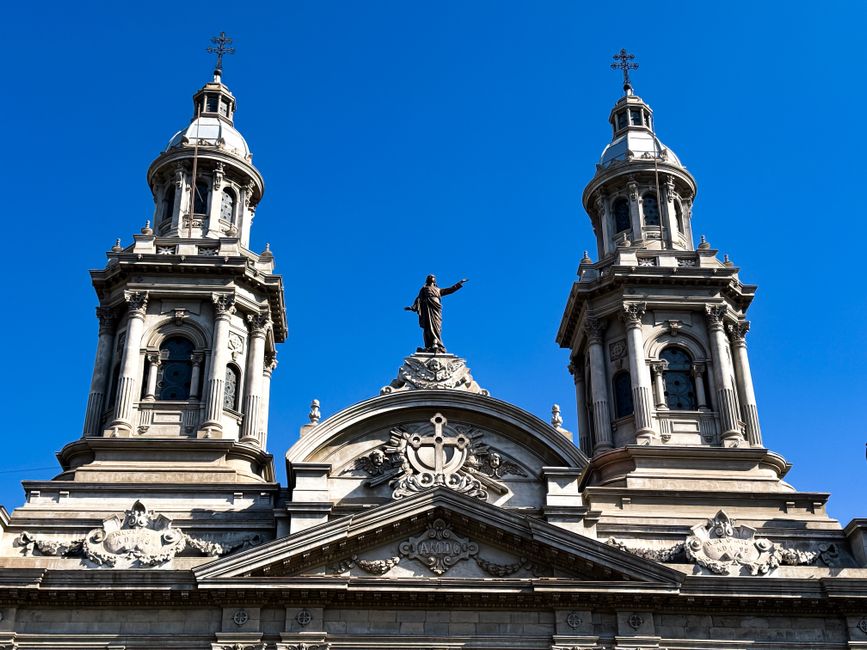
Laid out in February 1541 by conquistador Pedro de Valdivia, the Plaza de Armas forms the foundational grid-zero of Santiago’s civic identity. Originally planned as a fortified military compound and central marketplace, this leafy quadrangle preserves centuries of architectural evolution. Anchoring its western flank rises the Catedral Metropolitana, an imposing neoclassical monument designed by Italian architect Joaquín Toesca in the late eighteenth century, distinguished by twin stone bell towers and an opulent, frescoed nave lined with silver altars. Surrounding the perimeter, the mansard-roofed Correo Central and the Palacio de la Real Audiencia frame open plazas where an equestrian bronze of Valdivia stands in stark dialogue with Enrique Villalobos’s sculpted marble monument honoring Chile’s indigenous peoples. Step onto the gray granite paving, and the square immediately envelops you in Santiago’s most unfiltered urban theater. Towering Chilean wine palms cast dappled shadows over marble benches where stone-faced chess masters ponder their next move amid crowds of quiet spectators. The sweet aroma of *maní confitado* (caramelized peanuts) wafts from copper carts, mingling with the resonant clatter of *chinchineros*—traditional street percussionists spinning furiously with bass drums strapped to their backs. Between the impassioned orators under the neoclassical arches of the Portal Bulnes and acoustic Andean folk troupes, the plaza offers a vibrant, chaotic collision of living history and modern metropolitan pulse.