 New added
Helsinki Cathedral
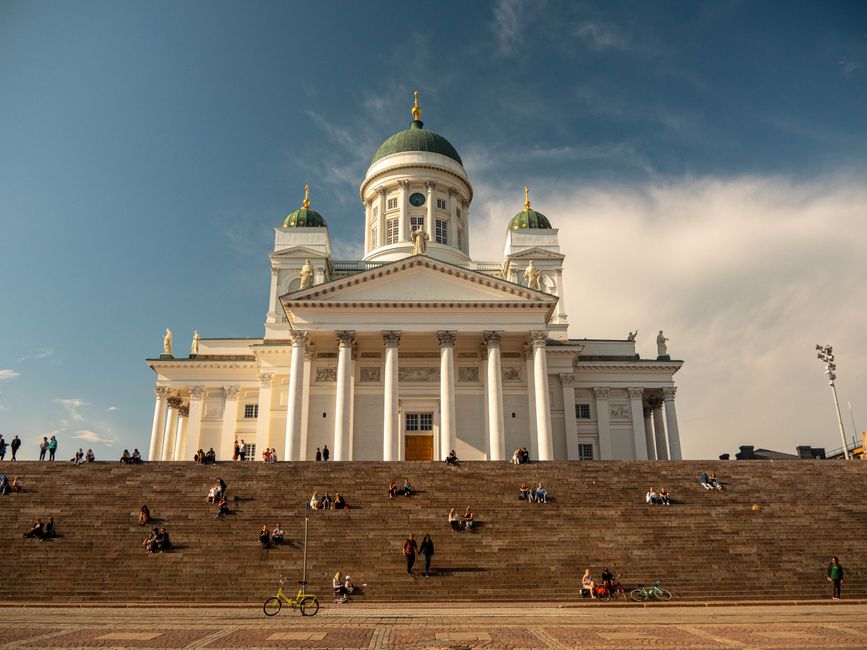
Rising like a monumental alabaster peak above the cobblestones of Senate Square, Helsinki Cathedral defines the maritime skyline of Finland’s capital. Designed by German architect Carl Ludvig Engel as the crowning achievement of the city’s 19th-century Neoclassical transformation, the cathedral was completed in 1852 and originally consecrated as St. Nicholas Church in honor of Russian Tsar Nicholas I. Built upon a Greek-cross floor plan, the structure is anchored by four towering Corinthian colonnades and a colossal, sea-green central dome flanked by four smaller cupolas. Lining the roof’s balustrades are the Twelve Apostles, cast in zinc—one of the largest uniform collections of zinc sculptures in the world—gazing stoically over the Gulf of Finland. Ascending the formidable flight of steep granite steps rewards travelers with sweeping panoramas of the bustling South Harbour and the pastel facades of the historic center. Stepping past the heavy brass doors, the theatrical grandeur of the exterior yields to the austere serenity of Finnish Lutheranism. The cavernous, pristine white interior is illuminated by soft Nordic light pouring through high arched windows, largely devoid of ornamentation except for an understated altarpiece by Carl Timoleon von Neff, a towering pipe organ, and sculptures of Protestant reformers Martin Luther and Mikael Agricola. Here, enveloped in meditative stillness, visitors experience a striking transition from imperial neoclassical bravado to quiet, uncluttered contemplation.