
 New added
Stradun Dubrovnik
Stretching nearly 300 meters between the medieval Pile and Ploče gates, the Stradun—officially the Placa—serves as the limestone spine of Dubrovnik. Engineered in the twelfth century by filling the marshy channel that once divided the Roman island settlement from mainland Slavs, the avenue assumed its current appearance following the catastrophic earthquake of 1667. To ensure rapid rebuilding and visual harmony, the Senate of the Republic of Ragusa mandated rigid architectural codes: uniform pale-ochre Baroque facades of identical height, standardized window moldings, and ground-floor shop fronts featuring the classic arched *na koleno* layout. At its western threshold sits Onofrio’s Great Fountain, constructed in 1438 with sixteen carved stone spouts, while the eastern terminus opens onto Luža Square, guarded by the 31-meter City Bell Tower and the gothic-renaissance porticos of Sponza Palace. Stepping onto the thoroughfare, travelers glide across white limestone pavers worn so smooth by centuries of footsteps that they gleam like polished marble under the midday sun. The sheer lack of vehicles amplifies human sound: the sharp clatter of heels, the hum of multilingual chatter echoing between stone walls, and the mechanical chime of the bronze bell-strikers, Maro and Baro, ringing the hour. At dusk, wrought-iron lanterns cast an amber glow across the wet-look stones, drawing visitors into a timeless evening stroll wrapped in the scent of sea salt and roasted sugared almonds drifting from nearby alleyways.
More in Dubrovnik
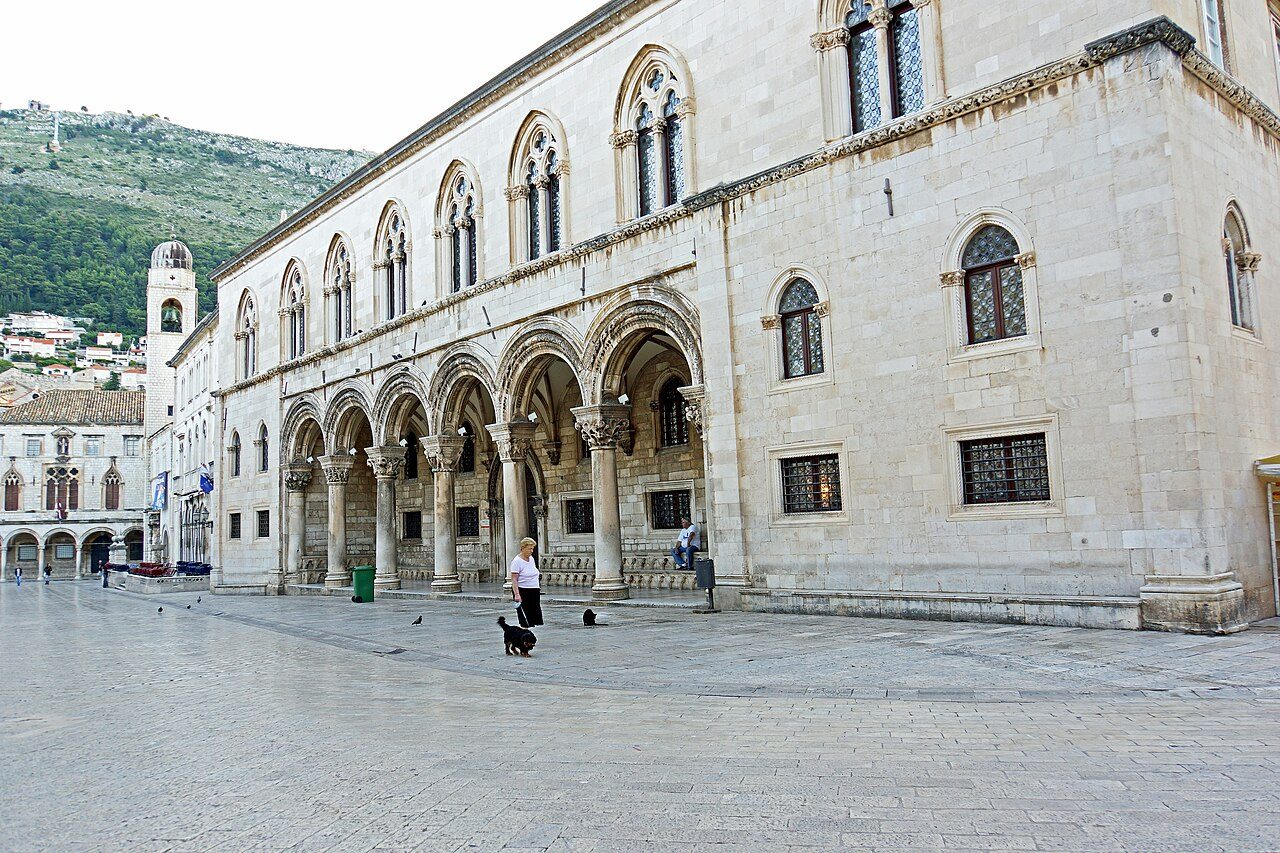
Photo credits (2)
- Timur Voronkov, Public domain, via Wikimedia Commons
- Dennis G. Jarvis, CC BY-SA 2.0, via Wikimedia Commons