
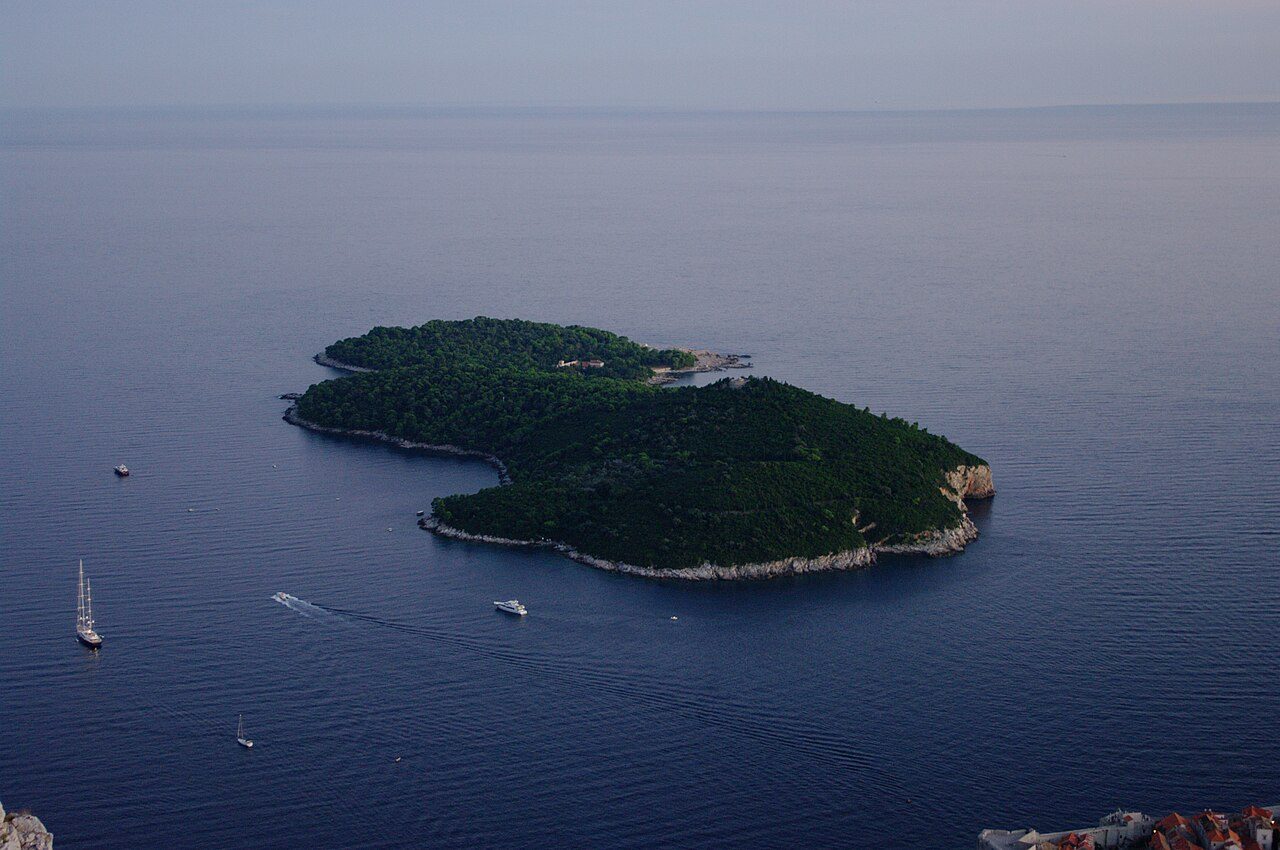
Lokrum
Rising just 600 meters off Dubrovnik’s medieval ramparts, Lokrum has sheltered hermits, conquerors, and royal exiles for a millennium. Benedictine monks established an abbey here in 1023, leaving behind ruined Romanesque-Gothic cloisters that still cast quiet shadows across weathered stone arches. According to legend, Richard the Lionheart washed ashore on these craggy limestone shelves after a shipwreck in 1192, though the island’s modern fabric belongs largely to the 19th century. In 1806, Napoleonic troops erected the star-shaped, limestone Fort Royal atop the 96-meter summit, while Austrian Archduke Maximilian of Habsburg later acquired the island in 1859, converting parts of the monastery into a neo-Gothic summer palace. Stepping off the timber ferry, you are immediately enveloped by the sharp perfume of Aleppo pine resin and the piercing cries of feral peacocks—descendants of birds Maximilian imported from the Canary Islands. Shaded gravel trails meander past a botanical garden packed with towering Australian eucalyptuses, giant blue agaves, and rare succulents. At the island's southern reach, the path drops into *Mrtvo More* (the Dead Sea), a secluded karst sinkhole of brilliant emerald water fed by subterranean fissures. Standing on the sun-bleached rock ledges, travelers shed the Mediterranean heat by sliding into the buoyant, hyper-saline pool, sheltered from the open Adriatic's churning waves by sheer limestone cliffs.
More in Dubrovnik
Photo credits (2)
- Timur Voronkov, Public domain, via Wikimedia Commons
- Dennis G. Jarvis, CC BY-SA 2.0, via Wikimedia Commons