 New added
Lviv Market Square
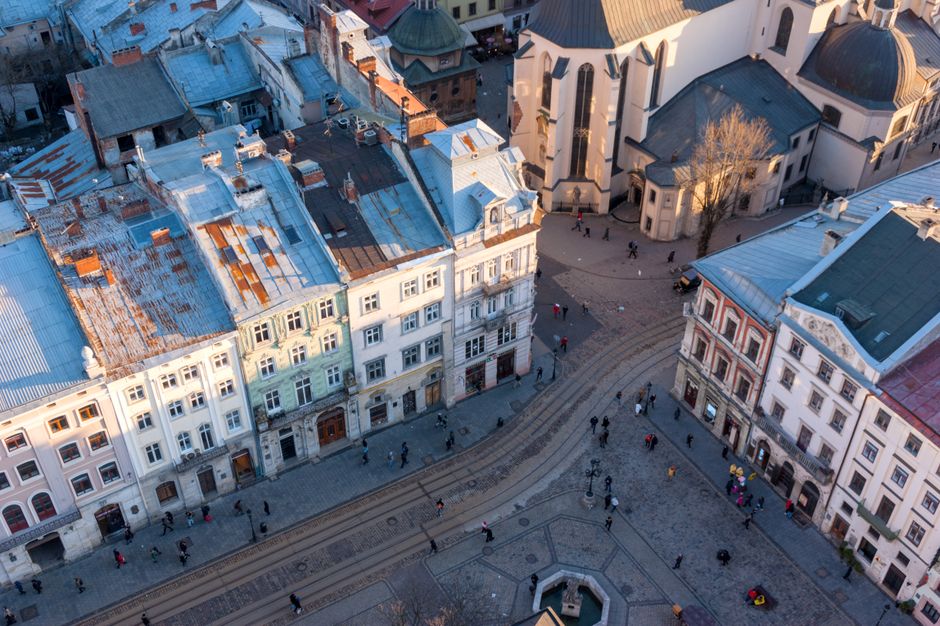
Laid out in the 14th century and thoroughly rebuilt after the catastrophic fire of 1527, Lviv’s Rynok Square preserves an extraordinary ensemble of Central European Renaissance and Baroque architecture. At its core stands the 19th-century Town Hall, flanked by four classical limestone fountains sculpted in 1793 by Hartman Witwer depicting Neptune, Diana, Amphitrite, and Adonis. Enclosing the perimeter are forty-four narrow merchant townhouses (kamianytsi), historically restricted by medieval tax edicts to three windows wide. Architectural standouts include the jet-black, diamond-rusticated facade of the late-16th-century Black Mansion and the Italianate arcaded courtyard of the Royal Kamianytsia, once home to Polish King John III Sobieski. Stepping onto the uneven basalt cobblestones, travelers encounter an atmosphere shaped by centuries of cross-cultural trade. Vintage trams rattle along polished iron tracks, cutting through the aroma of hand-ground coffee drifting from subterranean cellars beneath pastel ocher and terracotta facades. Ascending the 408 wooden stairs of the Town Hall’s 65-meter tower rewards you with an unbroken vista across sea-green church domes, red-tile roofs, and the distant slopes of High Castle hill. Down below, the gentle murmur of open-air terrace diners mingles with the notes of busking classical violinists, anchoring you firmly within Ukraine’s historic western crossroads.