Lviv
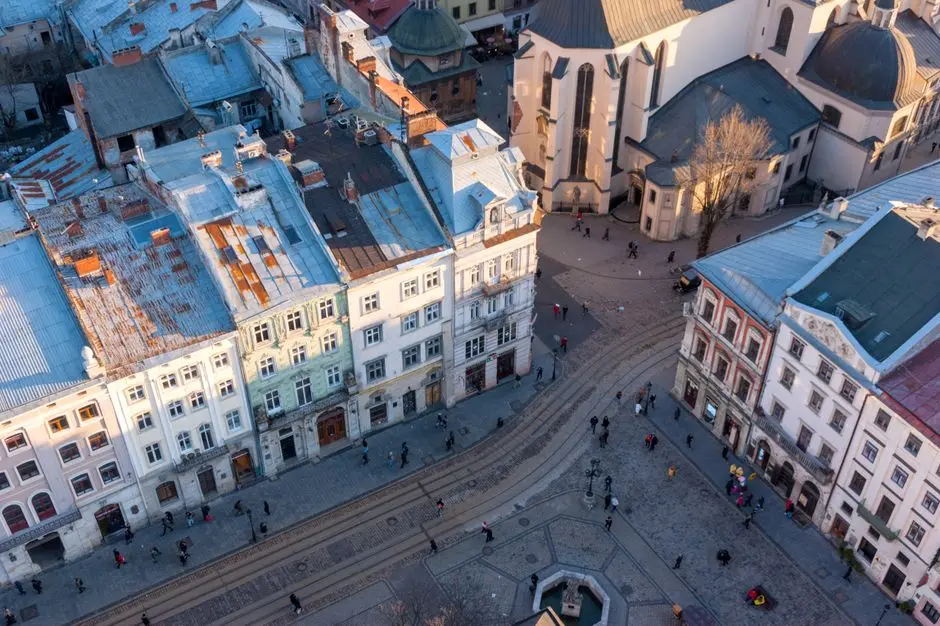
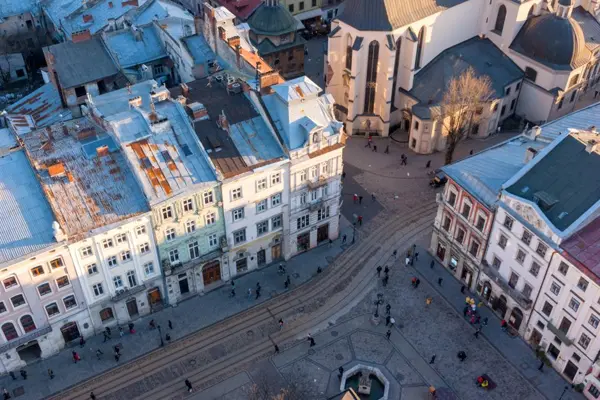
Nestled among the rolling green hills of the Roztocze upland in western Ukraine, Lviv carries the weathered elegance of Central Europe. The Poltva River flows entirely beneath its cobbled avenues, leaving the surface to the clatter of vintage trams and the rich scent of roasting coffee. Walking through the historic center feels intimate and layered, where pastel facades lean over narrow passages and carved stone lions guard sculpted archways. Founded in 1256 by King Danylo of Galicia and named in honor of his son Lev, the city absorbed centuries of Polish, Austrian, and Jewish heritage. At its heart sits Rynok Square, framed by forty-four Renaissance and Baroque townhouses alongside classical stone fountains. A short stroll north leads into the medieval Armenian Quarter, home to the fourteenth-century Armenian Cathedral with its quiet courtyards and expressive, gilded wall frescoes. Further east, shaded beneath beech and chestnut trees, Lychakiv Cemetery preserves ornate nineteenth-century crypts and expressive marble monuments honoring the region’s writers, scholars, and artists. Daily life revolves around the traditional kavyarnya, or coffeehouse, where locals gather over cups of spiced brew and plates of baked syrnyk cheesecake. Winter brings lively folk carols and traditional vertep street theater to the cobbled lanes. The historic core is compact and best explored on foot, though hopping aboard the creaking vintage trams offers an effortless way to reach outer neighborhoods. Early autumn is the most pleasant time to visit, bringing crisp golden light, mild walking weather, and uncrowded cobblestones.
Read more