
 New added
1 / 2
Plovdiv Roman Theatre
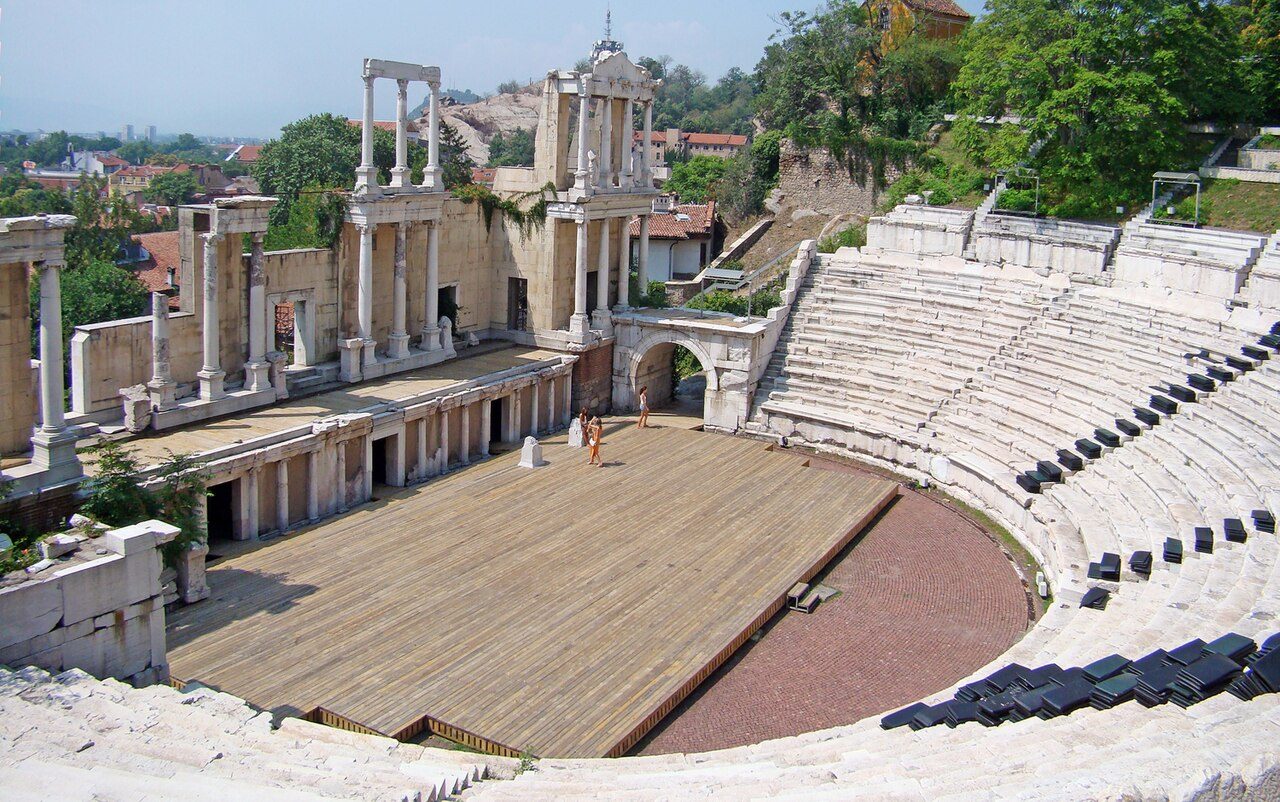
Carved into the natural saddle between Taksim and Dzhambaz hills, this majestic amphitheater was commissioned during the reign of Emperor Trajan at the turn of the 2nd century AD to anchor ancient Philippopolis. Buried under centuries of silt and forgotten until a dramatic 1970s landslide exposed its buried colonnades, the monument survives as one of the world's best-preserved classical performance spaces. Twenty-eight concentric tiers of radiant white marble sweep downward toward an orchestra ringed by honorific Greek inscriptions that once reserved seating for civic magistrates and regional tribes. Behind the orchestra floor rises a dramatic, two-story *scaenae frons* framed by reconstructed Ionic porticoes, friezes, and classical pediments that open dramatically to the southern sky. Ascending to the uppermost rim of the *cavea*, travelers are met with a dizzying vista where ancient masonry dissolves into panoramic views of the distant, pine-forested Rhodope Mountains. The sun-warmed stone retains the contours of the thousands of Roman spectators who once packed the benches for gladiatorial combat and civic assemblies. The theater’s pristine acoustics endure intact: a low whisper or coin dropped on the marble stage resonates clearly up to the highest row. When twilight blankets the Old Town and stage lights illuminate the limestone pillars for modern opera performances, the boundary between Roman antiquity and living contemporary culture entirely evaporates.
More in Plovdiv
Photo credits (2)
- Edal Anton Lefterov, CC BY-SA 3.0, via Wikimedia Commons
- Faces&&Places, CC BY 2.0, via Wikimedia Commons