
 New added
Skanderbeg Square
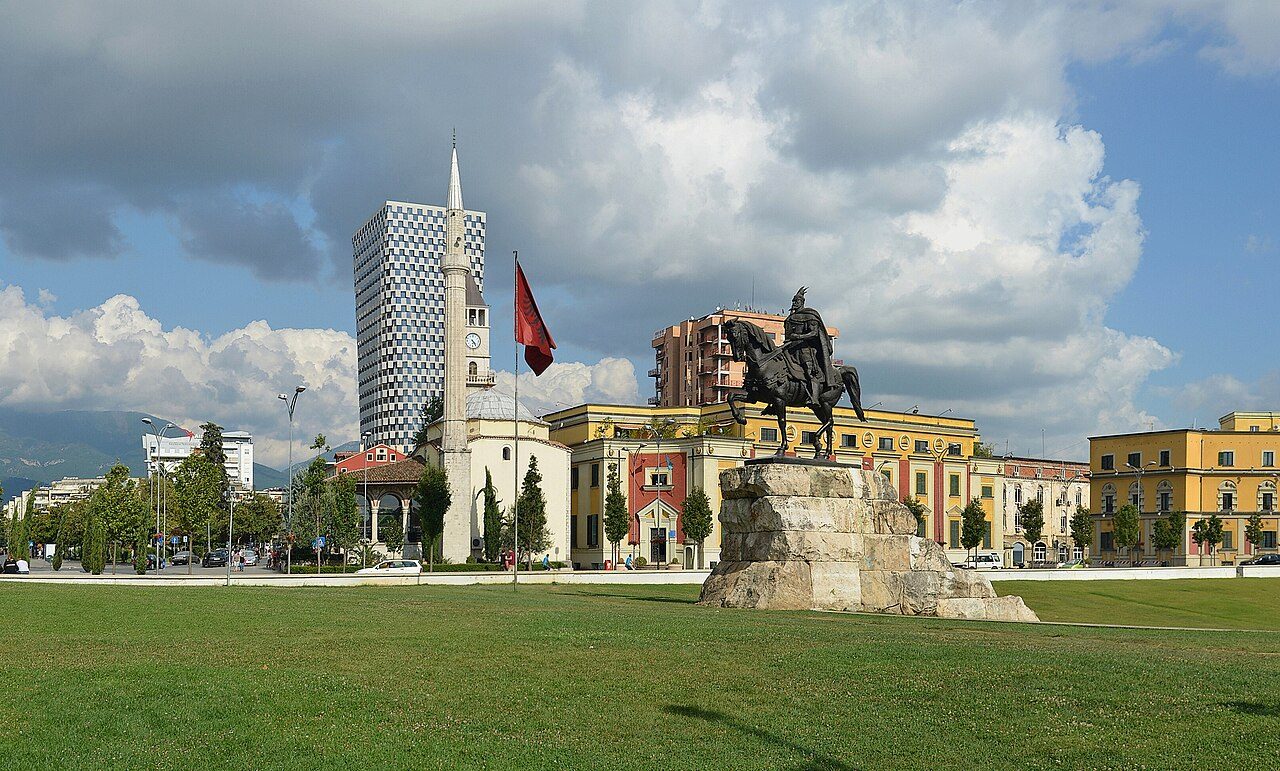
Anchoring the heart of Tirana, this sweeping 40,000-square-meter plaza bears the physical imprint of Albania’s tumultuous twentieth century. Originally conceptualized in the late 1920s by Italian architects Armando Brasini and Florestano Di Fausto under King Zog, the space evolved from an Italian neo-rationalist civic center into a monolithic parade ground during Enver Hoxha’s communist dictatorship. At its southern flank rises Odhise Paskali’s 1968 bronze equestrian monument of Gjergj Kastrioti Skanderbeg, set against pastel-yellow ministries. Dominating the northern boundary, the National Historical Museum displays *The Albanians*, a colossal 1981 socialist-realist mosaic of defiant partisan fighters, while the slender 35-meter clock tower and the 18th-century Et’hem Bey Mosque—adorned with delicate floral frescoes—stand as rare, preserved relics of the city's Ottoman heritage. Step onto the subtly domed pedestrian surface, and you traverse a geological map of the nation; the ground is paved with natural stone slabs sourced from every region of Albania and Kosovo. In the summer heat, concealed fountains release thin sheets of recycled water over the reddish and gray tiles, creating reflective basins that cool the open air. As twilight descends, the plaza transforms into the civic stage for the traditional *xhiro* (evening promenade). Visitors encounter families strolling beneath native linden trees, buskers performing near the fountain pools, and the haunting resonance of the adhan echoing from the minaret against Tirana’s bustling, illuminated skyline.
More in Tirana
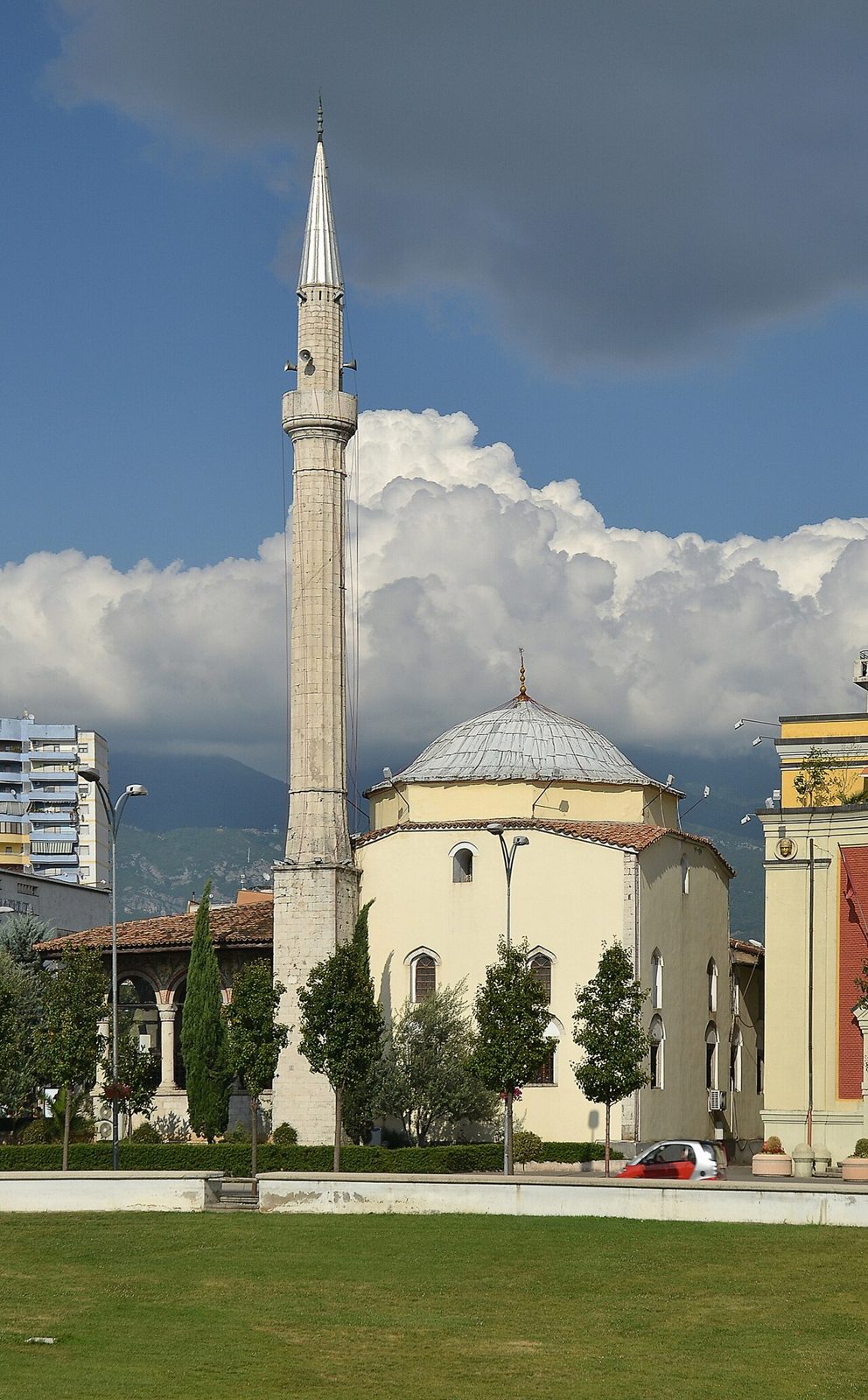
Photo credits (4)
- Pudelek, CC BY-SA 4.0, via Wikimedia Commons
- Edvini, CC BY-SA 4.0, via Wikimedia Commons
- Unknown author, Public domain, via Wikimedia Commons
- Pudelek, CC BY-SA 4.0, via Wikimedia Commons