
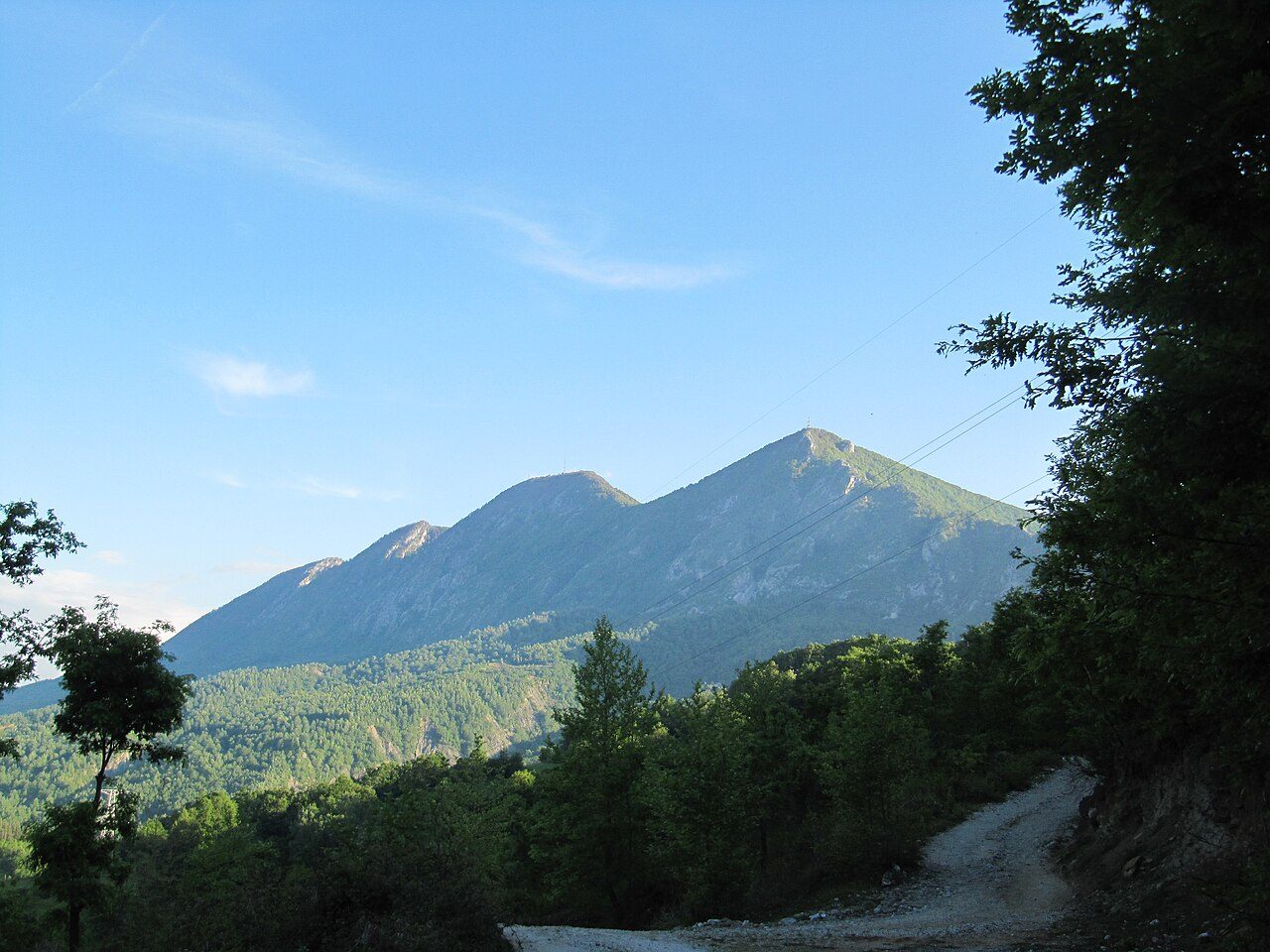
Mount Dajti
Rising 1,613 meters above the Tirana basin, the limestone massif of Mount Dajti anchors ancient Byzantine defenses and Cold War relics alike. Designated a national park in 1966 during Enver Hoxha’s regime, its lower flanks conceal Bunk’Art 1—a secretive multi-room atomic shelter—while higher ridges cradle the 6th-century stone ruins of Tujani Castle, an outpost fortified under Emperor Justinian I. Today, the mountain is crowned by the Austrian-engineered Dajti Ekspres cable car, which opened in 2005. Spanning 4.6 kilometers across jagged ravines and dense beech forests, this aerial lift ascends to a socialist-modernist terrace anchored by the concrete, circular rotunda of the Dajti Tower Belvedere. Stepping out of the crimson gondola, travelers instantly trade Tirana's sun-baked urban roar for thin, crisp alpine air redolent of damp earth and Bosnian pine. Standing on the cliffside observation deck, the vast panorama unfolds: the technicolor rooftops and Ottoman minarets of the capital shrink into a mosaic, giving way to the shimmering blue horizon of the Adriatic Sea near Durrës. Hikers traversing the marked limestone trails encounter dramatic karst fissures, wild mountain herbs, and quiet meadows where local shepherds graze flocks alongside the weathered concrete bunkers left behind by 20th-century militarization.
More in Tirana
Photo credits (4)
- Edvini, CC BY-SA 4.0, via Wikimedia Commons
- Unknown author, Public domain, via Wikimedia Commons
- Pudelek, CC BY-SA 4.0, via Wikimedia Commons
- Pudelek, CC BY-SA 4.0, via Wikimedia Commons