Xi'an
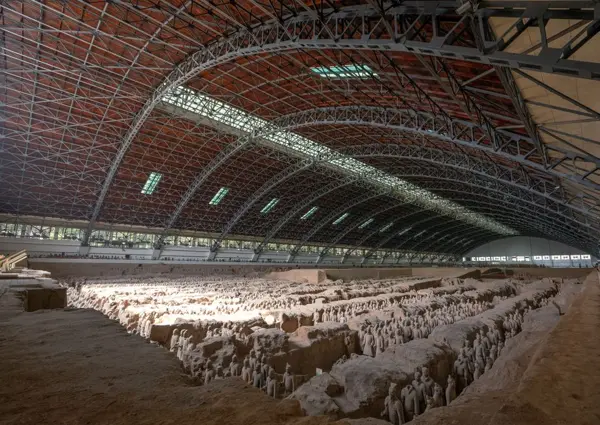
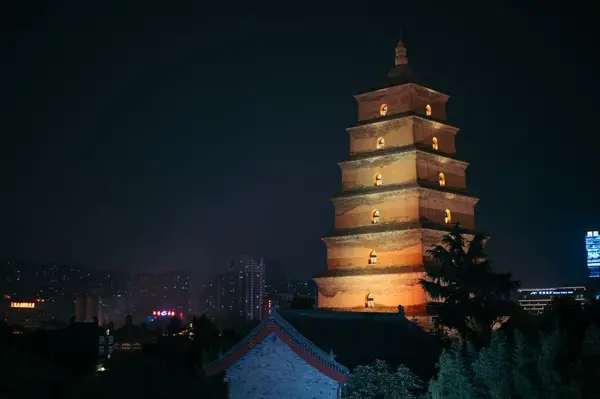
Spread across the Guanzhong plain between the Wei River and the Qinling Mountains, Xi'an carries the weight of an imperial capital with casual ease. Walking its grid of wide boulevards feels grand yet grounded, where morning mist mingles with the scent of toasted cumin and wood smoke. The massive Ming-era City Wall encloses the core, its grey stone bastions providing a quiet boundary between modern high-rises and leafy residential lanes. As the eastern terminus of the ancient Silk Road, Xi'an was unified under Qin Shi Huang in 221 BC and reached its peak as the Tang capital of Chang'an. East of the city, thousands of life-sized clay soldiers in the Terracotta Army still guard the first emperor's subterranean tomb. Downtown, the brick Giant Wild Goose Pagoda, erected in 652 to store Buddhist scriptures, anchors a quiet temple complex, while the neighboring Muslim Quarter hums with Hui merchants trading beneath stone arches. Evenings revolve around lively street stalls and hearty northern cuisine, from wide biangbiang noodles tossed in hot chili oil to spiced lamb roujiamo flatbreads. At dusk, elderly residents gather beneath the stone ramparts to sing piercing, percussion-heavy Qinqiang opera. Autumn brings crisp air and golden ginkgo trees, making October an ideal time to visit. Navigate the city on the efficient metro system, and hire a bicycle early in the morning to pedal the full fourteen-kilometer loop atop the ancient wall.
Read more