 New added
Terracotta Army
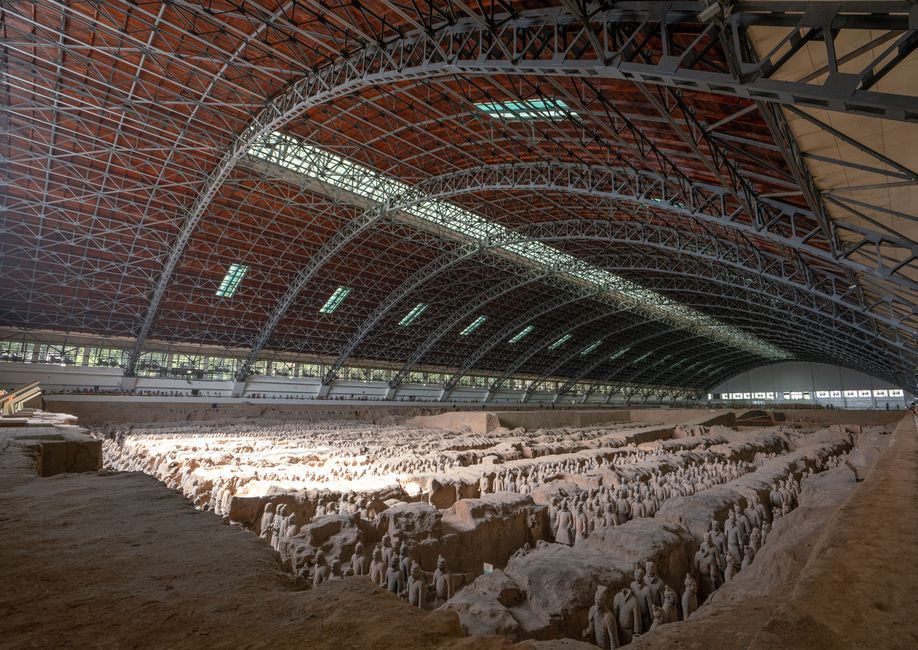
Commissioned around 246 BCE to safeguard the subterranean necropolis of Qin Shi Huang, China’s first emperor, this terracotta garrison lay hidden beneath the loess plains of Lintong until local well-diggers unearthed clay shards in 1974. Entering the cavernous, hangar-like enclosure of Pit 1, travelers confront a mesmerizing spectacle of imperial ambition: thousands of life-sized infantrymen, archers, and cavalrymen arrayed in battle formation along sunken earthen corridors. The scale is monumental, yet the intimacy of the craft is what arrests the eye. No two clay faces are identical. Each soldier bears personalized features—from chisel-carved cheekbones and braided topknots to calloused knuckles and studded breastplates—with microscopic traces of purple, vermilion, and azurite lacquer hinting at their original, brilliantly painted splendor. Beyond the main vanguard, Pits 2 and 3 offer an unvarnished encounter with the ongoing excavation, functioning as both tactical command posts and active archaeological laboratories where conservators piece together shattered warriors like complex three-dimensional jigsaws. Peering over the railings, visitors breathe the cool, chalky air of the earthen pits, gazing down at fractured torsos and hollow-cast horses still embedded in the sediment. In the flanking exhibition hall, the emperor's half-scale bronze chariots—outfitted with fully articulated reins, four-horse teams, and rotating mechanical umbrellas—display the pinnacle of third-century BCE metallurgy. Standing before these immortal sentinels, you can practically hear the clatter of weaponry echoing through twenty-two centuries of silence.