Venice
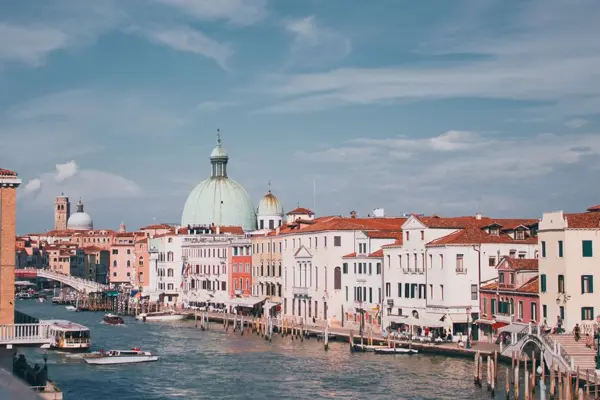
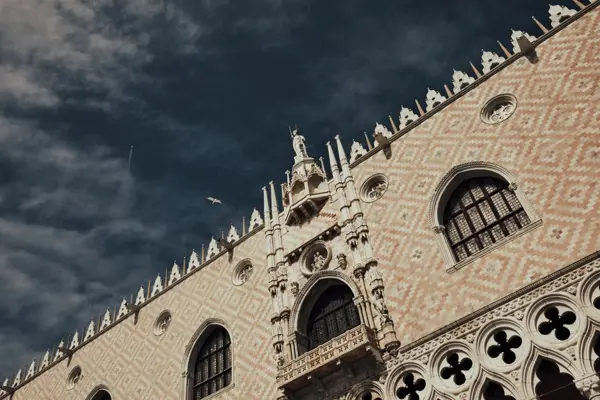
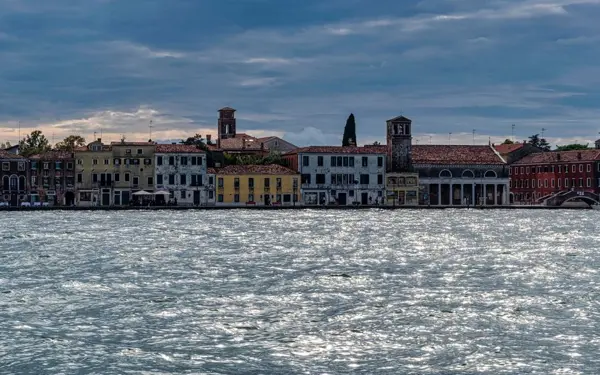
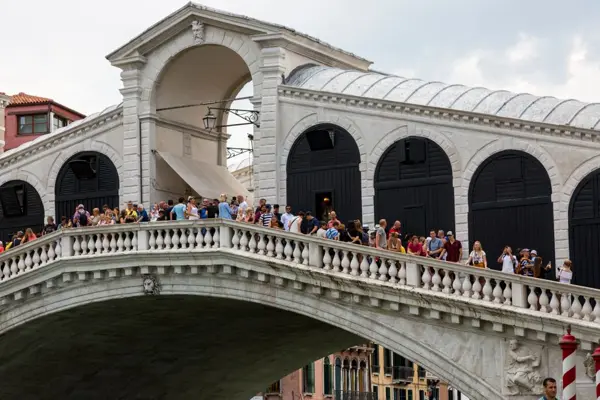
Venice rises directly from the salt marsh of a shallow lagoon in northeastern Italy, separated from the Adriatic Sea by long barrier islands. Moving on foot here means adapting to a cadence dictated entirely by stone and water: there are no cars, only the slap of waves against weathered brick, the clatter of shoes across arched footbridges, and alleys so narrow that your shoulders brush laundry drying between opposing windows. Light reflects upward off the green canals, constantly shifting across faded plaster and gothic marble arches. Founded in the fifth century by mainland refugees fleeing Germanic raids, the settlement evolved into a maritime empire that dominated Mediterranean trade until the sixteenth century. At its ceremonial heart, the Piazza San Marco showcases the golden mosaics of the Basilica and the pink-hued Doge's Palace, where Venetian rulers governed for centuries. Farther north, the Cannaregio district preserves the historic Jewish Ghetto, established in 1516, while across the Grand Canal, the quiet Campo Santa Margherita anchors Dorsoduro with relaxed neighborhood life and Renaissance masterworks inside the Gallerie dell'Accademia. Venetians gather in tiny wood-paneled bacari for cicchetti, bite-sized snacks like creamed salt cod on grilled polenta, often sourced fresh from the centuries-old Rialto fish market. In late winter, the city dresses in masks for Carnevale, while autumn brings high-water tides and serene, mist-covered mornings. Travel primarily by foot or ride the public vaporetto water buses along the Grand Canal; explore at sunrise before day-trippers arrive to hear the true sounds of the lagoon.
Read more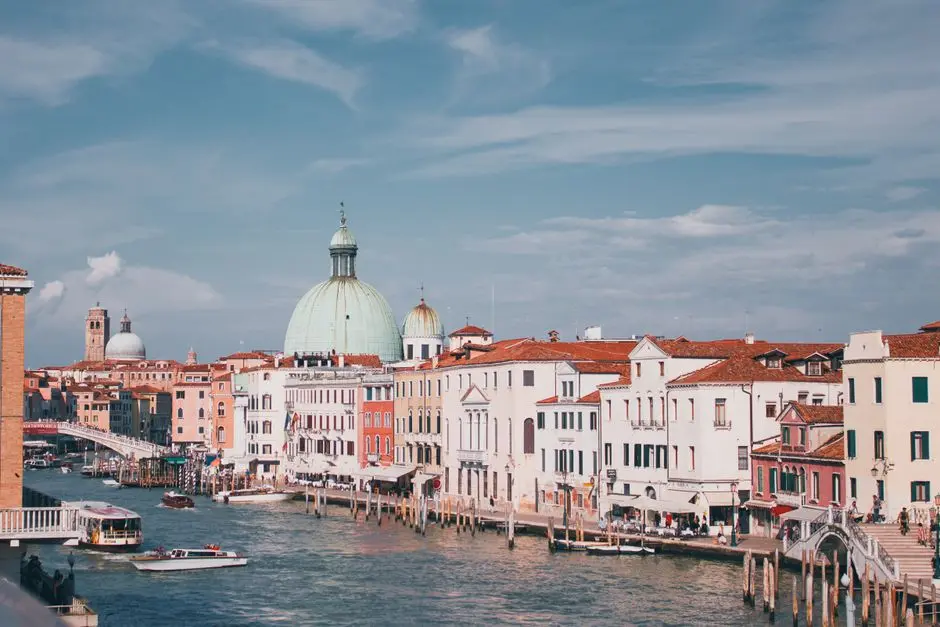
What's on in Venice
The iconic Venetian carnival featuring opulent masked costume balls, gondola water parades, and open-air street spectacles.
Official infoEvents are collected automatically from the web. Dates can change, so please check the official information before you travel.